Have you ever read the phrase “yea or nay” and wondered what yea actually means? Many people confuse yea with yeah, while others assume nay is simply an old fashioned way of saying “no.” Although these words are rarely used in everyday conversation, they still appear in voting procedures, historical documents, literature, and formal expressions.
If you’re trying to understand yea vs nay, this guide explains everything you need to know. You’ll learn their meanings, origins, correct usage, examples, common mistakes, and whether American and British English treat these words differently.
Quick Answer
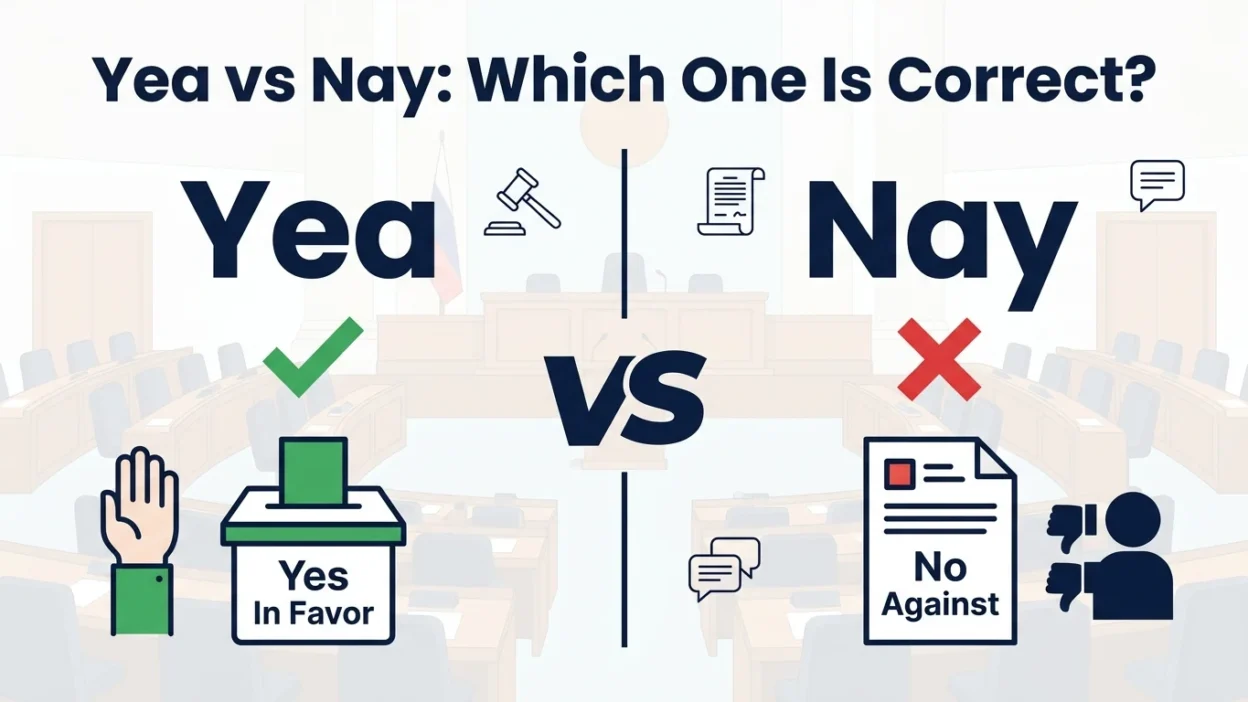
Yea means yes or in favor, while nay means no or against.
These words are most commonly used in formal voting, parliamentary procedures, historical writing, and the expression “yea or nay.” In everyday English, people usually say yes and no instead.
What Does “Yea” Mean?
Yea is an old English word that means yes, affirmative, or in favor of something.
Today, it is primarily used in formal settings such as legislative voting, government proceedings, and historical texts.
Examples
- The committee voted yea on the proposal.
- Three members voted yea, while two voted nay.
- The motion passed because most representatives voted yea.
- Please respond with a simple yea if you agree.
In modern conversation, yes is much more common than yea.
What Does “Nay” Mean?
Nay means no, negative, or against a proposal or motion.
Like yea, it is mostly found in formal voting, legal settings, literature, and historical writing.
Examples
- Five senators voted nay.
- The proposal failed because the majority voted nay.
- If you disagree, vote nay.
- The audience answered with a unanimous nay.
Although it sounds old-fashioned, nay remains the standard word for “no” in many legislative voting systems.
Yea vs Nay: Comparison Table
| Feature | Yea | Nay |
|---|---|---|
| Meaning | Yes | No |
| Indicates | Approval | Disapproval |
| Used in voting | Yes | Yes |
| Common in everyday speech | Rarely | Rarely |
| Formal English | Yes | Yes |
| Historical usage | Common | Common |
Where Are “Yea” and “Nay” Used?
Although these words are uncommon in casual conversation, they remain important in several contexts.
Parliamentary Voting
Many legislatures still use yea and nay during official votes.
Example:
- Members voting yea supported the bill.
- Members voting nay opposed it.
Government Records
Official voting records often list the names of representatives who voted yea or nay.
Historical Documents
Older English writings frequently use these words instead of yes and no.
Example:
- The council answered with a unanimous yea.
Literature
Authors sometimes use yea and nay to create a historical or dramatic tone.
Example:
- The knight replied, “Yea, my lord.”
The Famous Phrase “Yea or Nay”
One of the most common places you’ll encounter these words is the expression:
“Yea or nay.”
This phrase simply means:
- Yes or no
- Agree or disagree
- Decide one way or the other
Examples
- I need a clear yea or nay before moving forward.
- Give me a yea or nay by tomorrow.
- The manager wanted a simple yea or nay answer.
Even today, this expression remains popular in both spoken and written English.
Yea vs Yeah: Don’t Confuse Them
One of the biggest mistakes involves confusing yea with yeah.
Here’s the difference.
Yea
- Means yes
- Formal
- Used in voting and historical contexts
Example:
- The council voted yea.
Yeah
- Informal version of yes
- Common in everyday conversation
Example:
- Yeah, I’ll come with you.
Although they sound similar, they are completely different words.
Common Mistakes to Avoid
Many learners confuse these words because they are unfamiliar.
Writing “Yeah” Instead of “Yea”
Incorrect:
- The senators voted yeah.
Correct:
- The senators voted yea.
Using “Yea” in Casual Conversation
Although not incorrect, it sounds very formal.
Instead of saying:
- Yea, I agree.
Most people simply say:
- Yes, I agree.
- Yeah, I agree.
Thinking “Nay” Means Maybe
It doesn’t.
Nay always means no or against.
Mixing Formal and Informal Language
Avoid sentences like:
- Yeah members voted nay.
Instead, keep the style consistent.
American vs British English
There is very little difference between American and British English when it comes to yea and nay.
Both varieties use these words mainly in:
- Parliamentary voting
- Government proceedings
- Historical writing
- Literature
- Formal expressions
In everyday speech, both Americans and Britons overwhelmingly prefer yes and no.
Easy Trick to Remember the Difference
Here’s a simple memory trick.
Yea begins with the same sound as yes.
Nay begins with the same sound as negative.
So remember:
- Yea = Yes
- Nay = No
If someone asks for a yea or nay, they’re simply asking for a yes or no answer.
Examples in Everyday Context
Although less common, these examples show correct usage.
Yea
- The board voted yea on the new budget.
- Everyone gave a yea except one member.
- The proposal received enough yea votes to pass.
- Parliament recorded twenty-seven yea votes.
Nay
- Several members voted nay.
- The committee rejected the motion with more nay votes.
- One nay vote delayed the decision.
- The proposal failed after a majority voted nay.
Why These Words Still Matter
Even if you never use yea or nay in conversation, understanding them helps you read:
- News reports
- Government records
- Political discussions
- Historical books
- Legal documents
- Parliamentary proceedings
- Classical literature
Knowing their meaning also prevents confusion with the much more common word yeah.
Frequently Asked Questions
What does yea mean?
Yea means yes or in favor, especially during formal voting.
What does nay mean?
Nay means no or against, particularly in legislative and official voting.
Is yea the same as yeah?
No. Yea is a formal word meaning yes, while yeah is an informal way of saying yes.
Where are yea and nay used?
They are mainly used in government voting, parliamentary procedures, legal settings, historical writing, and literature.
Is the phrase “yea or nay” correct?
Yes. It is a well-established English expression meaning yes or no.
Do American and British English both use yea and nay?
Yes. Both varieties use these words primarily in formal contexts rather than everyday conversation.
Can I use yea in casual conversation?
You can, but it may sound old-fashioned or overly formal. Most people simply use yes or yeah instead.
Summary
Understanding yea vs nay is simple once you know their traditional meanings. Yea means yes or in favor, while nay means no or against. Although these words are uncommon in daily speech, they continue to play an important role in parliamentary voting, legal documents, historical writing, and the familiar expression “yea or nay.”
The key is not to confuse yea with yeah. If you’re writing about government, history, or formal voting, yea and nay are the correct choices. For everyday conversations, however, yes, no, and yeah remain the natural options. Understanding the distinction will help you write more accurately and interpret formal English with confidence.

Dani Morrison is a dedicated language writer and spelling expert at Spelword.com, where she focuses on helping readers understand common English spelling mistakes and confusing word pairs. With a passion for clear communication, Dani creates easy-to-follow guides that simplify complex grammar and spelling rules for everyday use.