
If you’ve ever hesitated between writing “layed out” or “laid out,” you’re not alone. This is one of those subtle grammar traps that catches even confident writers. The confusion usually comes from how similar the words lay and laid sound and how often people assume “layed” must be correct.
In this guide, you’ll get a clear, simple explanation of layed out vs laid out, along with examples, common mistakes, and practical tips to help you use the correct form every time.
Quick Answer
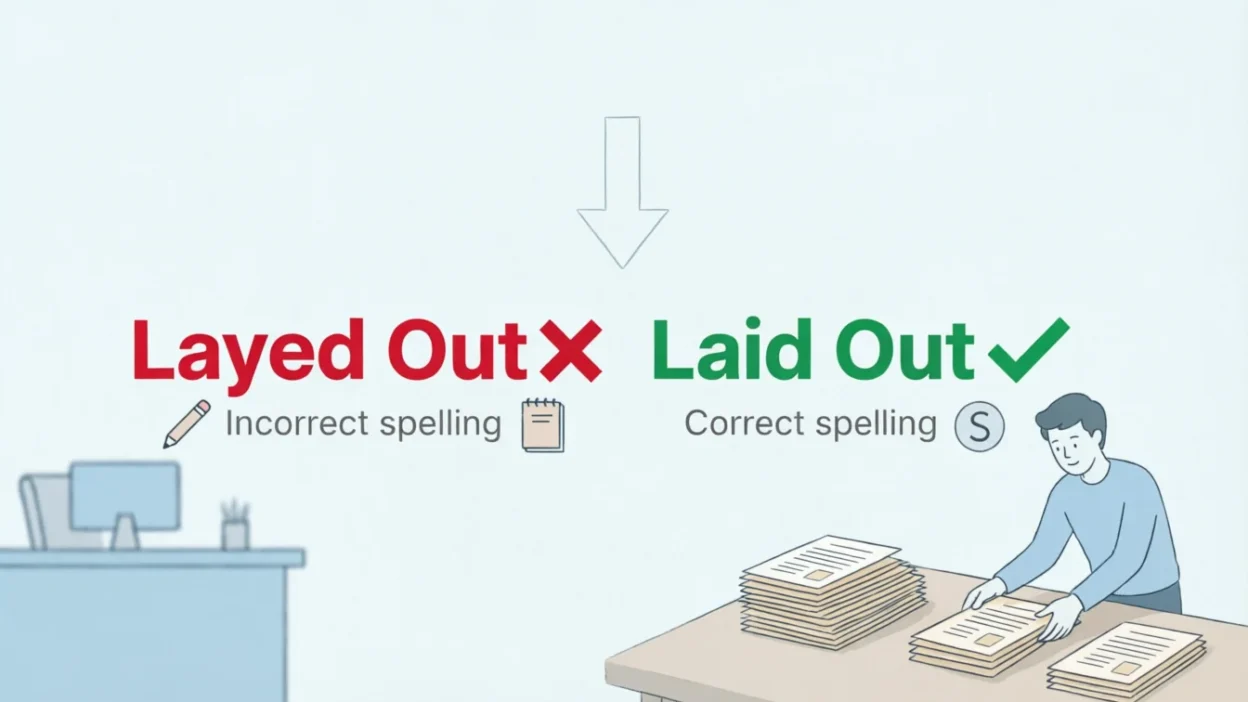
“Laid out” is correct.
“Layed out” is not a standard word in English and should be avoided in almost all cases.
What Does “Laid Out” Mean?
“Laid out” is the past tense and past participle of the verb “lay,” which means to put or place something down in a flat position.
It can also have extended meanings, such as:
- Organizing or arranging something clearly
- Presenting ideas or plans
- Preparing something carefully
Examples:
- She laid out the clothes for tomorrow.
- The teacher laid out the rules clearly.
- He laid out his strategy before starting the project.
Is “Layed Out” Ever Correct?
In standard English, “layed” is not considered correct, so “layed out” is almost always wrong.
The confusion comes from misunderstanding verb forms. The correct past tense of lay is laid, not layed.
However, you might rarely see “layed” in informal writing or misspellings—but it’s not accepted in formal, academic, or professional contexts.
Why Do People Confuse “Layed Out” and “Laid Out”?
This mistake usually happens because of:
- Similar pronunciation of laid and layed
- Confusion between lay and lie
- Overgeneralizing regular verb patterns (adding “-ed”)
Here’s the key:
- Lay → Laid → Laid
- NOT “Lay → Layed”
“Lay” vs “Lie”: The Root of the Confusion
Understanding this helps avoid mistakes altogether.
- Lay (needs an object):
I lay the book on the table.
Past: I laid the book on the table. - Lie (no object):
I lie down to rest.
Past: I lay down to rest.
That’s where things get tricky—because lay is also the past tense of lie!
Example:
- Present: I lie down
- Past: I lay down
- Past participle: I have lain down
But:
- Present: I lay the book
- Past: I laid the book
Comparison Table: Layed Out vs Laid Out
| Term | Correct? | Meaning | Usage Example |
|---|---|---|---|
| Laid out | ✅ Yes | Placed, arranged, or presented | She laid out the documents clearly. |
| Layed out | ❌ No | Incorrect spelling | ❌ He layed out the plan. |
Common Mistakes to Avoid
Here are some typical errors people make:
- ❌ Writing “layed out” instead of “laid out”
- ❌ Assuming all past tense verbs end in “-ed”
- ❌ Confusing “lay” and “lie”
Incorrect vs Correct Examples:
- ❌ She layed out the design.
- ✅ She laid out the design.
- ❌ They layed out the plan yesterday.
- ✅ They laid out the plan yesterday.
When to Use “Laid Out” in Different Contexts
“Laid out” is versatile and can be used in many everyday situations.
1. Physical Placement
- He laid out the tools on the table.
2. Organizing Ideas
- The report laid out the main findings clearly.
3. Planning or Explaining
- She laid out her goals for the year.
4. Informal Usage (Slang)
In casual contexts, “laid out” can also mean:
- Knocked down or unconscious
He was completely laid out after the match.
American vs British English Differences
Good news—there’s no difference between American and British English in this case.
- Both use “laid out” as the correct form
- Both consider “layed out” incorrect
So whether you’re writing for a US or UK audience, the rule stays the same.
Tips to Remember the Correct Form
Here are a few simple ways to avoid the mistake:
- Think: “I laid it down” (not “layed”)
- Remember: Irregular verbs don’t follow “-ed” rules
- If in doubt, replace with “placed”
- She placed it out → She laid it out
FAQs
What is correct: layed out or laid out?
“Laid out” is correct. “Layed out” is a misspelling and should not be used in standard English.
Why do people write “layed out”?
People often assume the past tense of “lay” follows a regular pattern and add “-ed,” which leads to the incorrect form.
Is “layed” ever a real word?
No, “layed” is not considered a correct standard English word. The correct past tense of “lay” is “laid.”
Can I use “laid out” in formal writing?
Yes, “laid out” is completely correct and widely used in both formal and informal writing.
What is the difference between “laid out” and “set out”?
“Laid out” focuses on placing or arranging, while “set out” often means to begin or establish something.
Is “laid out” used in business writing?
Yes, it is commonly used to present plans, ideas, or strategies clearly in professional contexts.
How can I avoid this mistake in exams?
Memorize the verb forms: “lay → laid → laid.” Practice using it in sentences to build confidence.
Summary
The difference between layed out vs laid out is simple once you understand it: “laid out” is always correct, while “layed out” is a common mistake. This confusion usually comes from irregular verb forms and assumptions about past tense endings.
By remembering that “lay” becomes “laid,” you can avoid this error in both everyday writing and professional communication. Whether you’re describing physical placement, organizing ideas, or explaining a plan, “laid out” is the correct and reliable choice.

William Harved is a passionate language enthusiast and digital writer specializing in English spelling, grammar clarity, and common writing mistakes. As the primary author of Spelword.com, he focuses on helping readers understand confusing word pairs, correct spelling errors, and improve everyday communication.