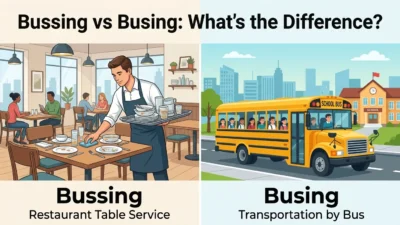
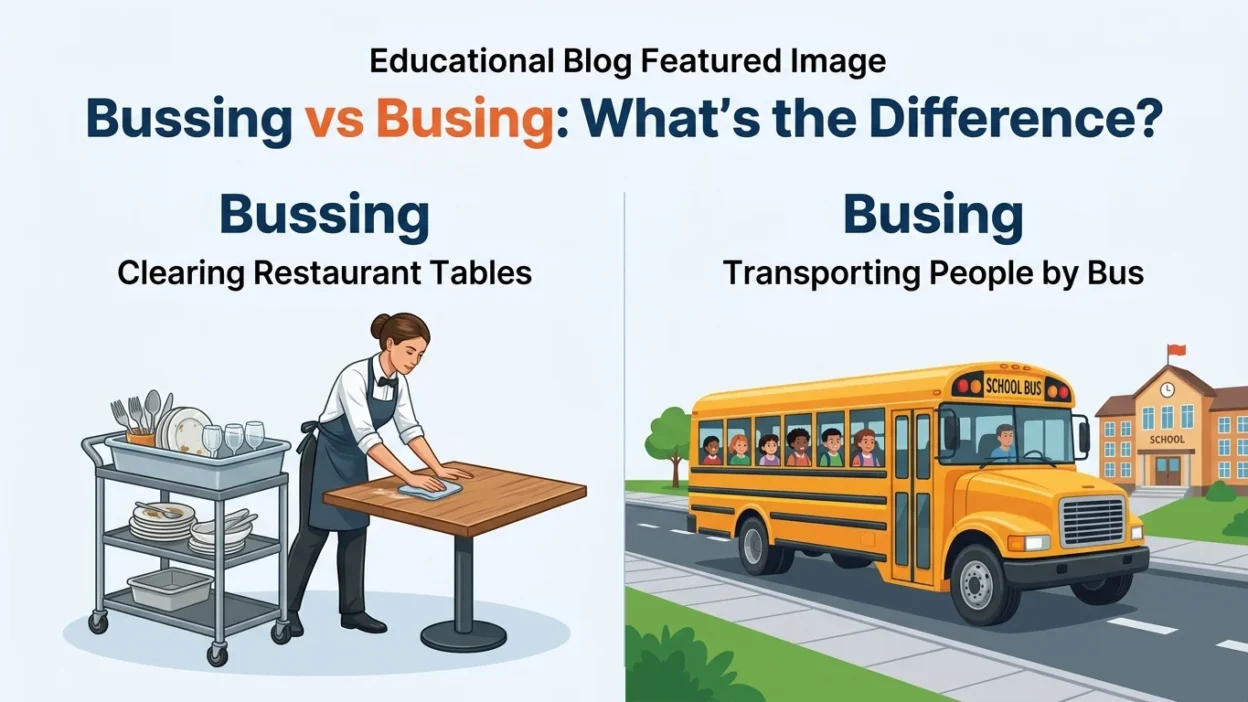
If you’ve ever written bussing or busing and paused to wonder which spelling is correct, you’re certainly not alone. These two forms often create confusion because both appear in dictionaries, style guides, and everyday writing. Depending on the context, one spelling may be preferred over the other.
Understanding the difference between bussing vs busing is important for students, writers, teachers, and professionals who want to communicate clearly. While the words are closely related and often interchangeable, spelling preferences can vary based on meaning, region, and style conventions.
Quick Answer
Both bussing and busing are correct spellings, but they are often used in different contexts.
- Busing is the more common spelling for transporting people by bus, especially in American English.
- Bussing is frequently used in the restaurant industry to describe clearing tables.
Examples
- The school district is busing students to nearby schools.
- The waiter is bussing tables during the lunch rush.
Although both words come from the noun bus, their preferred usage differs depending on context.
What Does “Busing” Mean?
Busing refers to transporting people by bus. It is commonly used in discussions about schools, public transportation, and organized travel.
The word is formed by adding -ing to bus. Many modern style guides favor busing because it follows a simplified spelling pattern.
Examples of Busing
- The city is busing residents to evacuation centers.
- The school district began busing students across town.
- The company is busing employees to the conference venue.
- Special programs provide busing for children in rural areas.
- The government increased funding for student busing services.
In these examples, busing clearly refers to transportation by bus.
What Does “Bussing” Mean?
Bussing is often associated with the restaurant industry. A person who clears dishes, wipes tables, and prepares seating areas for new customers is commonly called a busser, and the activity is known as bussing tables.
While some dictionaries accept bussing as an alternative spelling for transportation by bus, it is more commonly connected with restaurant work.
Examples of Bussing
- She spent the evening bussing tables at the café.
- The restaurant hired extra staff for bussing duties.
- He was bussing tables while attending college.
- Effective bussing keeps the dining room organized.
- The server helped with bussing during the busy dinner shift.
In hospitality settings, bussing is generally the preferred spelling.
Bussing vs Busing: Comparison Table
| Feature | Bussing | Busing |
|---|---|---|
| Primary Meaning | Clearing restaurant tables | Transporting people by bus |
| Common Industry | Hospitality and restaurants | Transportation and education |
| Accepted Spelling | Yes | Yes |
| Most Common Usage | Restaurant work | School and public transport |
| Example | Bussing tables after customers leave | Busing students to school |
This distinction helps writers choose the spelling that best fits their intended meaning.
Why Are There Two Spellings?
The confusion comes from English spelling rules and historical usage.
Normally, when a verb ends with a consonant after a short vowel, the final consonant is doubled before adding -ing. Following that rule, bus becomes bussing.
However, many style guides adopted the simplified spelling busing for transportation-related uses. Over time, this spelling became widely accepted and is now commonly used in newspapers, educational writing, and government documents.
As a result, both spellings exist today.
When Should You Use Busing?
Use busing when discussing transportation by bus.
Common Situations
- School transportation
- Public transit programs
- Employee transportation
- Community shuttle services
- Government transportation policies
Examples
- The district is busing students to neighboring schools.
- Emergency crews are busing residents away from flooded areas.
- The company is busing workers between offices.
Most readers immediately recognize busing as transportation-related.
When Should You Use Bussing?
Use bussing when referring to restaurant operations, especially clearing tables and removing dishes.
Common Situations
- Restaurant jobs
- Hospitality training
- Dining room management
- Food service operations
Examples
- She earns extra money by bussing tables.
- Proper bussing improves customer experience.
- The staff divided serving and bussing responsibilities.
This spelling helps distinguish restaurant work from transportation activities.
Common Mistakes With Bussing and Busing
Writers often make errors because both spellings appear correct.
Mistake 1: Using Bussing for School Transportation
Incorrect:
- The district is bussing students to another school.
Preferred:
- The district is busing students to another school.
Mistake 2: Using Busing for Restaurant Duties
Less Common:
- She spent the evening busing tables.
Preferred:
- She spent the evening bussing tables.
Mistake 3: Assuming One Spelling Is Always Wrong
Many people believe one version is incorrect. In reality, both spellings are recognized. Context usually determines the preferred choice.
Examples in Everyday Sentences
Here are additional examples to show the difference clearly.
Busing Examples
- The city is busing visitors to the festival grounds.
- Schools provide busing for eligible students.
- The organization is busing volunteers to the event.
- Weather conditions delayed the busing schedule.
- The district expanded its busing routes.
Bussing Examples
- The employee spent hours bussing tables.
- Efficient bussing helps restaurants operate smoothly.
- She learned serving and bussing responsibilities quickly.
- The manager assigned two workers to bussing duties.
- Customers appreciated the prompt bussing service.
Bussing vs Busing in American and British English
The distinction between bussing and busing is more noticeable in American English.
American English
- Busing is strongly preferred for transportation.
- Bussing is commonly used for restaurant work.
British English
British English generally follows similar patterns, although the transportation meaning may sometimes appear with either spelling depending on the publication or style guide.
In modern writing, busing remains the most common choice when discussing transportation in both varieties of English.
Style Guide Preferences
Many professional publications and educational institutions recommend:
- Busing for transportation by bus
- Bussing for restaurant table-clearing activities
This approach reduces ambiguity and helps readers understand the intended meaning immediately.
When writing for schools, government organizations, or news outlets, busing is usually the safest choice for transportation contexts.
Easy Trick to Remember the Difference
A simple memory aid can help.
Busing = Bus Transportation
Think of busing as directly connected to the vehicle bus.
Example:
- Busing students
- Busing passengers
- Busing workers
Bussing = Restaurant Service
Notice the double s in bussing.
You can associate the extra s with service in a restaurant.
Example:
- Bussing tables
- Bussing dishes
- Bussing dining areas
This quick trick makes choosing the correct spelling much easier.
FAQs
Is bussing or busing correct?
Both are correct. However, busing is usually preferred for transportation, while bussing is often preferred for restaurant work.
What does busing mean?
Busing means transporting people by bus, such as students, employees, or passengers.
What does bussing mean in a restaurant?
Bussing refers to clearing tables, removing dishes, and preparing seating areas for new customers.
Why are there two spellings?
Different spelling conventions developed over time. Both became accepted, but they are often used in different contexts today.
Is bussing students wrong?
Not necessarily. Some dictionaries accept it, but most modern style guides prefer busing when referring to transportation.
Is busing tables incorrect?
It is not technically incorrect, but bussing tables is much more common in restaurant-related writing.
Which spelling should I use in formal writing?
Use busing for transportation-related topics and bussing for restaurant service tasks.
Do American and British English use different spellings?
Both varieties generally prefer busing for transportation, though minor style differences may occur between publications.
Summary
The debate over bussing vs busing comes down largely to context. Both spellings are accepted in modern English, but busing is the preferred spelling when referring to transporting people by bus. It is commonly used in education, public transportation, government policies, and news reporting.
Meanwhile, bussing is most often associated with restaurant work, particularly clearing tables and assisting dining room operations. Choosing the spelling that matches the context helps readers understand your meaning instantly and ensures your writing looks polished and professional.

William Harved is a passionate language enthusiast and digital writer specializing in English spelling, grammar clarity, and common writing mistakes. As the primary author of Spelword.com, he focuses on helping readers understand confusing word pairs, correct spelling errors, and improve everyday communication.