Have you ever heard someone say “yea” or “nay” during a vote and wondered what those words actually mean? While they may sound old fashioned, yea and nay are still used today in specific contexts, especially in government proceedings, formal voting, and historical discussions. Because they aren’t part of everyday conversation for most people, many writers and English learners confuse them with similar words like yeah and nay.
Understanding the difference between yea vs nay can help you interpret formal documents, historical texts, legislative votes, and even literary works more accurately. In this guide, you’ll learn the meaning of each word, how to use them correctly, common mistakes to avoid, and practical examples that make these terms easy to remember.
Quick Answer
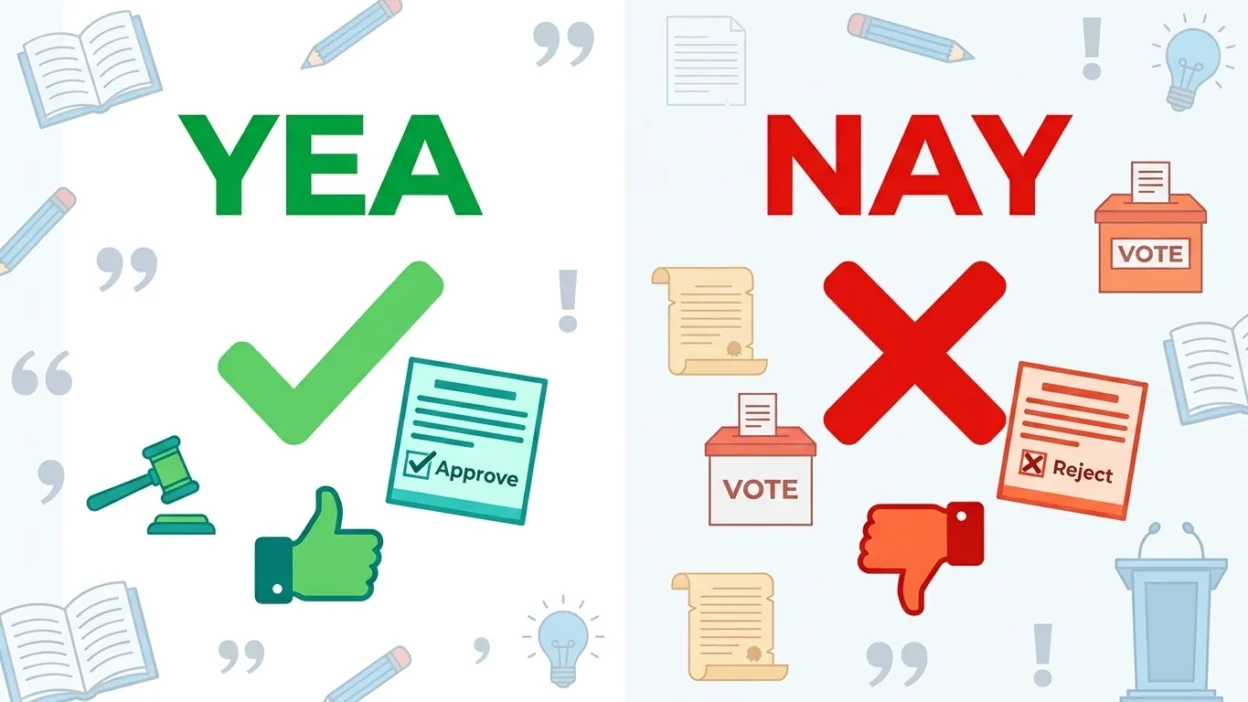
The difference between yea and nay is simple:
- Yea means yes, approval, or agreement.
- Nay means no, disapproval, or rejection.
Examples
✅ The committee voted yea on the proposal.
✅ Three members voted nay.
Think of them as formal versions of:
- Yea = Yes
- Nay = No
These terms are most commonly used in official voting situations.
What Does “Yea” Mean?
The word yea is an affirmative response that means yes, agreement, approval, or support.
Historically, it has been used in English for centuries and remains common in parliamentary and legislative voting procedures.
Meaning of Yea
- Yes
- Approval
- Agreement
- Support for a proposal or motion
Examples of Yea
- The council voted yea on the new policy.
- Twenty senators voted yea.
- Those in favor should answer yea.
In each example, yea expresses a positive vote or approval.
What Does “Nay” Mean?
The word nay is the opposite of yea. It means no, rejection, opposition, or disapproval.
It is frequently used in formal voting procedures to indicate opposition to a proposal.
Meaning of Nay
- No
- Rejection
- Opposition
- Disapproval
Examples of Nay
- Five members voted nay.
- The motion failed because too many voted nay.
- Those opposed should answer nay.
Whenever someone votes nay, they are voting against the proposal.
Yea vs Nay: Comparison Table
| Feature | Yea | Nay |
|---|---|---|
| Meaning | Yes | No |
| Function | Approval | Rejection |
| Voting Position | In favor | Against |
| Tone | Positive | Negative |
| Common Usage | Formal voting | Formal voting |
| Modern Equivalent | Yes | No |
The easiest way to remember the difference is that yea supports while nay opposes.
Where Are Yea and Nay Used?
Although these words are not common in casual conversation, they still appear in several important contexts.
1. Government and Legislative Voting
The most common modern use is in official votes.
Examples:
- The bill passed with 72 yeas and 28 nays.
- Members cast their yea or nay votes.
Many parliaments, congresses, and legislative bodies use these terms during roll-call votes.
2. Historical Documents
Older texts frequently contain yea and nay.
Examples:
- Historical parliamentary records
- Legal documents
- Government archives
3. Religious and Literary Writing
Some religious translations and literary works use yea to emphasize agreement or certainty.
Example:
- “Yea, though I walk through the valley…”
In such contexts, yea may mean “indeed,” “truly,” or “yes.”
Understanding “Yea” vs “Yeah”
One of the most common grammar mistakes is confusing yea with yeah.
Yea
- Formal
- Means yes
- Used in voting and historical contexts
Yeah
- Informal
- Casual version of yes
- Used in everyday speech
Examples
✅ The senator voted yea.
✅ Yeah, I understand what you mean.
❌ The senator voted yeah.
In formal voting, yea is always the correct choice.
Common Mistakes with Yea and Nay
Many English learners make errors because these words are uncommon in daily communication.
Mistake 1: Confusing Yea with Yeah
❌ The committee voted yeah.
✅ The committee voted yea.
Remember: yeah is casual speech, while yea is a formal vote.
Mistake 2: Using Nay as “Maybe”
❌ I might attend the event, nay.
✅ I might not attend the event.
Nay means no, not uncertainty.
Mistake 3: Using Yea in Everyday Conversation
❌ Yea, I want pizza for dinner.
✅ Yeah, I want pizza for dinner.
While technically understandable, modern speakers usually use yeah in casual situations.
Mistake 4: Mixing Formal and Informal Language
❌ The members voted yea, and everyone said yeah afterward.
Although grammatically possible, be mindful of context and tone.
How to Remember the Difference
A simple memory trick can help.
Yea = Yes
Both words begin with the same sound:
Yea → Yes
Think:
- Yea = Approval
- Yea = Positive vote
Nay = No
Both words indicate rejection.
Think:
- Nay = No
- Nay = Negative vote
This association makes the distinction easy to remember.
Examples of Yea and Nay in Sentences
Yea Examples
- The board voted yea on the proposal.
- Twelve representatives voted yea.
- The motion received more yeas than expected.
- Every member answered yea during the roll call.
Nay Examples
- Three directors voted nay.
- The proposal failed after several nay votes.
- One senator voted nay.
- The measure received more nays than yeas.
These examples show how the words function in formal decision-making settings.
Synonyms and Related Terms
Understanding related vocabulary can help expand your knowledge.
Synonyms for Yea
- Yes
- Agree
- Approve
- Support
- Affirmative
- In favor
Synonyms for Nay
- No
- Oppose
- Reject
- Negative
- Against
- Disapprove
These alternatives are more common in everyday communication.
Yea and Nay in Modern English
While still valid English words, yea and nay are considered somewhat specialized today.
Most people encounter them in:
- Legislative proceedings
- Government reports
- Historical writing
- Political coverage
- Formal voting records
In ordinary conversation, speakers almost always use yes and no instead.
Modern Example
News reports often say:
- The bill passed with 250 yeas and 180 nays.
This remains standard terminology in many legislative bodies worldwide.
American vs British English
When comparing yea vs nay, there is virtually no difference between American and British English.
Both varieties use:
- Yea for formal approval
- Nay for formal rejection
The words may appear more frequently in parliamentary records, legislative documents, and historical texts than in everyday speech.
Pronunciation
American and British speakers generally pronounce them similarly:
- Yea = /yeɪ/
- Nay = /neɪ/
The meaning remains identical across both forms of English.
Why Understanding Yea vs Nay Matters
Learning these terms can improve your:
- Reading comprehension
- Historical understanding
- Political literacy
- Vocabulary knowledge
- Formal writing skills
Even though they are not everyday words, knowing their meanings helps you understand official documents, voting results, and historical records more accurately.
Frequently Asked Questions (FAQs)
What is the difference between yea and nay?
Yea means yes or approval, while nay means no or rejection.
Is yea the same as yeah?
No. Yea is a formal voting term, while yeah is an informal way of saying yes.
Where are yea and nay used today?
They are commonly used in legislative votes, government proceedings, and formal decision-making processes.
Can I use yea in casual conversation?
You can, but most native speakers use yeah or yes in everyday situations.
What does nay mean?
Nay means no, opposition, rejection, or disagreement.
Why do governments use yea and nay?
These terms provide a clear and traditional way to record official votes.
Is nay still used in modern English?
Yes, especially in political, governmental, and parliamentary contexts.
What is easier to remember: yea or nay?
Think of yea = yes and nay = no. Both pairs share similar sounds and meanings.
Summary
The distinction between yea vs nay is straightforward once you understand their roles. Yea means yes, approval, or support, while nay means no, rejection, or opposition. These words are most commonly used in legislative voting, formal proceedings, and historical writing.
Although modern English speakers usually say yes and no, knowing the meaning of yea and nay helps you better understand government records, historical documents, and political discussions. Their usage may be specialized, but they remain important parts of the English language.

William Harved is a passionate language enthusiast and digital writer specializing in English spelling, grammar clarity, and common writing mistakes. As the primary author of Spelword.com, he focuses on helping readers understand confusing word pairs, correct spelling errors, and improve everyday communication.