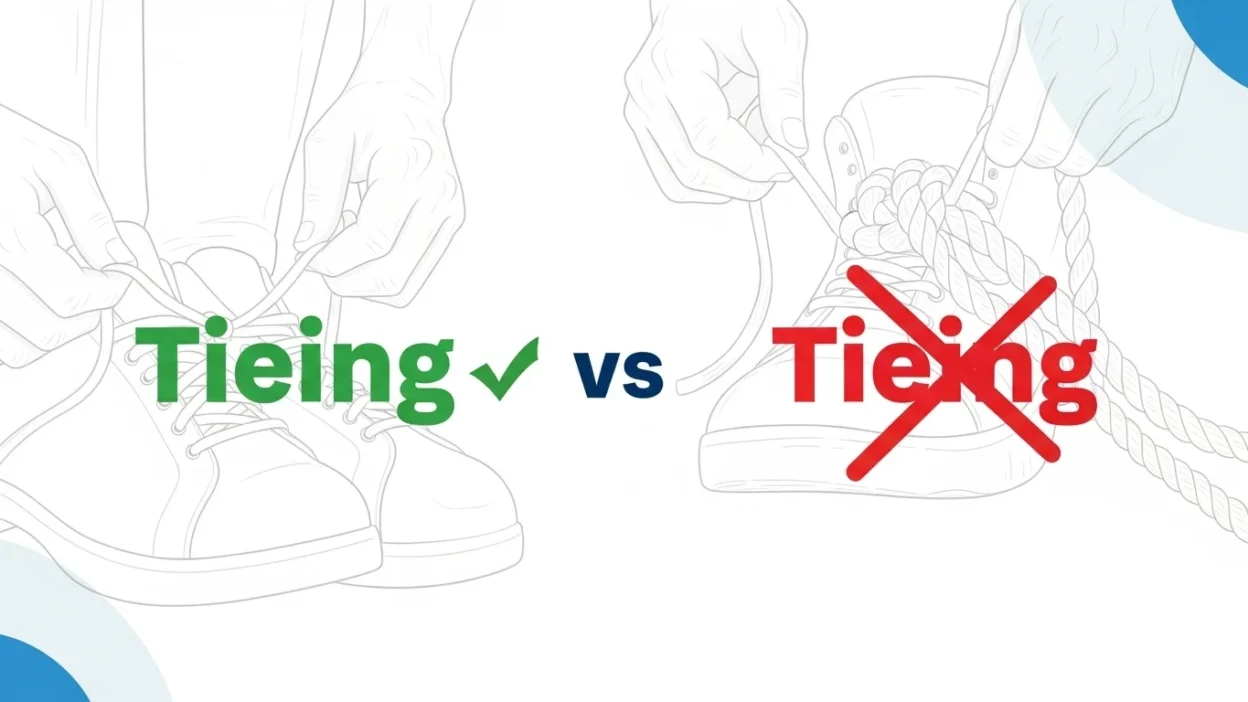
If you’ve ever paused while writing tieing or tying, you’re not alone. This is one of those tricky spelling moments where both versions look reasonable but only one is actually correct in modern English.
The confusion often comes from how English handles words ending in “ie.” In this guide, we’ll break down tieing vs tying in a simple, friendly way so you can understand the rule, avoid mistakes, and use the correct spelling with confidence.
Quick Answer: Tieing vs Tying
- Tying is the correct spelling.
- Tieing is incorrect and should not be used.
What Does “Tying” Mean?
Tying is the present participle (or gerund) of the verb tie, which means to fasten, attach, or secure something using a knot or similar method.
Definition:
The act of fastening or binding something with a string, rope, or similar material.
Examples:
- She is tying her shoelaces.
- He is tying the rope to the post.
- They are tying decorations for the event.
It’s commonly used in everyday conversation, writing, and instructions.
Is “Tieing” a Real Word?
No, tieing is not considered correct in standard English. It is a common spelling mistake.
Why does this happen?
- People assume you just add “-ing” to tie → tieing
- But English spelling rules change the word slightly
- The “ie” changes to “y” before adding “-ing”
So instead of tieing, the correct form becomes tying.
Tieing vs Tying: Key Differences
| Feature | Tying | Tieing |
|---|---|---|
| Correct spelling | ✅ Yes | ❌ No |
| Meaning | Fastening or securing | No meaning in English |
| Usage | Formal and informal writing | Should not be used |
| Grammar role | Present participle/gerund | Not a valid form |
Why “Tying” Is Spelled This Way
English has a specific rule for verbs ending in “ie.”
When adding “-ing”:
- The “ie” changes to “y”
- Then “-ing” is added
Examples:
- tie → tying
- die → dying
- lie → lying
This rule helps maintain smooth pronunciation and consistent spelling patterns.
Examples of “Tying” in Different Contexts
In daily life:
- She is tying a ribbon around the gift.
In instructions:
- Start by tying a knot at the end of the string.
In sports:
- The team is tying the score in the final minutes.
In storytelling:
- He kept tying loose ends before leaving.
The word is versatile and used in both literal and figurative contexts.
Common Mistakes to Avoid
Even though the rule is simple, these mistakes happen often:
1. Writing “tieing” instead of “tying”
Incorrect: He is tieing his shoes.
Correct: He is tying his shoes.
2. Forgetting the “ie → y” rule
This is the main reason for the confusion.
3. Applying regular verb patterns incorrectly
Not all verbs simply add “-ing”—some require spelling changes.
4. Ignoring proofreading
Small errors like this can slip through if you don’t double-check your writing.
Easy Ways to Remember the Correct Spelling
Here are a few simple tricks:
- Think: “ie becomes y before -ing”
- Remember examples like dying and lying
- Practice writing tying in sentences
Once you understand the pattern, it becomes much easier to remember.
American vs British English Differences
There is no difference between American and British English for this word:
- Both use tying as the correct spelling
- Tieing is incorrect in all forms of English
This consistency makes the rule easy to apply everywhere.
Why Correct Spelling Matters
Even small spelling mistakes can affect your writing.
- Clarity: Correct spelling ensures your message is understood
- Professionalism: Proper grammar builds trust
- Credibility: Accurate writing reflects strong language skills
- Engagement: Clean writing keeps readers focused
Using tying correctly helps your writing appear polished and reliable.
Frequently Asked Questions (FAQs)
Is tieing ever correct in English?
No, tieing is not correct. The proper spelling is tying.
Why does tie become tying instead of tieing?
Because of the rule where “ie” changes to “y” before adding “-ing.”
What is the meaning of tying?
Tying means fastening or securing something with a knot or similar method.
Are there other words like tying?
Yes, words like dying (from die) and lying (from lie) follow the same rule.
Can tying be used in formal writing?
Yes, tying is appropriate in both formal and informal contexts.
Is there any regional difference in spelling?
No, both American and British English use tying.
How can I remember the correct form?
Remember the rule: “ie becomes y before -ing.”
Summary
The difference between tieing vs tying comes down to a simple spelling rule. Tying is the correct form and follows the standard English rule where “ie” changes to “y” before adding “ing.” On the other hand, tieing is a common mistake that should be avoided in all types of writing.
By understanding this pattern and practicing correct usage, you can avoid confusion and improve your writing accuracy. Small details like this make a big difference in creating clear, professional, and confident communication.

William Harved is a passionate language enthusiast and digital writer specializing in English spelling, grammar clarity, and common writing mistakes. As the primary author of Spelword.com, he focuses on helping readers understand confusing word pairs, correct spelling errors, and improve everyday communication.