
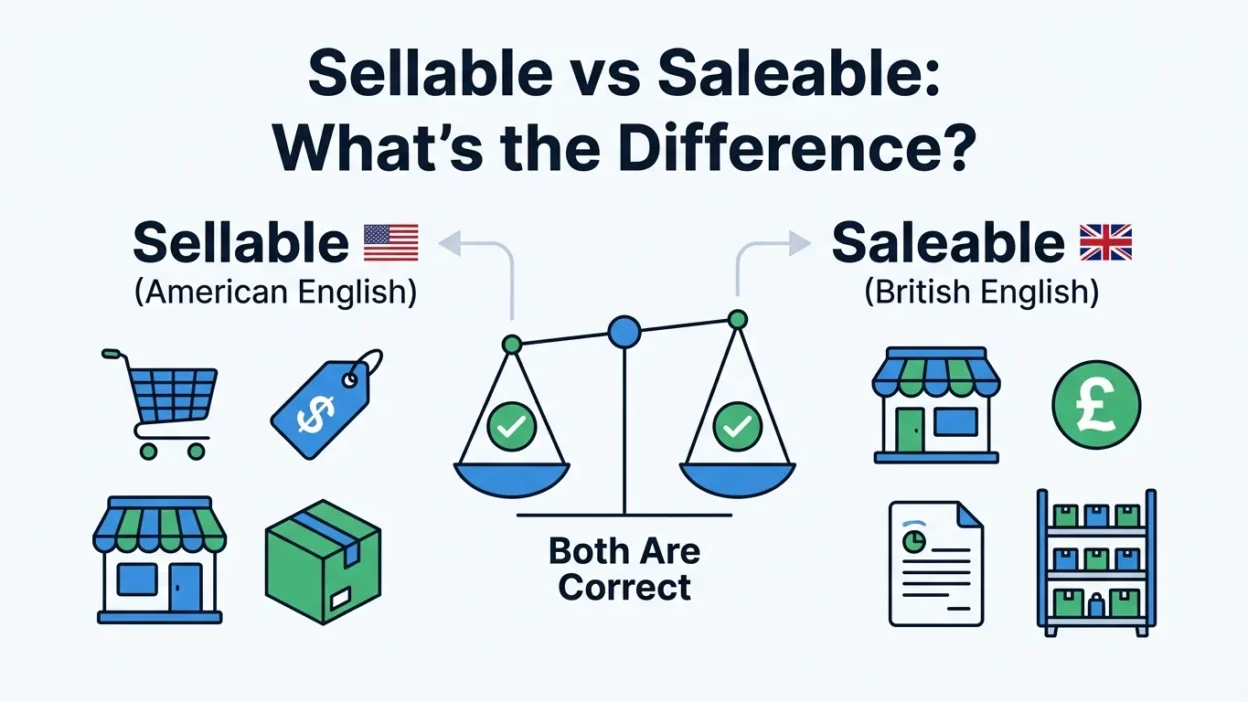
If you’ve ever written about products, marketing, or business, you’ve probably wondered whether sellable or saleable is the correct word. The two spellings look nearly identical, share the same meaning, and are both accepted in English, making it easy to feel unsure about which one to choose.
The good news is that you don’t have to memorize complicated grammar rules. In this guide, you’ll learn the difference between sellable vs saleable, when to use each spelling, how they compare in American and British English, and which one is the better choice for your audience.
Quick Answer
Both sellable and saleable are correct English adjectives that mean able to be sold or likely to sell successfully.
The primary difference is regional preference:
- Sellable is more common in American English.
- Saleable is more common in British English and formal business writing.
Although both words have the same meaning, it’s best to stay consistent throughout your writing.
| Word | Correct? | Common Usage |
|---|---|---|
| Sellable | ✅ Yes | American English |
| Saleable | ✅ Yes | British English and formal contexts |
What Does Sellable Mean?
Sellable means capable of being sold or likely to attract buyers.
The word is commonly used in marketing, retail, real estate, publishing, and business. It describes products, ideas, services, or content that customers are willing to purchase.
Example Sentences
- The designer created a sellable product for young professionals.
- Good packaging makes the item more sellable.
- The company focused on developing sellable software.
- A unique design can make almost any product more sellable.
- The agent suggested improvements to make the house more sellable.
What Does Saleable Mean?
Saleable has exactly the same meaning as sellable.
It refers to something that can be sold easily or has commercial value. While the meaning is identical, saleable appears more frequently in British English and in legal or commercial documents.
Example Sentences
- The artwork became saleable after authentication.
- The company produces saleable goods for export.
- Fresh packaging keeps food products saleable.
- The property remained saleable despite market changes.
- The business focuses on creating saleable products.
Sellable vs Saleable: Side-by-Side Comparison
| Feature | Sellable | Saleable |
|---|---|---|
| Correct spelling | ✅ Yes | ✅ Yes |
| Meaning | Able to be sold | Able to be sold |
| American English | More common | Less common |
| British English | Less common | More common |
| Formal business writing | Acceptable | Often preferred |
| Everyday marketing | Very common | Common |
Is There Any Difference in Meaning?
No.
There is no meaningful difference between sellable and saleable.
Both words describe:
- Products that can be sold
- Services customers will buy
- Property with market value
- Commercially attractive ideas
- Market-ready goods
The only real distinction is regional preference, not meaning.
Why Are There Two Spellings?
English has many words with multiple accepted spellings depending on historical usage and regional conventions.
The word saleable developed from the noun sale, while sellable comes directly from the verb sell.
Over time:
- American English increasingly favored sellable because it closely matches the verb sell.
- British English continued using saleable, especially in business and legal writing.
Today, both spellings are widely accepted.
When Should You Use Sellable?
Choose sellable if you’re writing for:
- American audiences
- Marketing blogs
- E-commerce websites
- Product descriptions
- Business presentations
- Social media content
Examples
- The company introduced a more sellable packaging design.
- This feature makes the software more sellable.
- High-quality photos make online products more sellable.
- The consultant offered ideas to make the brand more sellable.
When Should You Use Saleable?
Use saleable when writing for:
- British readers
- UK businesses
- Legal documents
- Financial reports
- Corporate policies
- Formal commercial writing
Examples
- The goods remained saleable throughout the season.
- Only saleable products are displayed in the showroom.
- The report assessed whether the assets were saleable.
- The company ensured all inventory remained saleable.
American vs British English
This is where the biggest difference appears.
American English
American writers generally prefer:
✅ Sellable
Examples:
- Sellable inventory
- Sellable products
- Sellable assets
British English
British writers more commonly use:
✅ Saleable
Examples:
- Saleable goods
- Saleable property
- Saleable merchandise
Despite these preferences, readers on both sides of the Atlantic usually understand either spelling without confusion.
Common Mistakes to Avoid
Here are some mistakes people often make.
Mixing Both Spellings
Choose one spelling and use it consistently throughout your document.
❌ The product is sellable, but not very saleable.
✅ The product is sellable, but not very attractive to buyers.
Or
✅ The product is saleable, but not very attractive to buyers.
Thinking One Is Incorrect
Many people assume one spelling must be wrong.
In reality:
- Sellable is correct.
- Saleable is also correct.
Confusing Sellable with Successful
A product can be sellable without becoming a bestseller.
For example:
A product may be legally sellable but still fail because customers don’t want it.
Examples in Everyday Writing
Marketing
Our new design is much more sellable than the previous version.
Retail
Only sellable inventory is included in this month’s report.
Real Estate
Fresh paint made the property more sellable.
Business
The company invested in creating saleable products for international markets.
Manufacturing
The factory checks every item before declaring it saleable.
Sellable vs Saleable Comparison Table
| Situation | Preferred Word |
|---|---|
| American blog | Sellable |
| British website | Saleable |
| US marketing campaign | Sellable |
| UK legal contract | Saleable |
| International audience | Either (stay consistent) |
| Academic writing | Either |
Related Words
Understanding related vocabulary can help you use these words naturally.
| Word | Meaning |
|---|---|
| Sell | To exchange something for money |
| Sale | The act of selling |
| Marketable | Attractive to buyers |
| Commercial | Related to business |
| Profitable | Producing financial gain |
| Merchandise | Goods for sale |
Although these words are related, sellable and saleable specifically describe something that can be sold.
Tips for Choosing the Right Spelling
If you’re still unsure, remember these simple guidelines.
Choose sellable if:
- Your audience is mainly American.
- You’re writing online content.
- You’re creating marketing materials.
Choose saleable if:
- Your readers are British.
- You’re preparing legal or corporate documents.
- Your organization already uses British English.
For international audiences, either spelling works as long as you remain consistent.
Frequently Asked Questions
Is sellable a real word?
Yes. Sellable is a correct English word that means capable of being sold or likely to attract buyers.
Is saleable also correct?
Yes. Saleable is equally correct and has the same meaning as sellable.
What is the difference between sellable and saleable?
The difference is mainly regional. American English usually prefers sellable, while British English more often uses saleable.
Which spelling should I use in business writing?
Use the spelling that matches your audience. American businesses generally use sellable, while British organizations often prefer saleable.
Are sellable and saleable interchangeable?
Yes. They are interchangeable because they share the same meaning. Just avoid switching between them in the same document.
Which spelling is more common in American English?
Sellable is considerably more common in American English.
Which spelling is preferred in British English?
British English generally favors saleable, especially in formal or commercial contexts.
Summary
The debate over sellable vs saleable isn’t about right versus wrong it’s about regional preference. Both words correctly describe something that can be sold or is likely to sell successfully. The key distinction is that sellable is more common in American English, while saleable is generally preferred in British English and some formal business settings.
No matter which spelling you choose, consistency is the most important rule. Match your audience’s language style, use the same spelling throughout your document, and you’ll communicate clearly and professionally. Whether you’re writing product descriptions, business reports, or marketing content, both words are grammatically correct and widely understood.

William Harved is a passionate language enthusiast and digital writer specializing in English spelling, grammar clarity, and common writing mistakes. As the primary author of Spelword.com, he focuses on helping readers understand confusing word pairs, correct spelling errors, and improve everyday communication.