Have you ever paused while writing and wondered whether to use sew or sow? You’re not alone. These two words sound exactly the same in many accents, making them easy to confuse. However, they have completely different meanings and are used in very different situations.
Understanding the difference between sew vs sow can help you communicate more clearly and avoid common writing mistakes. Whether you’re talking about making clothes, planting seeds, or using these words figuratively, this guide will explain everything you need to know in simple terms.
Quick Answer
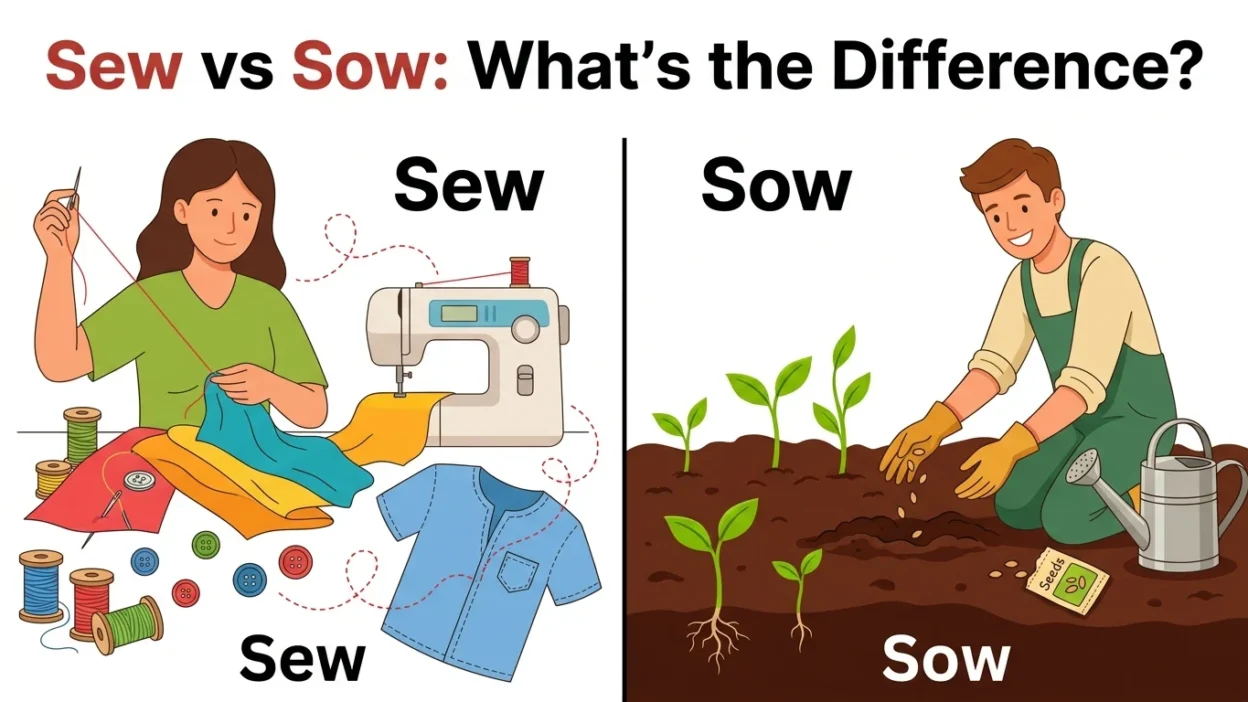
Sew means to join fabric or other materials together using a needle and thread.
Sow means to plant seeds in the ground or to spread something that may grow or develop over time.
Examples:
- She learned how to sew a dress.
- Farmers sow seeds in the spring.
If you’re talking about stitching fabric, use sew. If you’re talking about planting seeds or spreading ideas, use sow.
What Does Sew Mean?
The word sew is a verb that refers to joining materials together with a needle and thread. It is commonly associated with clothing, textiles, crafts, and repairs.
People sew garments, blankets, curtains, and many other fabric items.
Examples of Sew in Sentences
- My grandmother taught me how to sew.
- She can sew her own clothes.
- I need to sew a button back onto my shirt.
- He sewed the torn pocket carefully.
- They sew costumes for school plays.
Common Uses of Sew
You may use sew when talking about:
- Making clothing
- Repairing fabric
- Needlework
- Tailoring
- Craft projects
Because sewing is a practical skill, the word frequently appears in fashion, home improvement, and hobby-related discussions.
What Does Sow Mean?
The word sow is also a verb, but its meaning is completely different. It primarily means to plant seeds in the ground so that crops, flowers, or plants can grow.
It can also be used figuratively to mean introducing or spreading something that may develop later.
Examples of Sow in Sentences
- Farmers sow wheat every year.
- We plan to sow flower seeds this weekend.
- The gardener sowed vegetables in early spring.
- Kind words can sow hope.
- Rumors may sow confusion among people.
Common Uses of Sow
You may use sow when discussing:
- Agriculture
- Gardening
- Planting crops
- Growth and development
- Ideas, emotions, or beliefs
The figurative meaning is especially common in expressions such as “sow the seeds of success” or “sow doubt.”
Sew vs Sow: Comparison Table
| Feature | Sew | Sow |
|---|---|---|
| Meaning | Join fabric with needle and thread | Plant seeds or spread something |
| Part of Speech | Verb | Verb |
| Common Context | Clothing, tailoring, repairs | Farming, gardening, growth |
| Literal Meaning | Stitch materials together | Place seeds in soil |
| Figurative Use | Rare | Very common |
| Example | Sew a shirt | Sow a field |
How to Remember the Difference
A simple memory trick can help.
Sew = Stitch
The word sew relates to sewing clothes, repairing fabric, and working with thread.
Think:
Sew = Stitching fabric together
Sow = Seeds
The word sow is connected to planting.
Think:
Sow = Seeds growing in soil
Whenever you see farming, gardening, or growth, sow is probably the correct choice.
Common Mistakes with Sew and Sow
Because these words are homophones, people often confuse them in writing.
Mistake #1: Using Sew for Planting
❌ Farmers sew corn every spring.
✅ Farmers sow corn every spring.
Planting requires sow, not sew.
Mistake #2: Using Sow for Stitching
❌ I need to sow a hole in my jacket.
✅ I need to sew a hole in my jacket.
Repairing clothing requires sew.
Mistake #3: Forgetting Figurative Meanings
❌ Her speech sewed confidence among the team.
✅ Her speech sowed confidence among the team.
When discussing the spread of ideas or emotions, use sow.
Sew in Everyday Language
The word sew appears frequently in practical situations.
Examples
- Can you sew this zipper?
- She enjoys sewing as a hobby.
- The tailor can sew custom suits.
- Learning to sew saves money on clothing repairs.
Even if you don’t sew regularly, you’ve likely encountered the word in fashion or home-related conversations.
Sow in Everyday Language
The word sow often appears in both literal and figurative contexts.
Literal Examples
- We will sow carrots in April.
- Farmers sow rice before the rainy season.
- Gardeners sow herbs throughout the year.
Figurative Examples
- Good leadership can sow trust.
- Negative comments may sow fear.
- Teachers sow curiosity in young minds.
- Hard work today can sow future success.
These figurative uses are very common in books, speeches, and everyday writing.
Idioms and Expressions Using Sow
The word sow appears in many well-known English expressions.
Sow the Seeds
This phrase means to begin something that may grow or develop later.
Examples:
- The project sowed the seeds of innovation.
- Their partnership sowed the seeds for future success.
You Reap What You Sow
This popular expression means that actions have consequences.
Examples:
- If you work hard, you reap what you sow.
- Kindness often returns because you reap what you sow.
Understanding these expressions can make it easier to recognize the correct use of sow.
American vs British English Differences
There is no significant difference between American and British English regarding sew and sow.
In both forms of English:
- Sew means to stitch fabric.
- Sow means to plant seeds or spread ideas.
Spelling and meaning remain the same on both sides of the Atlantic.
Why Are Sew and Sow Confused?
Several factors contribute to confusion.
Similar Pronunciation
In most English accents, sew and sow are pronounced the same way.
Similar Length
Both words contain only three letters, making them easy to mistype.
Different Meanings
Since they belong to completely different topics, writers sometimes choose the wrong word without noticing.
The best solution is to focus on the context of the sentence.
Quick Practice Examples
Choose the correct word.
- She learned to ___ a dress.
- Answer: sew
- Farmers ___ seeds before the growing season.
- Answer: sow
- The tailor can ___ custom clothing.
- Answer: sew
- Positive actions can ___ trust.
- Answer: sow
- I need to ___ a button on my coat.
- Answer: sew
These examples demonstrate how context quickly reveals the correct word.
FAQs
What is the difference between sew and sow?
Sew means to join fabric with a needle and thread. Sow means to plant seeds or spread something that may grow later.
Is sew used for clothing?
Yes. Sew is commonly used when making, repairing, or altering clothing and other fabric items.
What does sow mean in gardening?
In gardening, sow means placing seeds into the soil so plants can grow.
Can sow be used figuratively?
Yes. Sow can mean spreading ideas, emotions, beliefs, or influences that may develop over time.
Are sew and sow pronounced the same?
Yes. In most English accents, sew and sow are pronounced the same way, making them homophones.
How do I remember sew vs sow?
Remember that sew relates to stitching fabric, while sow relates to seeds and planting.
Is there a difference in British and American English?
No. Both American and British English use sew and sow with the same meanings and spellings.
What is an example of sow in a sentence?
An example is: The farmer will sow wheat before the rainy season.
Summary
Understanding sew vs sow is important because these words sound alike but have entirely different meanings. Sew refers to stitching fabric together using a needle and thread, while sow refers to planting seeds or spreading ideas and influences that may develop over time. Knowing the context of your sentence is the easiest way to choose the correct word.
Although these homophones are often confused, the distinction becomes clear when you remember their core meanings. If you’re talking about clothing, tailoring, repairs, or needlework, use sew. If you’re discussing farming, gardening, growth, or the spread of ideas, use sow. Mastering this simple difference will make your writing more accurate and professional.

William Harved is a passionate language enthusiast and digital writer specializing in English spelling, grammar clarity, and common writing mistakes. As the primary author of Spelword.com, he focuses on helping readers understand confusing word pairs, correct spelling errors, and improve everyday communication.