Many people use infection and infestation as if they mean the same thing, especially when talking about health problems. While both involve harmful organisms affecting people, animals, or plants, they describe two very different situations. Knowing the difference can help you communicate more accurately in everyday conversations, school assignments, and even medical discussions.
In this guide, you’ll learn the key differences between infection vs infestation, their meanings, examples, common mistakes, and when each term should be used. By the end, you’ll be able to choose the correct word with confidence.
Quick Answer
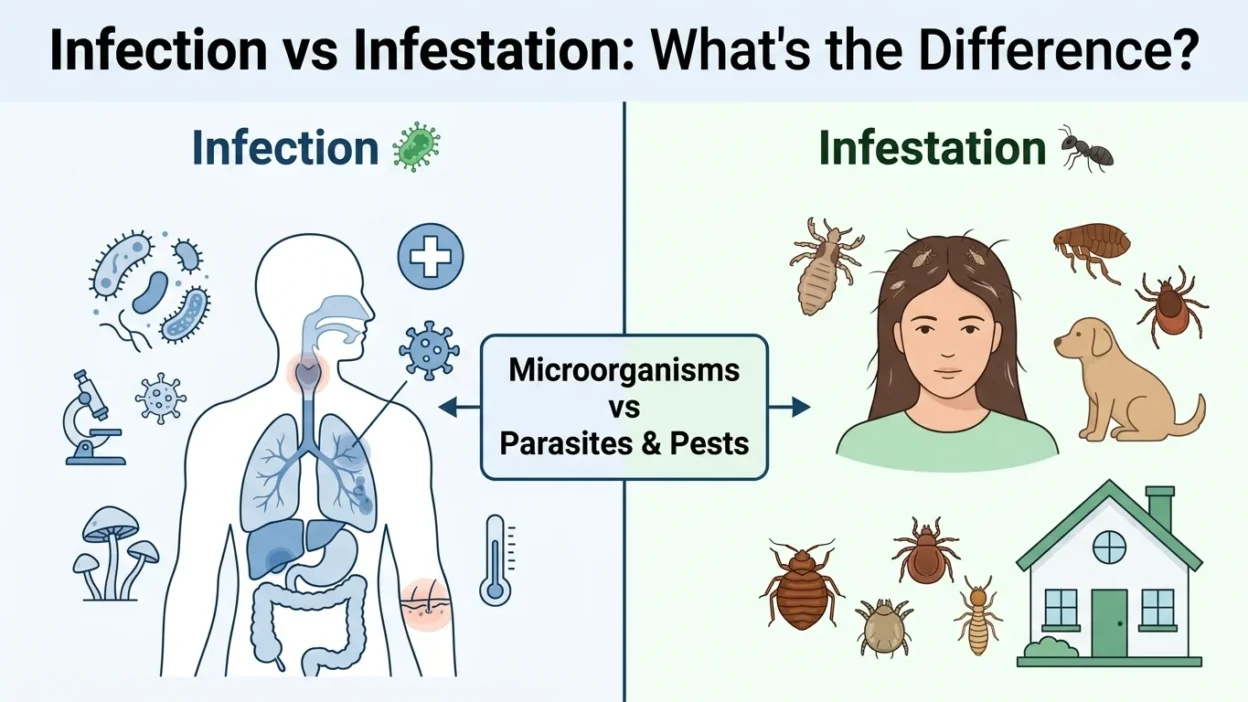
Infection occurs when microorganisms such as bacteria, viruses, fungi, or parasites enter the body, multiply, and cause disease.
Infestation occurs when larger parasites or pests, such as lice, fleas, ticks, mites, or worms, live on or inside a person, animal, plant, or place in significant numbers.
Simply put:
- Infection = Microorganisms causing disease
- Infestation = Visible parasites or pests living on or in a host or environment
| Word | Meaning | Common Examples |
|---|---|---|
| Infection | Disease caused by microorganisms | Flu, strep throat, COVID-19, fungal infections |
| Infestation | Presence of parasites or pests | Head lice, fleas, bed bugs, ticks |
What Is an Infection?
An infection happens when harmful microorganisms invade the body and begin multiplying. These organisms interfere with normal body functions and often trigger the immune system to respond.
Common organisms that cause infections include:
- Bacteria
- Viruses
- Fungi
- Protozoa
- Some microscopic parasites
An infection may affect almost any part of the body, including the skin, lungs, urinary tract, blood, digestive system, or brain.
Examples of Infections
- Influenza (flu)
- COVID-19
- Pneumonia
- Ear infection
- Urinary tract infection (UTI)
- Strep throat
- Ringworm (fungal infection)
- Tuberculosis
Example Sentences
- She developed a bacterial infection after surgery.
- The doctor prescribed antibiotics for the infection.
- Viral infections often improve without antibiotics.
- Good hygiene helps reduce the risk of infection.
What Is an Infestation?
An infestation refers to the presence of parasites or pests living on or inside a host or occupying a place in large numbers.
Unlike microorganisms that cause infections, infestations usually involve organisms that are visible to the naked eye or much larger than bacteria and viruses.
Infestations can affect:
- Humans
- Animals
- Plants
- Homes
- Farms
- Buildings
Examples of Infestations
- Head lice
- Fleas
- Bed bugs
- Ticks
- Cockroaches
- Termites
- Scabies mites
- Intestinal worms
Example Sentences
- The child stayed home because of a head lice infestation.
- The house had a serious termite infestation.
- Farmers treated the crop for insect infestation.
- The dog was suffering from a flea infestation.
Infection vs Infestation: Side-by-Side Comparison
| Feature | Infection | Infestation |
|---|---|---|
| Caused by | Microorganisms | Parasites or pests |
| Organisms involved | Bacteria, viruses, fungi, protozoa | Lice, fleas, ticks, mites, worms, insects |
| Usually visible | No | Often yes |
| Affects | Body tissues and organs | Skin, hair, body, plants, homes, animals |
| Treatment | Medicines such as antibiotics or antivirals | Removal of pests and antiparasitic treatment |
| Can spread | Yes | Yes, depending on the parasite or pest |
Key Differences Between Infection and Infestation
Although both terms involve harmful organisms, they differ in several important ways.
Type of Organism
An infection is caused by microscopic organisms.
An infestation involves larger parasites or pests.
Where They Occur
Infections usually affect internal tissues and organs.
Infestations commonly affect the skin, hair, digestive tract, homes, crops, or animals.
Treatment
Doctors often treat infections with:
- Antibiotics
- Antiviral medications
- Antifungal medicines
- Antiparasitic drugs
Infestations are usually treated by:
- Removing the pests
- Special shampoos
- Insecticides
- Environmental cleaning
- Pest control services
Can Parasites Cause Both Infection and Infestation?
Yes.
Some parasites can cause both, depending on how they affect the body.
For example:
- Head lice cause an infestation because they live on the scalp.
- Certain microscopic parasites may cause an infection because they invade body tissues.
Medical professionals determine the correct term based on the type of organism and how it behaves.
Examples in Everyday Life
Infection
A child develops a sore throat caused by bacteria.
This is an infection.
Infestation
A student brings home head lice from school.
This is an infestation.
Infection
Someone catches influenza during winter.
This is a viral infection.
Infestation
A family’s house becomes filled with termites.
This is a termite infestation.
Infection
A cut becomes infected with bacteria.
This is a bacterial infection.
Common Mistakes to Avoid
Many people confuse these two words. Here are the most common mistakes.
Calling Head Lice an Infection
❌ My child has a lice infection.
✅ My child has a lice infestation.
Calling Flu an Infestation
❌ I have a flu infestation.
✅ I have a flu infection.
Using the Terms Interchangeably
Although related, the words are not interchangeable.
Always consider:
- What type of organism is involved?
- Is it a microorganism or a visible parasite?
Infection and Infestation in Animals
Animals experience both conditions.
Common Infections
- Ear infections
- Respiratory infections
- Skin infections
- Bacterial diseases
Common Infestations
- Fleas
- Ticks
- Mange mites
- Worms
- Lice
Veterinarians use different treatments depending on whether the animal has an infection or an infestation.
Infection and Infestation in Plants
Plants can also suffer from both problems.
Plant Infections
These are often caused by:
- Fungi
- Viruses
- Bacteria
Examples include leaf spots and root rot.
Plant Infestations
These involve insects or pests such as:
- Aphids
- Caterpillars
- Whiteflies
- Beetles
Gardeners often use pesticides or biological controls to manage infestations.
American vs British English
There is no spelling or meaning difference between American and British English.
Both varieties use:
- Infection
- Infestation
The definitions, pronunciation, and medical usage remain the same in both forms of English.
Quick Comparison Table
| Situation | Correct Word |
|---|---|
| COVID-19 | Infection |
| Ear infection | Infection |
| Head lice | Infestation |
| Fleas on a dog | Infestation |
| Bed bugs | Infestation |
| Strep throat | Infection |
| Ringworm | Infection |
| Cockroaches in a house | Infestation |
Frequently Asked Questions
What is the difference between infection and infestation?
An infection is caused by microorganisms like bacteria or viruses, while an infestation involves larger parasites or pests such as lice, fleas, or ticks.
Is head lice an infection or an infestation?
Head lice are an infestation because lice live on the scalp rather than invading body tissues.
Can parasites cause infections?
Yes. Some microscopic parasites can invade body tissues and cause infections, while larger parasites often cause infestations.
Is COVID-19 an infection?
Yes. COVID-19 is a viral infection caused by a coronavirus.
Are bed bugs considered an infestation?
Yes. Bed bugs create an infestation because they live in furniture, bedding, and surrounding environments.
Can an infestation lead to an infection?
Yes. Excessive scratching from lice, fleas, or insect bites can break the skin and allow bacteria to enter, leading to a secondary infection.
Are infection and infestation treated the same way?
No. Infections often require medicines such as antibiotics or antivirals, while infestations usually involve removing parasites or pests and treating the environment if necessary.
Summary
Understanding infection vs infestation is important because the two terms describe different health conditions. An infection occurs when microorganisms such as bacteria, viruses, or fungi invade the body and multiply, often causing illness. An infestation, on the other hand, refers to the presence of larger parasites or pests like lice, fleas, ticks, or bed bugs living on a person, animal, plant, or within an environment.
Although both conditions can affect health and well-being, using the correct word makes your communication more accurate and professional. Whether you’re discussing medical conditions, veterinary care, gardening, or pest control, remembering that infection involves microorganisms while infestation involves parasites or pests will help you choose the right term every time.

William Harved is a passionate language enthusiast and digital writer specializing in English spelling, grammar clarity, and common writing mistakes. As the primary author of Spelword.com, he focuses on helping readers understand confusing word pairs, correct spelling errors, and improve everyday communication.