Have you ever paused while writing and wondered whether you should use ensure or insure? You’re not alone. These two words sound similar and are sometimes used interchangeably, but they actually have different meanings and specific uses.
Understanding the difference between ensure vs insure can improve your writing, help you avoid common mistakes, and make your communication more precise. Whether you’re writing an email, a business document, or academic content, knowing when to use each word is essential.
Quick Answer
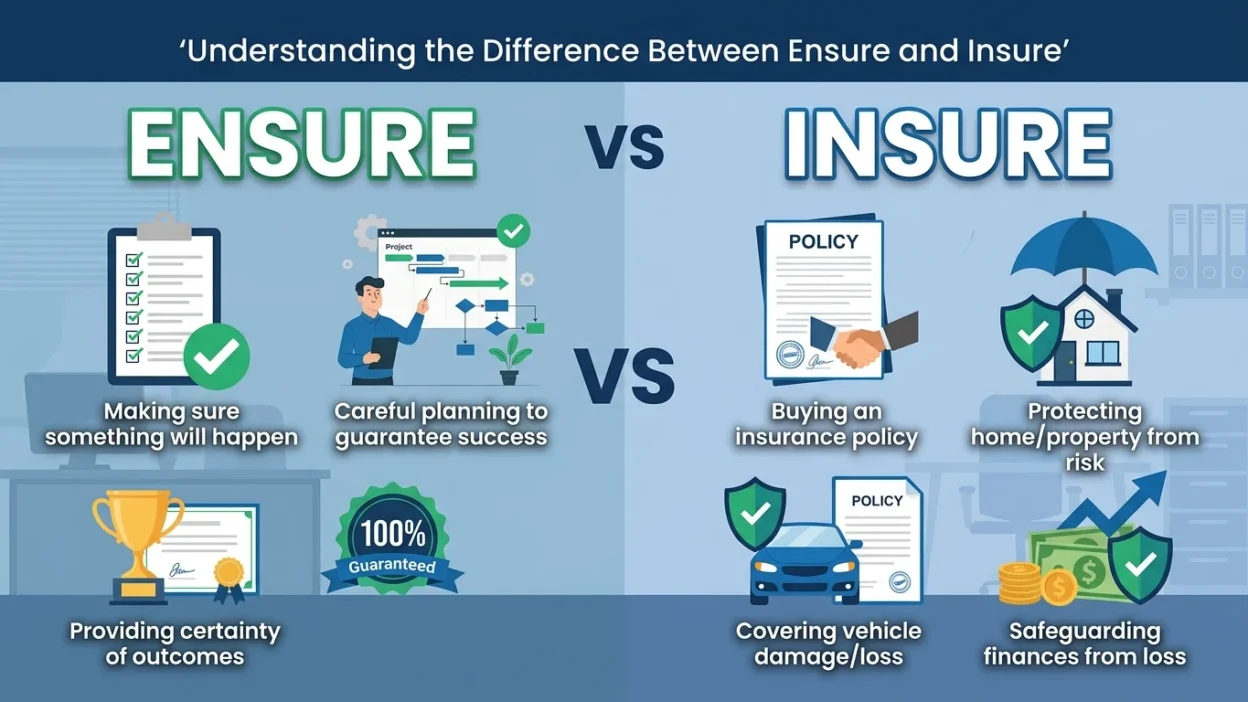
Ensure means to make certain that something happens or is true.
Insure means to protect something financially through an insurance policy.
Example:
- I will ensure that the report is submitted on time.
- We need to insure the car before driving it.
In most everyday writing, ensure is the correct choice when you mean “make sure.
What Does Ensure Mean?
The verb ensure means to guarantee, make certain, or confirm that something will happen.
When you use ensure, you’re talking about taking steps to make sure a desired result occurs.
Examples of Ensure
- Please ensure that all doors are locked before leaving.
- The teacher checked the attendance list to ensure accuracy.
- Regular maintenance helps ensure the machine operates efficiently.
- We must ensure customer satisfaction.
In each example, the word refers to making something certain or guaranteed.
What Does Insure Mean?
The verb insure refers specifically to providing or obtaining insurance coverage against loss, damage, or risk.
It is commonly used in financial, legal, and business contexts involving insurance policies.
Examples of Insure
- We decided to insure our home against fire damage.
- The company will insure the shipment during transportation.
- You should insure valuable jewelry.
- Most lenders require borrowers to insure their property.
In these examples, the focus is on financial protection through insurance.
Ensure vs Insure: Side-by-Side Comparison
| Feature | Ensure | Insure |
|---|---|---|
| Meaning | Make certain or guarantee | Provide insurance protection |
| Context | General situations | Financial and insurance situations |
| Part of Speech | Verb | Verb |
| Focus | Certainty and assurance | Protection against loss |
| Example | Ensure the project succeeds | Insure the building against damage |
When Should You Use Ensure?
Use ensure whenever you mean:
- Make certain
- Guarantee
- Confirm
- Assure an outcome
Correct Examples
- Double-check the figures to ensure accuracy.
- We need better planning to ensure success.
- The team worked hard to ensure a smooth launch.
- Safety procedures help ensure employee protection.
A helpful trick is to replace ensure with make sure. If the sentence still makes sense, ensure is probably the right word.
Example:
- Ensure everyone receives the memo.
- Make sure everyone receives the memo.
Both sentences mean the same thing.
When Should You Use Insure?
Use insure only when discussing insurance coverage or financial protection.
Correct Examples
- They chose to insure their business.
- You should insure expensive equipment.
- The airline allows passengers to insure baggage.
- Farmers often insure crops against weather damage.
If the sentence involves an insurance policy, premiums, claims, or financial risk, insure is usually the correct word.
Common Mistakes with Ensure and Insure
Because these words sound alike, writers often confuse them.
Mistake 1: Using Insure Instead of Ensure
❌ Please insure that everyone attends the meeting.
✅ Please ensure that everyone attends the meeting.
Why? There is no insurance policy involved. The meaning is “make sure.”
Mistake 2: Using Ensure Instead of Insure
❌ We need to ensure our house against flood damage.
✅ We need to insure our house against flood damage.
Why? The sentence refers to insurance coverage.
Mistake 3: Assuming They Are Always Interchangeable
While some older sources occasionally use insure to mean “ensure,” modern style guides generally recommend keeping the meanings separate for clarity.
Memory Trick to Remember the Difference
A simple memory trick can help:
- Ensure = Make sure.
- Insure = Insurance.
Notice that insure begins with the same letters as insurance.
Whenever insurance coverage is involved, choose insure.
Whenever certainty is involved, choose ensure.
American vs British English Differences
In modern American English, the distinction is very clear:
- Ensure means make certain.
- Insure means provide insurance.
British English generally follows the same rule today. However, some older British publications occasionally used insure to mean “ensure.”
Most current style guides, editors, and professional writers in both countries recommend:
- Use ensure for certainty.
- Use insure for insurance.
Following this distinction improves clarity and prevents confusion for readers worldwide.
Examples in Everyday Writing
Workplace Examples
- Managers should ensure employees understand company policies.
- Businesses often insure office equipment.
Academic Examples
- Researchers must ensure data accuracy.
- Universities may insure expensive laboratory equipment.
Personal Examples
- Parents try to ensure their children’s safety.
- Homeowners often insure their houses.
Travel Examples
- Travelers should ensure they have valid documents.
- Many tourists insure their trips before departure.
Why the Difference Matters
Using the correct word improves professionalism and precision.
Imagine reading these two sentences:
- We will ensure your package arrives safely.
- We will insure your package against loss.
The first promises a result. The second provides financial protection if something goes wrong.
Although the words are similar, they communicate different ideas.
Frequently Asked Questions
What is the main difference between ensure and insure?
Ensure means to make certain something happens, while insure means to provide insurance protection against loss or damage.
Can ensure and insure be used interchangeably?
In modern English, they should generally not be used interchangeably. Each word has a distinct meaning and purpose.
Is insure related to insurance?
Yes. Insure is directly connected to insurance policies and financial protection.
Which word is correct in formal writing?
Both words are correct when used in the proper context. Use ensure for certainty and insure for insurance coverage.
Do Americans and British people use these words differently?
Both American and British English generally follow the same distinction today, although older British usage sometimes treated them as interchangeable.
How can I remember the difference easily?
Think of insure as connected to insurance. If insurance is involved, use insure. Otherwise, use ensure.
Is it correct to say “ensure success”?
Yes. The phrase means to make success certain or more likely.
Is it correct to say “insure success”?
In modern usage, this is generally avoided. Most style guides recommend ensure success instead.
Summary
The difference between ensure vs insure is straightforward once you understand their meanings. Ensure means to make certain that something happens or is true, while insure refers to protecting against financial loss through insurance. Although the words sound similar, they serve different purposes and should not usually be substituted for one another.
For clear and professional writing, remember that ensure is about certainty and guarantees, while insure is about insurance coverage and financial protection. Keeping this distinction in mind will help you communicate more accurately and avoid one of the most common word-choice mistakes in English.

Dani Morrison is a dedicated language writer and spelling expert at Spelword.com, where she focuses on helping readers understand common English spelling mistakes and confusing word pairs. With a passion for clear communication, Dani creates easy-to-follow guides that simplify complex grammar and spelling rules for everyday use.