English has many words that look similar but have completely different meanings. One common example is relieving vs reliving. Because these words differ by only one letter, many writers accidentally use the wrong one. However, confusing them can change the meaning of an entire sentence.
If you’ve ever wondered whether you should write relieving stress or reliving memories, you’re in the right place. This guide explains the difference between relieving and reliving, provides clear examples, highlights common mistakes, and helps you choose the correct word every time.
Quick Answer
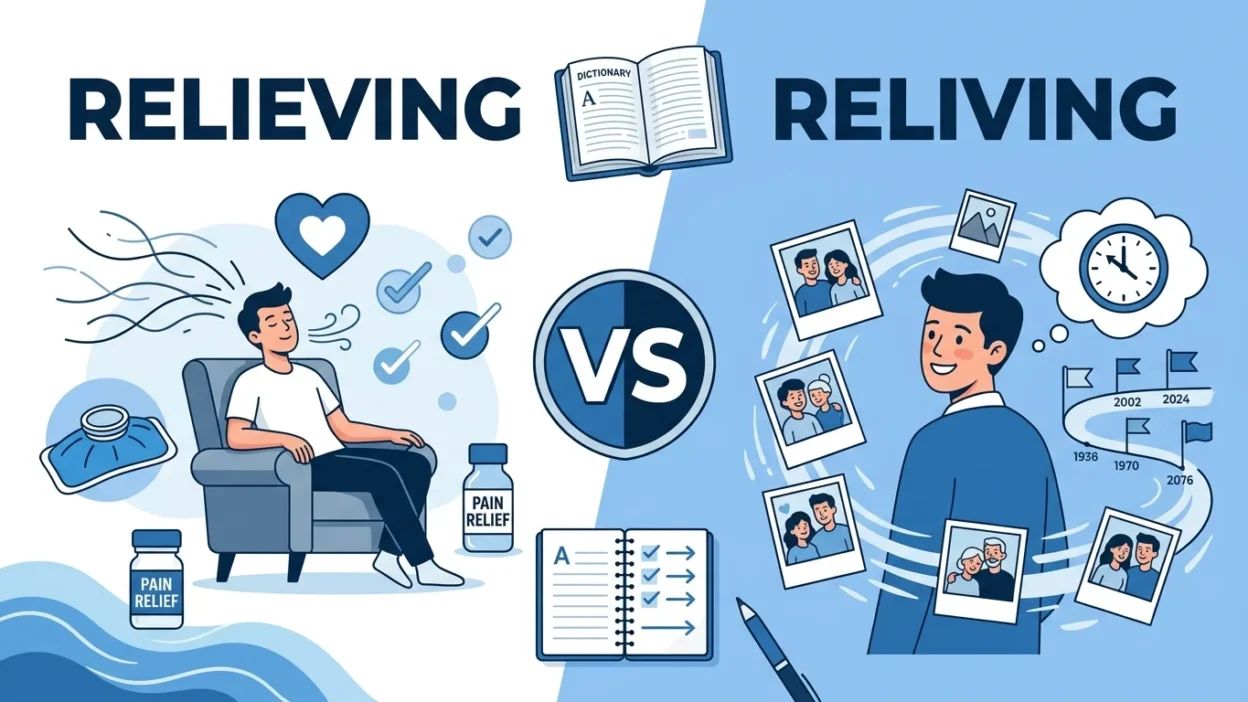
- Relieving means reducing, easing, or removing pain, stress, pressure, or discomfort.
- Reliving means experiencing something again in your mind, especially a past event or memory.
- Example:
- ✅ Deep breathing is helpful for relieving stress.
- ✅ Looking through old photos is a way of reliving childhood memories.
The key difference is simple: relieving is about making something better, while reliving is about experiencing something again.
What Does “Relieving” Mean?
The word relieving comes from the verb relieve, which means to reduce, lessen, ease, or remove something unpleasant.
People often use it when talking about pain, anxiety, pressure, responsibility, or discomfort.
Examples of Relieving
- The medication is relieving her headache.
- Taking a walk can be effective for relieving stress.
- The rain was relieving the extreme heat.
- Talking to a friend can be relieving during difficult times.
- The manager is relieving employees of extra duties.
In each example, something unpleasant is being reduced or removed.
What Does “Reliving” Mean?
The word reliving comes from the verb relive, which means to experience a past event again, usually through memories, thoughts, emotions, or storytelling.
People often use it when discussing memories, experiences, achievements, or traumatic events.
Examples of Reliving
- She enjoys reliving her college memories.
- Watching the video felt like reliving the entire event.
- Veterans sometimes struggle with reliving painful experiences.
- The reunion gave everyone a chance to start reliving old memories.
- He spent the evening reliving his childhood adventures.
Here, the person is mentally experiencing something from the past again.
Relieving vs Reliving: Key Difference
Although the words look nearly identical, their meanings are completely different.
| Relieving | Reliving |
|---|---|
| Means easing or reducing something | Means experiencing something again |
| Usually connected to pain, stress, pressure, or discomfort | Usually connected to memories or past experiences |
| Comes from the verb relieve | Comes from the verb relive |
| Focuses on improvement or comfort | Focuses on recalling and re-experiencing |
| Often has a positive or comforting effect | Can be positive, negative, or emotional |
Side-by-Side Examples
Let’s compare the words in similar contexts.
| Correct Use of Relieving | Correct Use of Reliving |
|---|---|
| Exercise is great for relieving stress. | Looking at photos is reliving memories. |
| The treatment is relieving pain. | He keeps reliving the championship game. |
| The vacation was relieving anxiety. | She enjoys reliving family traditions. |
| Meditation helps in relieving tension. | The documentary was reliving history. |
Notice how one word focuses on reducing discomfort while the other focuses on revisiting the past.
How to Remember the Difference
A simple memory trick can help.
Relieving = Relief
Both words contain the root relief.
Think about:
- Relieving pain
- Relieving stress
- Relieving pressure
If the meaning involves making something easier or better, choose relieving.
Reliving = Live Again
The word reliving contains the word live.
Think about:
- Living a memory again
- Living through an experience again
- Living a past moment again
If the meaning involves revisiting the past mentally, choose reliving.
Common Mistakes with Relieving and Reliving
Because the spelling is so similar, these words are often confused in writing.
Mistake 1: Using Relieving for Memories
❌ Looking through my old yearbook was relieving my high school days.
✅ Looking through my old yearbook was reliving my high school days.
The sentence refers to experiencing memories again, so reliving is correct.
Mistake 2: Using Reliving for Stress Reduction
❌ Yoga is excellent for reliving stress.
✅ Yoga is excellent for relieving stress.
Stress is being reduced, not experienced again.
Mistake 3: Ignoring Context
❌ She was reliving a headache after taking medicine.
✅ She was relieving a headache after taking medicine.
Medicine reduces pain rather than re-experiencing it.
When Reliving Has a Positive Meaning
Many people associate reliving with happy memories.
Examples include:
- Reliving childhood adventures
- Reliving a wedding day
- Reliving graduation memories
- Reliving family vacations
- Reliving personal achievements
In these situations, reliving allows people to reconnect with meaningful moments.
Example Sentences
- The photo album helped us relive our vacation.
- The anniversary celebration was like reliving our wedding day.
- Watching old home videos felt like reliving the past.
When Reliving Has a Negative Meaning
Not all memories are pleasant.
Sometimes people relive traumatic or painful experiences.
Examples include:
- Reliving an accident
- Reliving a loss
- Reliving a frightening experience
- Reliving a difficult childhood event
Example Sentences
- He struggled with reliving the incident.
- The documentary caused survivors to relive painful memories.
- Certain sounds can trigger reliving traumatic experiences.
In these contexts, the word often carries strong emotional weight.
Common Phrases Using Relieving
The word relieving frequently appears in everyday expressions.
Examples include:
- Relieving pain
- Relieving pressure
- Relieving stress
- Relieving anxiety
- Relieving symptoms
- Relieving discomfort
- Relieving tension
- Relieving responsibility
Example Sentences
- The massage was effective in relieving tension.
- The medicine is relieving symptoms quickly.
- Exercise can help in relieving anxiety.
Common Phrases Using Reliving
The word reliving often appears with memories and experiences.
Examples include:
- Reliving memories
- Reliving the past
- Reliving childhood
- Reliving history
- Reliving experiences
- Reliving moments
- Reliving achievements
- Reliving events
Example Sentences
- They spent hours reliving memories from school.
- The museum exhibit allows visitors to relive history.
- The team enjoyed reliving their championship victory.
American vs British English
Unlike some commonly confused words, relieving and reliving have the same meanings and usage rules in both American and British English.
There are no major spelling differences between the two varieties of English.
American English
- The medication is relieving pain.
- He keeps reliving the event.
British English
- The medication is relieving pain.
- He keeps reliving the event.
Writers in both regions follow the same distinction.
Why Understanding the Difference Matters
Using the correct word improves clarity and professionalism.
Imagine these two sentences:
- The therapy was relieving anxiety.
- The therapy was reliving anxiety.
The first suggests the therapy is helping. The second suggests the therapy is causing someone to experience anxiety again.
A single letter completely changes the meaning.
Whether you’re writing emails, reports, articles, academic papers, or social media posts, understanding this distinction helps ensure your message is accurate and easy to understand.
Frequently Asked Questions
What is the difference between relieving and reliving?
Relieving means reducing or easing something unpleasant. Reliving means experiencing a past event again in your mind.
Is relieving related to relief?
Yes. Relieving comes from the word relief and refers to reducing pain, stress, pressure, or discomfort.
What does reliving mean?
Reliving means mentally experiencing a past event, memory, or situation again.
Can reliving be positive?
Yes. People often relive happy memories such as vacations, weddings, graduations, or family celebrations.
Can reliving be negative?
Yes. Some people relive traumatic or painful experiences, which can trigger emotional distress.
Is yoga good for relieving stress or reliving stress?
Yoga is good for relieving stress because it helps reduce tension and anxiety.
Are relieving and reliving interchangeable?
No. They have completely different meanings and should not be used interchangeably.
Do American and British English use these words differently?
No. Both American and British English use relieving and reliving in the same way.
Summary
Understanding relieving vs reliving is important because these similar-looking words have very different meanings. Relieving refers to reducing or easing something unpleasant, such as stress, pain, anxiety, or pressure. It is associated with comfort, improvement, and making situations more manageable.
Reliving, on the other hand, means mentally experiencing a past event again. It often relates to memories, personal experiences, achievements, or historical events. Sometimes those memories are joyful, while other times they can be difficult or emotional. Remember this simple rule: if you’re reducing discomfort, use relieving; if you’re experiencing the past again, use reliving.

William Harved is a passionate language enthusiast and digital writer specializing in English spelling, grammar clarity, and common writing mistakes. As the primary author of Spelword.com, he focuses on helping readers understand confusing word pairs, correct spelling errors, and improve everyday communication.