Have you ever stopped while writing and wondered whether traveled or travelled is the correct spelling? You’re not alone. This is one of the most common spelling questions in English because both versions are correct but they are used in different varieties of the language.
The good news is that understanding traveled vs travelled is simple. The difference is based on regional spelling conventions rather than meaning. In this guide, you’ll learn when to use each spelling, see practical examples, discover common mistakes, and understand how American and British English differ.
Quick Answer
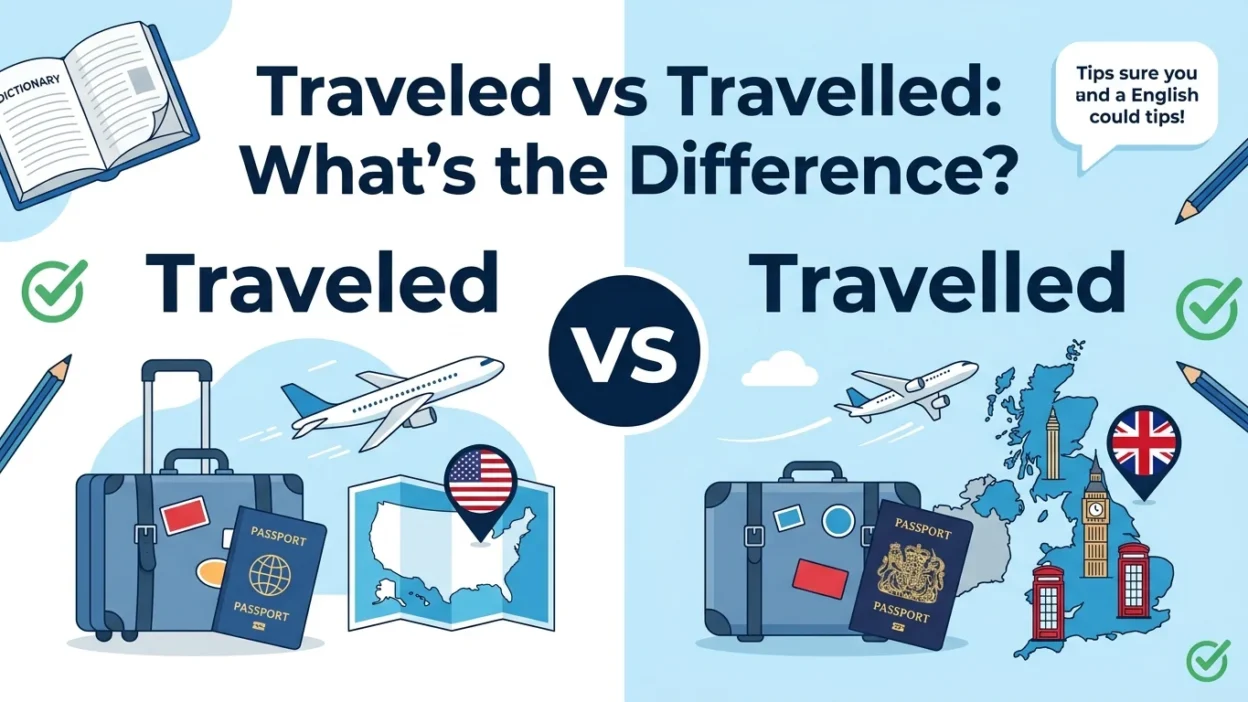
The difference between traveled and travelled is purely regional.
- Traveled is the preferred spelling in American English.
- Travelled is the preferred spelling in British English, as well as Australian, Canadian, and most other Commonwealth varieties of English.
- Both words are the past tense and past participle of the verb travel.
- They have exactly the same meaning.
What Does “Traveled” Mean?
Traveled is the American English spelling of the past tense and past participle of travel.
It means to have gone from one place to another for work, leisure, education, or other purposes.
Examples
- We traveled across the United States last summer.
- She traveled to New York for business.
- They have traveled extensively throughout Europe.
- I traveled by train instead of flying.
In American English, this is the standard spelling.
What Does “Travelled” Mean?
Travelled has exactly the same meaning as traveled, but it follows British English spelling rules by doubling the final l before adding -ed.
Examples
- We travelled across Scotland during the holidays.
- She travelled to London by train.
- They have travelled around Asia.
- He travelled for work every month.
If you’re writing in British English, this is the preferred spelling.
Traveled vs Travelled: Key Differences
The meanings are identical. The only difference is regional spelling.
| Feature | Traveled | Travelled |
|---|---|---|
| Meaning | Past tense of travel | Past tense of travel |
| American English | Preferred | Rare |
| British English | Less common | Preferred |
| Australian English | Rare | Preferred |
| Canadian English | Usually preferred | Preferred in many publications |
| Meaning Difference | None | None |
Your choice depends on the variety of English you’re using.
Why Are There Two Spellings?
The difference comes from spelling conventions.
American English
American English often simplifies spellings by using a single l when adding endings to words ending in -el.
Examples include:
- Traveled
- Traveling
- Traveler
British English
British English usually doubles the final l before adding -ed or -ing.
Examples include:
- Travelled
- Travelling
- Traveller
This spelling pattern applies to many other words as well.
When Should You Use Traveled?
Use traveled when writing in American English.
It is the standard spelling in:
- American newspapers
- U.S. schools
- Business communication
- Government publications
- Academic writing in the United States
Examples
- She traveled to California.
- We traveled during the holidays.
- He traveled abroad last year.
- They have traveled together many times.
When Should You Use Travelled?
Use travelled when writing in British English or for audiences in countries that follow British spelling conventions.
It is common in:
- The United Kingdom
- Australia
- New Zealand
- South Africa
- Many Canadian publications
Examples
- She travelled across England.
- We travelled by ferry.
- They travelled throughout Europe.
- He travelled frequently for work.
Traveled vs Travelled in Everyday English
Whether you write traveled or travelled, readers will understand your meaning.
American Style
- I traveled to Chicago.
- We traveled last weekend.
- She has traveled extensively.
British Style
- I travelled to Manchester.
- We travelled during the summer.
- She has travelled across Europe.
The only difference is spelling.
Related Words with the Same Difference
The same regional spelling rule applies to several related words.
| American English | British English |
|---|---|
| Traveler | Traveller |
| Traveling | Travelling |
| Traveled | Travelled |
Keeping these spellings consistent makes your writing look polished and professional.
Common Mistakes to Avoid
Many writers make simple consistency errors.
1. Mixing American and British Spellings
Incorrect:
- She travelled across France and enjoyed the colorful neighborhood.
Correct (American English):
- She traveled across France and enjoyed the colorful neighborhood.
Correct (British English):
- She travelled across France and enjoyed the colourful neighbourhood.
Stay consistent throughout your writing.
2. Thinking One Spelling Is Wrong
Neither spelling is incorrect.
Choose the spelling that matches your audience.
3. Switching Spellings in One Article
Avoid writing:
- Traveled
- Travelling
- Traveler
Together in a British article.
Consistency improves readability and professionalism.
American vs British English
This is one of the clearest examples of spelling differences.
American English
Preferred spellings:
- Traveled
- Traveling
- Traveler
British English
Preferred spellings:
- Travelled
- Travelling
- Traveller
The pronunciation remains the same in both varieties.
Tips for Remembering the Difference
These simple tricks make the spelling easy to remember.
- Think one L for American English.
- Think two Ls for British English.
- Match the spelling style of your audience.
- Stay consistent throughout your document.
- Remember that the meaning never changes.
These memory tips help avoid spelling inconsistencies.
Quick Comparison Table
| Situation | Better Choice |
|---|---|
| U.S. audience | Traveled |
| American school writing | Traveled |
| U.S. business email | Traveled |
| British audience | Travelled |
| UK newspaper | Travelled |
| Australian publication | Travelled |
| International audience | Either (stay consistent) |
| Academic writing | Follow your style guide |
Frequently Asked Questions
What is the difference between traveled and travelled?
There is no difference in meaning. Traveled is the American English spelling, while travelled is the British English spelling.
Which spelling is correct: traveled or travelled?
Both are correct. The appropriate spelling depends on whether you’re using American or British English.
Is traveled American English?
Yes. Traveled is the standard spelling in American English.
Is travelled British English?
Yes. Travelled is the preferred spelling in British English and most Commonwealth countries.
Which spelling should I use in academic writing?
Use the spelling required by your institution, publisher, or style guide, and remain consistent throughout your document.
Do traveled and travelled have different meanings?
No. Both words are the past tense and past participle of travel and carry exactly the same meaning.
Can I mix traveled and travelled in the same article?
It’s best not to. Choose either American or British spelling and use it consistently for a professional appearance.
Summary
Understanding traveled vs travelled is easy because the only difference is regional spelling. Traveled is the standard form in American English, while travelled is preferred in British English and many other English speaking countries. Both spellings represent the past tense and past participle of travel, and both have exactly the same meaning. Your choice should depend on your audience and the variety of English you are using.
The most important rule is consistency. If you’re writing for an American audience, use traveled, traveling, and traveler. If you’re writing for a British audience, use travelled, travelling, and traveller. Maintaining one spelling style throughout your writing makes it more polished, professional, and easier to read.