Have you ever typed “perfer” and felt unsure if it looked right? It’s a small mistake, but one that happens more often than you might think. Because the word sounds simple, many people accidentally flip the letters without realizing it.
Understanding perfer vs prefer is important for clear, professional writing. One is the correct and widely accepted spelling, while the other is simply a common typo. Let’s break it down in a simple and friendly way so you can use the right word every time with confidence.
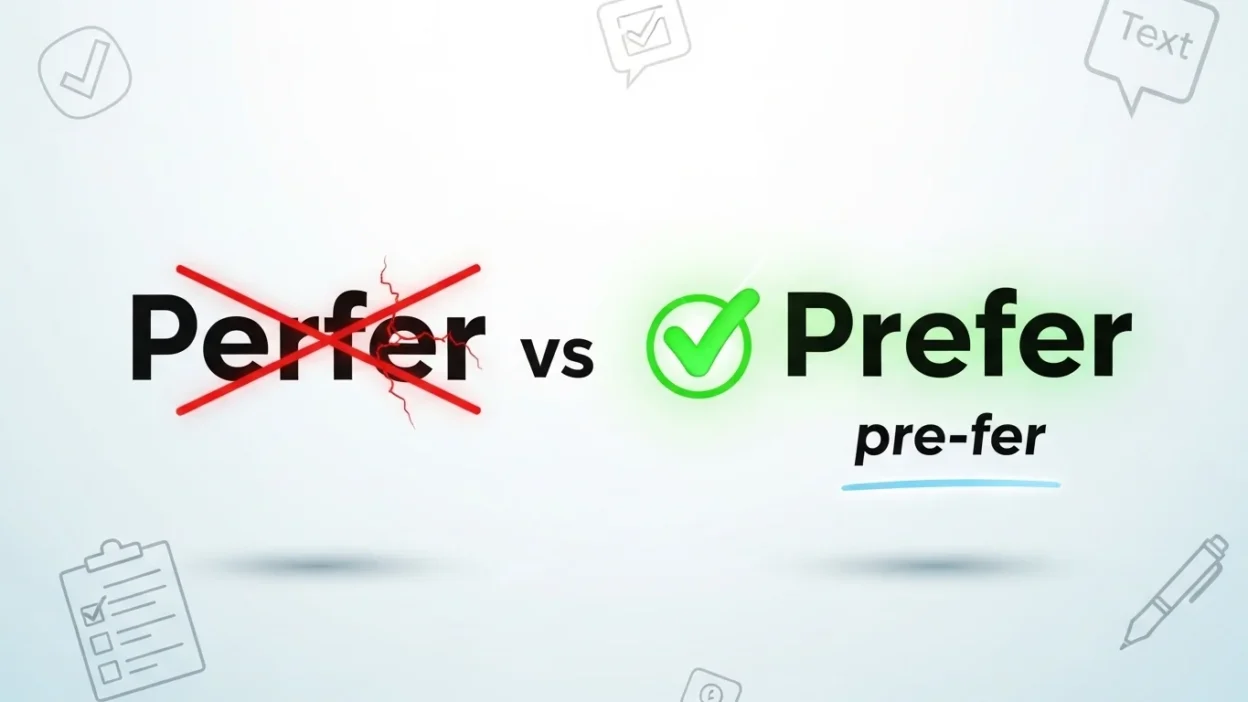
Quick Answer: Perfer vs Prefer
- ❌ Perfer = Incorrect spelling
- ✅ Prefer = Correct spelling
👉 Always use “prefer” when expressing a choice or liking something more than another.
What Does “Prefer” Mean?
Prefer is a verb that means to like one thing more than another or to choose something over an alternative.
Core Meaning of Prefer
- To like something better than something else
- To choose one option over another
- To show a personal preference
Examples of “Prefer” in Sentences
- I prefer tea over coffee.
- She prefers working in the morning.
- They prefer staying at home on weekends.
- He preferred the earlier version of the design.
This word is extremely common in everyday conversation, writing, and professional communication.
What Is “Perfer”?
“Perfer” is not a correct English word. It is simply a misspelling of “prefer.”
Why Do People Write “Perfer”?
This mistake usually happens because:
- The letters “e” and “r” are accidentally switched
- Fast typing or lack of proofreading
- Confusion with pronunciation patterns
However, the correct spelling is always prefer, with the “re” pattern in the middle.
Perfer vs Prefer: Key Differences
| Feature | Prefer | Perfer |
|---|---|---|
| Correct spelling | ✅ Yes | ❌ No |
| Meaning | To like or choose something | None (incorrect form) |
| Usage | Formal & informal writing | Should be avoided |
| Grammar | Verb | Invalid word |
| Dictionary status | Recognized word | Not recognized |
How to Use “Prefer” Correctly
Understanding how to use “prefer” in different sentence structures will make your English more natural.
1. Prefer + Noun
- I prefer coffee.
- She prefers chocolate.
2. Prefer + Verb (-ing)
- I prefer reading at night.
- He prefers working alone.
3. Prefer + To + Verb
- I prefer to travel by train.
- She prefers to study in silence.
4. Prefer A to B
- I prefer tea to coffee.
- They prefer summer to winter.
Common Mistakes to Avoid
When dealing with perfer vs prefer, here are common errors:
1. Letter Order Confusion
- ❌ Perfer
- ✅ Prefer
2. Skipping Proofreading
Typing quickly often leads to small spelling mistakes.
3. Misunderstanding Word Structure
“Prefer” follows a consistent spelling pattern.
Easy Memory Trick
👉 “You preFER what you like.”
Focus on the “fer” at the end to remember the correct order.
Real-Life Usage of “Prefer”
Using “prefer” correctly improves both speaking and writing.
In Daily Conversation
- “I prefer quiet places.”
- “Do you prefer tea or coffee?”
In Professional Settings
- “We prefer candidates with experience.”
- “Customers prefer fast service.”
In Writing and Communication
- “She preferred a different approach.”
- “Most users prefer simple designs.”
Synonyms and Related Words
To enrich your writing, consider these alternatives:
- Like better
- Choose
- Favor
- Select
- Opt for
Example:
- “I favor tea over coffee.”
- “She chose the blue dress.”
American vs British English
There is no difference between American and British English for this word.
- 🇺🇸 American English: Prefer
- 🇬🇧 British English: Prefer
Both use the same spelling and meaning.
Why Correct Spelling Matters
Using the correct spelling—prefer—is important because:
- Improves clarity and readability
- Builds credibility and professionalism
- Prevents confusion
- Enhances communication
Misspelling it as “perfer” can:
- Make your writing look careless
- Distract readers
- Reduce trust in your content
FAQs About Perfer vs Prefer
What is the correct spelling: perfer or prefer?
“Prefer” is the correct spelling in standard English.
Is “perfer” ever correct?
No, it is always incorrect and should be avoided.
What does “prefer” mean?
It means to like or choose something more than another option.
Why do people misspell “prefer”?
Because of letter reversal and typing errors.
Can “prefer” be used in formal writing?
Yes, it is widely used in both formal and informal contexts.
Is there a British vs American difference?
No, both use the same spelling: “prefer.”
What are synonyms for “prefer”?
Words like choose, favor, and opt for can be used.
How can I remember the correct spelling?
Think of “preFER” to keep the correct letter order.
Summary: Perfer vs Prefer
The difference between perfer vs prefer is simple but important. “Prefer” is the correct spelling and is used to express liking or choosing one option over another. It is a commonly used verb in everyday language and professional communication.
“Perfer,” on the other hand, is a common spelling mistake caused by letter confusion or typing errors. It has no meaning in standard English and should always be avoided.
By focusing on correct spelling and practicing proper usage, you can improve your writing clarity and professionalism. Small corrections like this make a big difference in how your message is understood.

William Harved is a passionate language enthusiast and digital writer specializing in English spelling, grammar clarity, and common writing mistakes. As the primary author of Spelword.com, he focuses on helping readers understand confusing word pairs, correct spelling errors, and improve everyday communication.