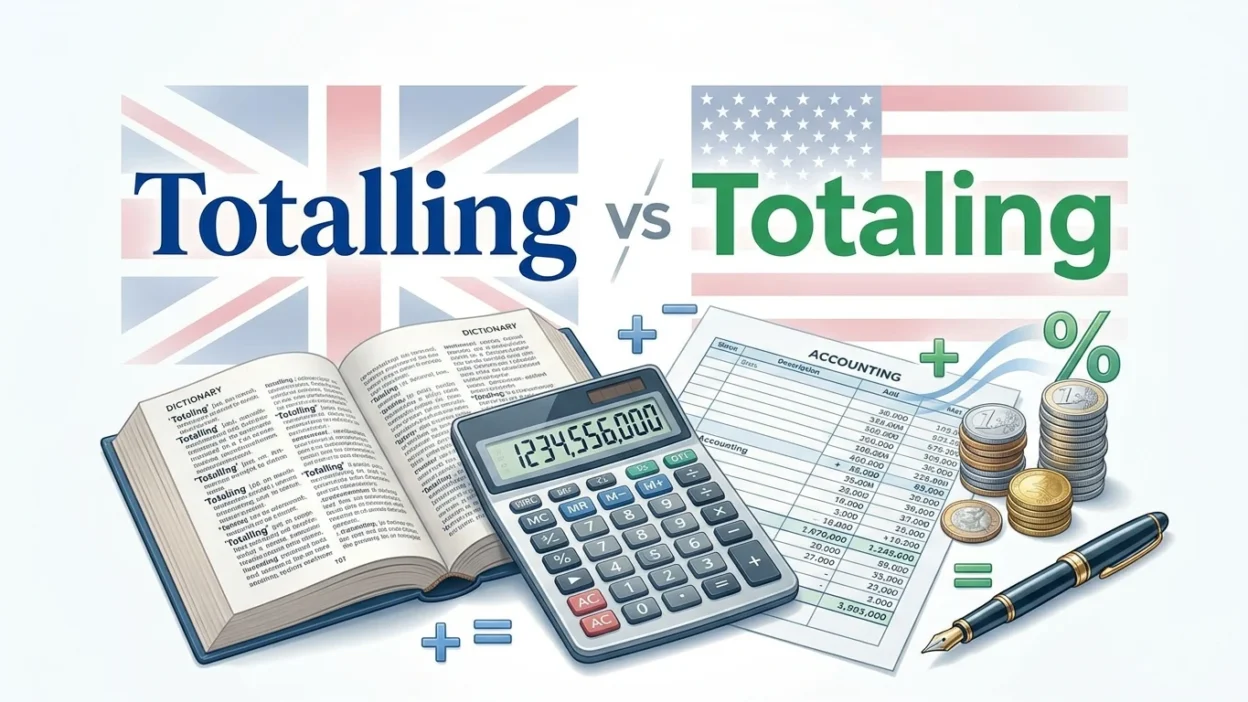
Have you ever written totalling or totaling and wondered whether one of them is a spelling mistake? You are not alone. The two forms look almost identical, and the only visible difference is the extra l. This small spelling variation often creates confusion, especially when writing reports, academic papers, business documents, or online content.
The good news is that both totalling and totaling are correct. The main difference comes from the variety of English being used. Totaling is generally preferred in American English, while totalling is more common in British English and several other varieties. Understanding this distinction can help you choose the spelling that best fits your audience and maintain consistency throughout your writing.
Quick Answer
Totalling and totaling are both correct spellings.
- Totaling is generally preferred in American English.
- Totalling is generally preferred in British English.
- Both forms mean adding numbers or amounts together to calculate a total.
- Neither spelling changes the meaning or pronunciation of the word.
Simple examples
- The expenses are totaling $5,000. — American English
- The expenses are totalling £5,000. — British English
If you are writing for an American audience, choose totaling. If you are following British English conventions, totalling is the more traditional choice.
What Does Totaling Mean?
Totaling is the present participle or gerund form of the verb total. It means adding several amounts or numbers together to determine their combined value.
For example:
- The bills are totaling $2,500.
- The company is totaling its annual expenses.
- The damages were totaling more than $10,000.
- The purchases are totaling nearly $500.
The word can also describe something that reaches a particular overall amount.
For instance:
The donations are totaling $25,000.
This means that all the donations combined amount to $25,000.
What Does Totalling Mean?
Totalling has exactly the same meaning as totaling.
It is the spelling commonly associated with British English and other varieties that follow British spelling conventions.
For example:
- The costs are totalling £3,000.
- The repairs are totalling several thousand pounds.
- The donations are totalling £20,000.
- The expenses are totalling more than expected.
The extra l does not create a different meaning. It is simply a spelling variation.
Totalling vs Totaling: Comparison Table
| Feature | Totalling | Totaling |
|---|---|---|
| Base word | Total | Total |
| Meaning | Adding amounts together | Adding amounts together |
| Spelling | Double l | Single l |
| British English | More common | Less common |
| American English | Less common | More common |
| Pronunciation | Same | Same |
| Correct? | Yes | Yes |
The key point is simple: both forms are correct, but your choice should match your preferred English variety.
Why Are There Two Spellings?
The difference between totalling and totaling comes from a broader difference in spelling conventions between British and American English.
British English often doubles the final consonant of certain words before adding suffixes such as -ing.
American English frequently avoids doubling the consonant in similar situations.
This pattern can be seen in other words:
- British: travelling / American: traveling
- British: cancelling / American: canceling
- British: modelling / American: modeling
- British: labelled / American: labeled
Similarly:
- British: totalling
- American: totaling
Therefore, the extra l is not an error. It reflects a difference in spelling conventions.
Totalling in British English
In British English, totalling with two l’s is generally the preferred spelling.
Examples include:
- The expenses are totalling £4,500.
- The damages are totalling more than £10,000.
- The project costs are totalling several million pounds.
- The invoices are totalling an unexpected amount.
- The company’s losses are totalling £2 million.
British publications, academic institutions, and organizations may therefore use totalling consistently in their written materials.
Totaling in American English
In American English, totaling with one l is generally preferred.
Examples include:
- The expenses are totaling $4,500.
- The damages are totaling more than $10,000.
- The project costs are totaling several million dollars.
- The invoices are totaling an unexpected amount.
- The company’s losses are totaling $2 million.
If your document follows American spelling conventions, totaling is normally the better choice.
Does Totalling Mean Something Different From Totaling?
No. There is no difference in meaning between the two forms.
Both words can mean:
- Adding amounts together
- Calculating a final sum
- Reaching a particular total
- Amounting to a specified figure
For example:
The expenses are totaling $8,000.
and
The expenses are totalling £8,000.
The spelling differs, but the underlying meaning remains the same.
Examples of Totaling in Sentences
Here are several examples using the American spelling:
- The receipts are totaling $750.
- The medical bills are totaling thousands of dollars.
- The company reported expenses totaling $3 million.
- The repairs are totaling more than the original estimate.
- The donations are totaling $50,000.
- The purchases are totaling nearly $1,000.
- The project expenses are totaling significantly more than expected.
These examples show that totaling is particularly useful in financial, business, accounting, and numerical contexts.
Examples of Totalling in Sentences
Here are examples using the British spelling:
- The receipts are totalling £750.
- The medical bills are totalling thousands of pounds.
- The company reported expenses totalling £3 million.
- The repairs are totalling more than the original estimate.
- The donations are totalling £50,000.
- The purchases are totalling nearly £1,000.
- The project expenses are totalling significantly more than expected.
Again, the only meaningful difference is the spelling convention.
Common Mistakes to Avoid
Mistake 1: Thinking one spelling is always wrong
It is incorrect to assume that either totalling or totaling is universally wrong.
Both are accepted English spellings.
Mistake 2: Mixing American and British spelling
Consistency matters in professional and academic writing.
For example, if you are using American English throughout your document, you would normally write:
- totaling
- traveling
- canceled
- labeled
If you are using British English, you may instead write:
- totalling
- travelling
- cancelled
- labelled
Choose one spelling system and use it consistently.
Mistake 3: Changing the meaning unnecessarily
Some writers assume that the extra l changes the meaning. It does not.
Totalling and totaling mean the same thing.
Mistake 4: Relying entirely on spell-check software
A spell checker may flag one version depending on your selected language settings.
For example, American English settings may prefer totaling, while British English settings may prefer totalling.
This does not necessarily mean the other form is incorrect.
Which Spelling Should You Use?
Your choice should depend on your audience and writing style.
Use totaling when:
- Writing in American English
- Targeting a U.S. audience
- Following an American style guide
- Preparing documents for an American institution
- Maintaining American spelling throughout a document
Use totalling when:
- Writing in British English
- Targeting a British audience
- Following British spelling conventions
- Preparing documents for a British institution
- Maintaining British spelling throughout a document
If your employer, university, journal, or client specifies a particular style guide, follow that requirement first.
Synonyms for Totalling and Totaling
Depending on the sentence, several alternatives can express a similar idea:
- Adding up
- Amounting to
- Adding together
- Calculating
- Summing
- Reaching
- Coming to
- Making up
For example:
The expenses are totaling $5,000.
Could also become:
The expenses amount to $5,000.
Or:
The expenses add up to $5,000.
The best alternative depends on the context and level of formality.
Frequently Asked Questions
Is totalling or totaling correct?
Both totalling and totaling are correct. Totalling is more common in British English, while totaling is generally preferred in American English.
Is totaling American English?
Yes. Totaling with one l is the standard and more common form in American English.
Is totalling British English?
Yes. Totalling with two l’s is commonly preferred in British English.
Do totaling and totalling have different meanings?
No. They have exactly the same meaning. Both refer to adding amounts together or reaching a particular total.
Why does British English use totalling?
British spelling conventions often double the final consonant of certain words before adding -ing. This produces totalling.
Why does American English use totaling?
American English generally simplifies this spelling by keeping one l, resulting in totaling.
Can I use totaling in British English?
Yes. Totaling can be understood and encountered in British English, but totalling is the more traditional British spelling.
Which spelling should I use in academic writing?
Follow the spelling conventions required by your university, journal, or style guide. Use totaling for American English and totalling for British English unless a specific guide says otherwise.
Summary
The difference between totalling and totaling is straightforward once you understand the spelling conventions behind them. Both words are correct, and both mean adding amounts together, calculating a total, or reaching a particular overall amount. The extra l does not change the meaning or pronunciation.
The main distinction is regional. Totaling is generally preferred in American English, whereas totalling is more common in British English. Neither form should be considered a spelling mistake on its own. The best approach is to identify your target audience, follow the appropriate English variety, and remain consistent throughout your writing.

William Harved is a passionate language enthusiast and digital writer specializing in English spelling, grammar clarity, and common writing mistakes. As the primary author of Spelword.com, he focuses on helping readers understand confusing word pairs, correct spelling errors, and improve everyday communication.