If you’ve ever typed “simular” and wondered why your spellchecker flagged it, you’re not alone. It’s one of those common mix ups that even confident writers make. The confusion usually comes from how closely it resembles a real word similar and how naturally it seems to fit in a sentence.
In this guide, you’ll get a clear, simple explanation of simular vs similar, along with examples, mistakes to avoid, and tips to help you remember the correct spelling every time. Whether you’re writing for school, work, or online content, this quick clarification will sharpen your writing instantly.
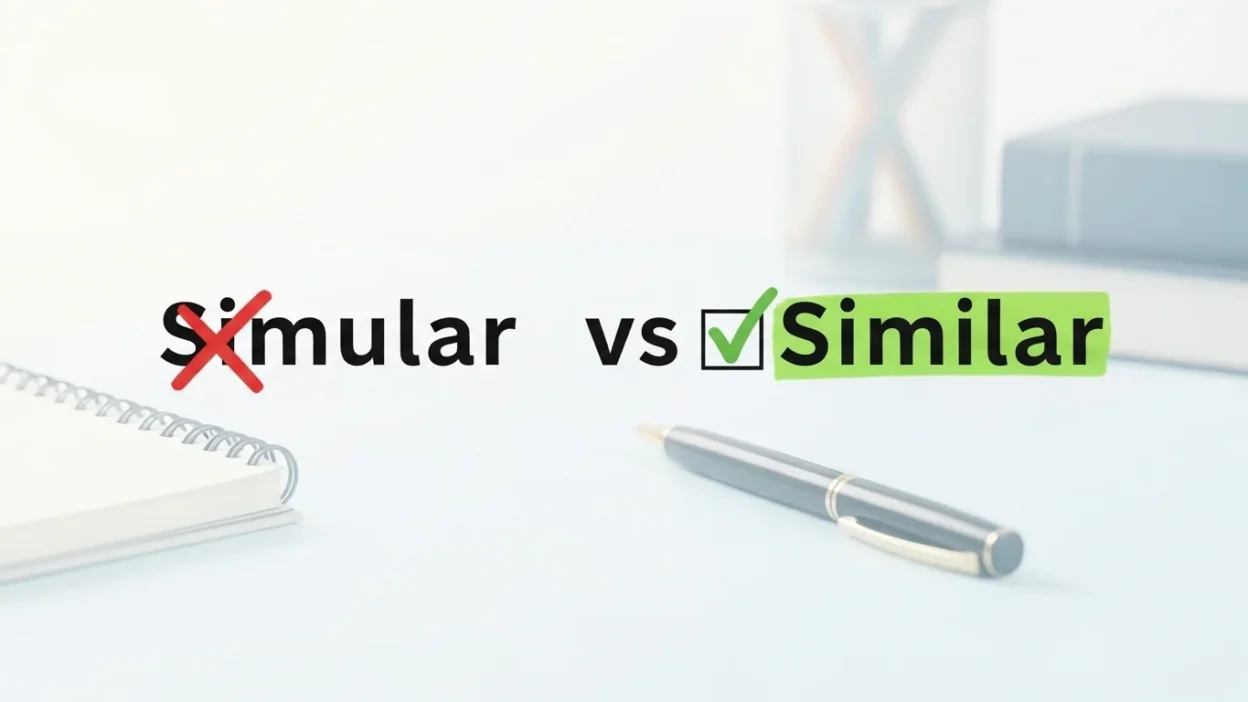
Quick Answer: Simular vs Similar
- Similar is the correct word in English. It means almost the same or having a resemblance.
- Simular is not a correct English word. It’s a common misspelling of similar.
What Does “Similar” Mean?
The word similar describes things that are alike but not identical. It’s commonly used in everyday communication, academic writing, and professional contexts.
Definition:
Having characteristics in common; resembling without being exactly the same.
Examples:
- These two designs are very similar, but not identical.
- Her writing style is similar to her teacher’s.
- The twins look similar, yet their personalities differ.
The word works across many contexts—people, objects, ideas, or situations—making it a versatile and essential part of English vocabulary.
Is “Simular” a Real Word?
No, simular is not recognized in standard English dictionaries. It’s simply a misspelling of similar.
Why does this mistake happen?
- The pronunciation of similar can sound like “sim-uh-ler,” leading people to write it phonetically.
- Typing quickly can result in swapping letters.
- Some learners assume “simular” follows patterns like regular or particular.
Despite how common it is, “simular” should always be corrected to “similar.”
Simular vs Similar: Key Differences
| Feature | Similar | Simular |
|---|---|---|
| Correct spelling | ✅ Yes | ❌ No |
| Meaning | Almost the same or alike | No meaning in English |
| Usage | Formal and informal writing | Should not be used |
| Dictionary status | Recognized word | Not recognized |
Common Mistakes to Avoid
Understanding where people go wrong can help you avoid the same errors.
1. Writing “simular” instead of “similar”
Incorrect: The two options are very simular.
Correct: The two options are very similar.
2. Assuming “simular” is a variation
Some think it’s an alternative spelling. It’s not—there’s only one correct form.
3. Ignoring spellcheck warnings
Spellcheck tools usually catch this mistake. Don’t overlook them.
4. Confusing pronunciation with spelling
English spelling doesn’t always match pronunciation. Trust standard spelling rules.
Easy Ways to Remember the Correct Spelling
If you tend to mix these up, try these simple tricks:
- Think of “same” inside “similar” → both relate to resemblance.
- Remember: “similar” ends with “-lar,” not “-ular.”
- Practice writing it correctly in sentences to build muscle memory.
Examples of “Similar” in Different Contexts
In daily conversation:
- We have similar tastes in music.
In academic writing:
- The results were similar to previous studies.
In professional settings:
- This project is similar to the one we completed last year.
In creative writing:
- Their journeys were similar, yet their endings were completely different.
American vs British English Differences
Good news—there’s no difference between American and British English when it comes to this word.
- Both use “similar” as the correct spelling.
- “Simular” is incorrect in both versions.
This makes it easier to remember since you don’t need to adjust based on region.
Why Correct Spelling Matters
Using the correct word isn’t just about grammar—it affects how your writing is perceived.
- Clarity: Readers understand your message instantly.
- Credibility: Proper spelling builds trust, especially in professional or academic work.
- SEO benefits: Correct keywords improve search visibility online.
Even small errors like simular can distract readers or reduce the impact of your message.
Frequently Asked Questions (FAQs)
Is simular ever correct in English?
No, simular is always incorrect. The correct spelling is similar.
Why do people write simular instead of similar?
It usually happens due to pronunciation confusion or typing mistakes.
What is the meaning of similar?
Similar means almost the same or having a resemblance.
Is similar used in formal writing?
Yes, similar is widely used in both formal and informal writing.
Are similar and same the same thing?
No, similar means alike but not identical, while same means exactly identical.
How can I avoid spelling simular incorrectly?
Use spellcheck, practice writing similar, and remember it ends with “-lar.”
Does simular exist in any dictionary?
No, it does not appear in standard English dictionaries.
Summary
The difference between simular vs similar is simple but important. Similar is the correct and widely accepted word used to describe things that are alike. On the other hand, simular is just a common spelling mistake that doesn’t belong in proper English writing. Recognizing this distinction can instantly improve the clarity and professionalism of your communication.
By understanding the meaning of similar, practicing its correct usage, and avoiding phonetic spelling errors, you can write with more confidence. Small corrections like this make a big difference, especially in academic, professional, and online content where accuracy truly matters.