Have you ever typed “whisp” when you meant “wisp” and wondered if it was just a shortened form? You’re not alone. This is a common spelling confusion that happens because of how similar the words sound and how quickly we tend to type.
Understanding wisp vs whisp is essential for clear, polished writing. One is a correct and widely accepted English word, while the other is simply a mistake that can make your writing look less professional. Let’s break it down in a simple, friendly way so you can use the right word every time.
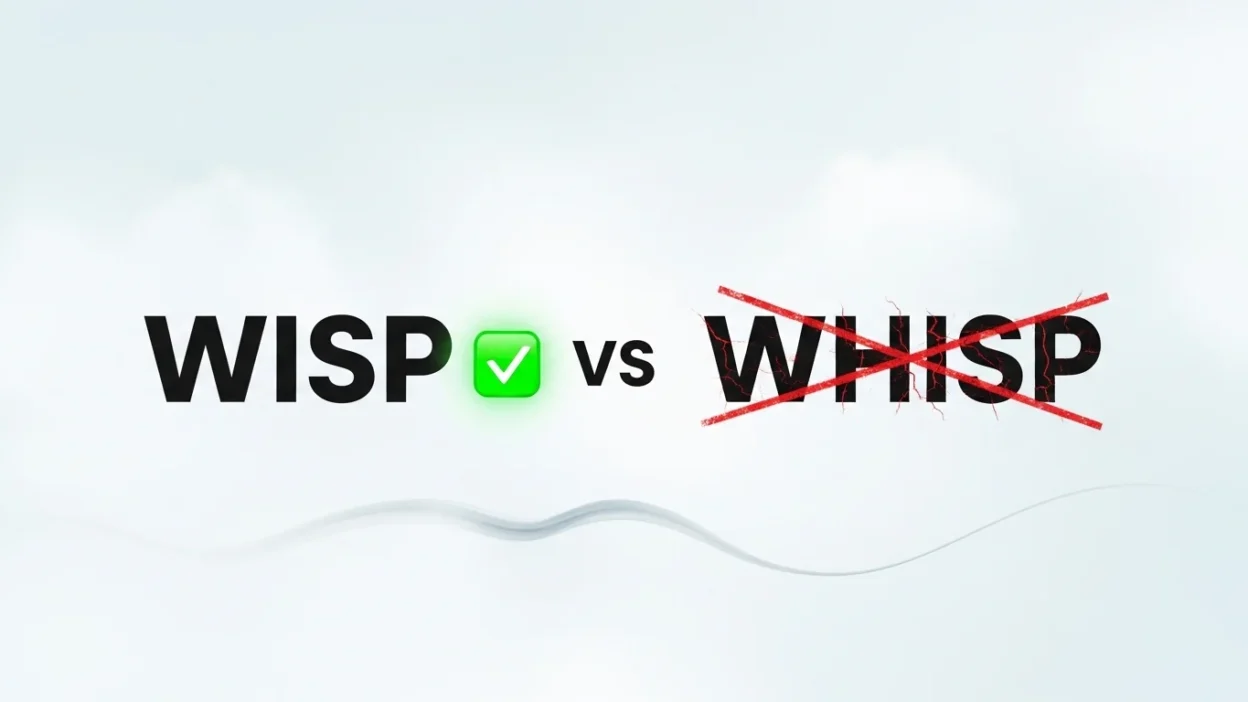
Quick Answer: Wisp vs Whisp
- ✅ Wisp = Correct spelling
- ❌ Whisp = Incorrect spelling
👉 Always use “wisp” when referring to a thin strand or small trace of something.
What Does “Wisp” Mean?
Wisp is a noun that refers to something thin, light, or delicate. It’s often used to describe strands of hair, smoke, clouds, or even faint traces of something.
Core Meanings of Wisp
- A thin strand or thread-like piece
- A small amount or trace of something
- Something light, delicate, or barely visible
Examples of “Wisp” in Sentences
- A wisp of smoke drifted into the air.
- She brushed a wisp of hair from her face.
- There was a wisp of fog in the distance.
- He noticed a faint wisp of a smile.
This word is commonly used in descriptive writing, storytelling, and everyday language.
What Is “Whisp”?
“Whisp” is not a correct English word. It is a misspelling and should not be used in standard writing.
Why Do People Write “Whisp”?
This mistake usually happens because:
- It sounds similar to “wisp”
- People confuse it with “whisper”
- Typing shortcuts or errors lead to dropping letters
However, the correct word in this case is always wisp, not “whisp.”
Wisp vs Whisp: Key Differences
| Feature | Wisp | Whisp |
|---|---|---|
| Correct spelling | ✅ Yes | ❌ No |
| Meaning | Thin strand or small trace | None (incorrect form) |
| Usage | Formal & informal writing | Should be avoided |
| Dictionary status | Recognized word | Not recognized |
| Related words | Strand, trace, thread | Often confused with whisper |
Common Mistakes to Avoid
Confusion between wisp vs whisp often comes from mixing similar-looking words.
1. Adding Unnecessary Letters
- ❌ Whisp
- ✅ Wisp
The correct word is short and simple—no “h” needed.
2. Confusing with “Whisper”
- “Whisper” is a completely different word related to sound.
- “Wisp” refers to something thin or visible.
3. Relying on Sound Alone
Because “wisp” and “whisp” may sound similar, spelling errors can happen easily.
Easy Memory Trick
👉 “Wisp is wispy—light and simple, just like its spelling.”
No extra letters, no confusion—just wisp.
Real-Life Usage of “Wisp”
Using “wisp” correctly adds clarity and vivid detail to your writing.
In Descriptive Writing
- “A wisp of cloud floated across the sky.”
- “A wisp of smoke curled upward.”
In Everyday Language
- “She had a wisp of hair out of place.”
In Creative Writing
- “A wisp of magic shimmered in the air.”
This word helps create visual imagery and subtle detail.
Synonyms and Related Words
To make your writing more engaging, here are some alternatives:
- Strand
- Trace
- Thread
- Curl
- Hint
Example:
- “A thin strand of smoke rose into the sky.”
- “There was a hint of fog in the air.”
American vs British English
There is no difference between American and British English for this word.
- 🇺🇸 American English: Wisp
- 🇬🇧 British English: Wisp
Both use the same spelling and meaning.
Why Correct Spelling Matters
Using the correct word—wisp—helps you:
- Improve clarity and precision
- Maintain professional writing standards
- Avoid confusion with unrelated words
- Build credibility and trust
Misspelling it as “whisp” can:
- Distract readers
- Reduce the quality of your writing
- Cause misunderstandings
FAQs About Wisp vs Whisp
What is the correct spelling: wisp or whisp?
“Wisp” is the correct spelling in standard English.
Is “whisp” ever correct?
No, it is always incorrect and should not be used.
What does “wisp” mean?
It refers to a thin strand, small trace, or delicate piece of something.
Why do people write “whisp”?
Because of confusion with similar words like “whisper.”
Can I use “wisp” in formal writing?
Yes, it is suitable for both formal and informal contexts.
Is there a British vs American difference?
No, both use the same spelling: “wisp.”
What is the difference between “wisp” and “whisper”?
“Wisp” refers to something thin or visible, while “whisper” relates to soft speech.
How can I remember the correct spelling?
Remember that “wisp” is short and simple—no extra letters needed.
Summary: Wisp vs Whisp
The difference between wisp vs whisp is simple but important. “Wisp” is the correct spelling used to describe a thin strand or small trace of something. It is commonly used in descriptive and everyday writing to add clarity and imagery.
“Whisp,” on the other hand, is a misspelling that often appears due to confusion with similar words like “whisper.” It has no meaning in standard English and should always be avoided.