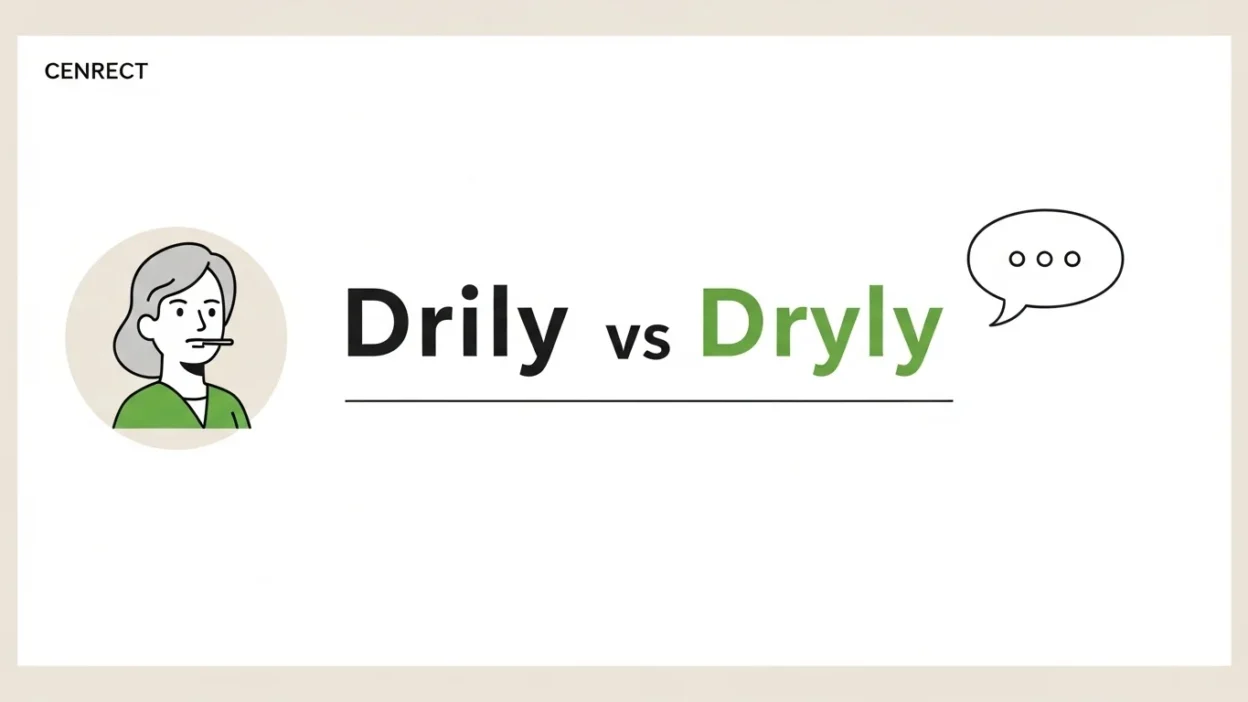
Some spelling differences in English are subtle but important, and drily vs dryly is a perfect example. If you’ve ever hesitated while writing this word, wondering which version looks right, you’re not alone. Both forms appear in writing, which makes the confusion even more understandable.
The good news is that both spellings are correct but they’re used differently depending on style and preference. In this guide, you’ll learn the meaning, usage, examples, and how to choose the right form confidently in your writing.
Quick Answer: Drily vs Dryly
- ✅ Both spellings are correct: Drily and Dryly
- ⭐ Preferred in American English: Dryly
- ⭐ Preferred in British English: Drily
Both words mean the same thing, but usage depends on regional preference and writing style.
What Do “Drily” and “Dryly” Mean?
The words drily and dryly are adverbs that describe how something is said or done in a way that is subtle, unemotional, or slightly sarcastic.
Simple Definitions:
- In a matter-of-fact or unemotional way
- With subtle or understated humor
- Without showing much emotion
Examples in Sentences:
- He dryly remarked that the situation was “not ideal.”
- She drily responded with a quiet joke.
- The teacher dryly explained the mistake.
Why Are There Two Spellings?
The difference comes from how English forms adverbs from adjectives ending in “y.”
The Rule:
When forming adverbs, words ending in “y” usually change “y” to “i” and add “-ly.”
- Dry → Drily
However, modern usage has also accepted:
- Dry → Dryly
Key Insight:
👉 Dryly keeps the original “y,” while drily follows the traditional spelling rule.
Both forms are correct, but preferences vary.
Drily vs Dryly: Comparison Table
| Feature | Dryly ✅ | Drily ✅ |
|---|---|---|
| Correct spelling | Yes | Yes |
| Meaning | Same | Same |
| Preferred usage | American English | British English |
| Style | Modern, common | Traditional |
| Usage frequency | More common globally | Less common |
Common Mistakes to Avoid
Even though both forms are correct, there are still some mistakes to watch for:
1. Thinking One Is Completely Wrong
❌ “Drily” is incorrect.
✅ Both are correct, but usage depends on style.
2. Mixing Styles in One Piece
Try to stay consistent within the same document.
3. Confusing Meaning
Both words have identical meanings—there is no difference in definition.
4. Overthinking the Choice
In most cases, using dryly is safe and widely accepted.
More Examples in Context
In Everyday Conversations:
- He dryly commented on the weather.
- She drily joked about the situation.
In Professional Writing:
- The report dryly noted the decline in performance.
- The speaker drily addressed the issue.
In Literature:
- Authors often use dryly to show subtle humor.
American vs British English Differences
This is where the main distinction appears.
- 🇺🇸 American English: Dryly (more common)
- 🇬🇧 British English: Drily (more traditional)
Practical Tip:
If you’re writing for an international audience, dryly is generally the safer choice.
Why Correct Usage Matters
Even when both forms are correct, choosing the right one improves clarity and consistency.
Key Benefits:
- Enhances readability
- Matches audience expectations
- Maintains professional tone
- Avoids confusion in style
Consistency is more important than which version you choose.
Synonyms and Related Words
Using alternatives can make your writing more expressive.
Synonyms:
- Calmly
- Subtly
- Casually
- Lightly
- Ironically
Easy Memory Trick
Here’s a simple way to remember:
👉 “Dryly keeps the ‘y’—modern and easy; drily follows the traditional rule.”
This helps you choose based on your writing style.
FAQs About Drily vs Dryly
Are both “drily” and “dryly” correct?
Yes, both are correct and have the same meaning.
Which spelling is more common?
Dryly is more commonly used, especially in American English.
Is “drily” outdated?
No, but it is less common and more traditional.
Do they have different meanings?
No, both words mean the same thing.
Which should I use in formal writing?
Either is acceptable, but consistency is important.
Is there a British vs American difference?
Yes, British English often prefers drily, while American English prefers dryly.
Can I use both in the same document?
It’s better to stick to one for consistency.
How can I remember the difference?
Think of dryly as the modern version and drily as the traditional form.
Summary: Drily vs Dryly
The difference between drily vs dryly is not about right or wrong—both spellings are correct. The key difference lies in usage preference. Dryly is more common in modern and American English, while drily is often seen in British or traditional writing.
Understanding this distinction allows you to choose the form that best fits your audience and writing style. Both words convey the same meaning, so clarity and consistency are what matter most.
Final Thoughts
English often gives you multiple correct options, and this is one of those cases. Whether you choose dryly or drily, the most important thing is to stay consistent and write with confidence. Small choices like this can make your writing feel more polished and intentional.