
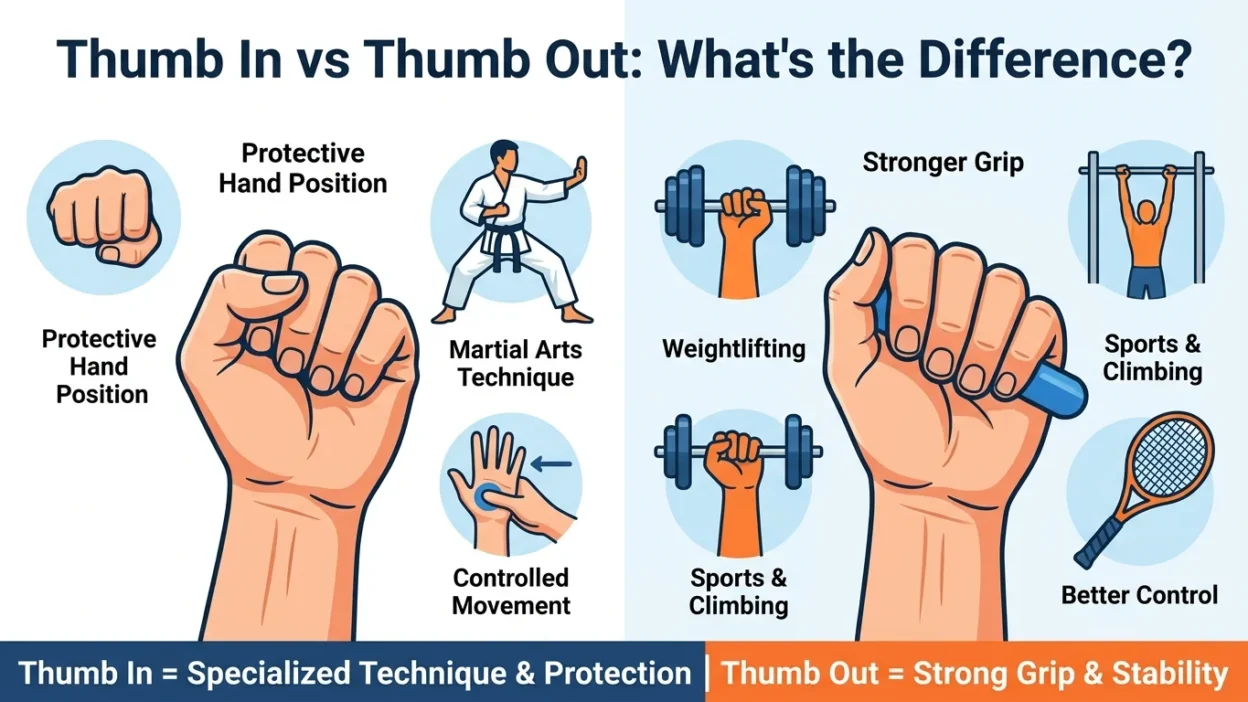
If you’ve heard the terms thumb in and thumb out, you may have noticed they’re used in many different activities, from sports and fitness to martial arts, weightlifting, shooting, and even everyday hand positioning. Because the meaning depends on the context, it’s easy to become confused about which technique is correct and when each one should be used.
In this guide, we’ll explain thumb in vs thumb out, explore what each position means, compare their advantages and disadvantages, provide practical examples, and highlight common mistakes. By the end, you’ll understand when each thumb position is appropriate and why the correct choice depends on the activity.
Quick Answer
The difference between thumb in vs thumb out is based on the position of the thumb during a grip or hand movement.
- Thumb in means the thumb is tucked inside the fingers or positioned close to the palm.
- Thumb out means the thumb wraps around the outside of the hand, object, or grip.
Neither position is universally better. The safest and most effective choice depends on what you’re doing.
For example:
- Many martial arts teach thumb in during certain fist formations to protect the thumb.
- Weightlifting and many sports usually recommend thumb out, wrapping around the equipment for a stronger and safer grip.
What Does “Thumb In” Mean?
Thumb in refers to placing the thumb inside the fingers or keeping it tucked toward the palm instead of wrapping it around an object.
The exact position varies depending on the activity.
Examples
- Some martial arts teach students to keep the thumb in while making specific hand formations.
- Certain rehabilitation exercises use a thumb in position.
- A coach demonstrated the proper thumb in technique during hand drills.
The purpose of the thumb-in position is often protection, control, or a specific technical movement.
Common Uses of “Thumb In”
You may encounter the thumb-in position in:
- Martial arts
- Hand therapy
- Rehabilitation exercises
- Certain stretching routines
- Finger coordination exercises
- Specific athletic drills
Always follow the technique recommended by your instructor or healthcare professional.
What Does “Thumb Out” Mean?
Thumb out refers to wrapping the thumb around the outside of an object or extending it away from the fingers.
This position generally creates a stronger grip and improves stability.
Examples
- The trainer instructed everyone to keep their thumb out around the barbell.
- The tennis coach corrected the player’s thumb out grip.
- She used a thumb out position while climbing.
In many sports, this grip provides additional control and safety.
Common Uses of “Thumb Out”
The thumb-out position is frequently recommended in:
- Weightlifting
- Rock climbing
- Tennis
- Baseball
- Golf
- Rowing
- Cycling
- Gymnastics
It often helps reduce the chance of losing your grip.
Thumb In vs Thumb Out: Comparison Table
| Feature | Thumb In | Thumb Out |
|---|---|---|
| Thumb Position | Tucked toward the palm or inside the fingers | Wrapped around or outside the grip |
| Main Purpose | Protection or specialized technique | Grip strength and control |
| Common Activities | Martial arts, therapy, rehabilitation | Weightlifting, sports, climbing |
| Grip Strength | Usually less secure | Usually stronger |
| Beginner Friendly | Depends on the activity | Commonly recommended for gripping objects |
When Should You Use Thumb In?
The thumb-in position is useful in situations where technique or thumb protection is the priority.
Examples
- Certain martial arts punches.
- Finger mobility exercises.
- Rehabilitation movements.
- Controlled hand-position drills.
- Specialized training techniques.
Always follow the guidance specific to your sport or activity.
When Should You Use Thumb Out?
The thumb-out position is generally preferred when gripping equipment or tools.
Examples
- Holding a barbell.
- Using pull-up bars.
- Climbing.
- Holding sports equipment.
- Carrying heavy objects.
Wrapping the thumb around the object usually creates a safer and more secure grip.
Real-Life Examples
Let’s compare both positions in common situations.
Weightlifting
Recommended:
- Thumb out around the bar provides a stronger grip.
Less common:
- Thumb in may be used only in certain advanced lifting techniques under expert supervision.
Martial Arts
Depending on the style:
- Some techniques require thumb in to reduce the chance of thumb injury.
- Others teach different hand positions for different strikes.
Rock Climbing
Correct:
- Climbers usually use a thumb out grip around holds whenever possible for greater control.
Everyday Carrying
When carrying heavy bags:
- A thumb out grip generally offers better stability.
Common Mistakes People Make
Because thumb positioning varies by activity, misunderstandings are common.
Assuming One Position Is Always Better
Neither grip is universally correct.
The proper technique depends on the task.
Ignoring Professional Instruction
Different sports have different grip requirements.
Always follow your coach, trainer, therapist, or instructor.
Using Thumb In for Heavy Lifting Without Guidance
In many lifting situations, wrapping the thumb around the bar improves safety.
Confusing Grip Terminology
Some sports use different names for similar thumb positions.
Understanding the context is important.
Safety Considerations
Proper thumb positioning can help reduce the risk of injury.
Consider these general tips:
- Learn the correct technique before training.
- Practice with light resistance first.
- Use the grip recommended for your activity.
- Ask an instructor to check your hand position.
- Avoid copying advanced techniques without proper coaching.
Safe technique is more important than simply choosing one thumb position over another.
American vs British English Differences
There is no significant difference between American and British English regarding the meanings of thumb in and thumb out.
The terms are descriptive rather than standardized grammar expressions.
However, individual sports organizations, coaches, or training manuals may use different terminology depending on the discipline rather than the country.
Whether you’re reading American or British instructional material, the correct thumb position will depend on the specific activity being discussed.
Easy Way to Remember the Difference
Here’s a simple memory trick.
Thumb In
Think:
Protection or specialized technique.
Thumb Out
Think:
Grip and control.
If you’re holding equipment, thumb out is often the more common recommendation.
If you’re performing a specialized hand technique, thumb in may be required.
Why Context Matters
Unlike many word comparisons, thumb in vs thumb out doesn’t have one universally correct answer.
For example:
A boxing coach may recommend one hand position.
A physical therapist may recommend another.
A weightlifting instructor may teach something entirely different.
The best thumb position always depends on:
- The activity
- Safety requirements
- Equipment
- Technique
- Professional instruction
Understanding the context helps you choose the correct approach.
FAQs
What is the difference between thumb in and thumb out?
Thumb in places the thumb toward the palm or inside the fingers, while thumb out wraps the thumb around or outside the grip.
Is thumb out always better?
No. The correct thumb position depends on the activity, technique, and safety recommendations.
Why do weightlifters often use thumb out?
Wrapping the thumb around the bar usually provides a stronger and more secure grip.
Why is thumb in used in some martial arts?
Certain techniques use a thumb-in position to protect the thumb and improve hand formation.
Can the wrong thumb position cause injury?
Yes. Using an incorrect grip for a particular activity may reduce control or increase the risk of strain or injury.
Are thumb in and thumb out official technical terms?
They are commonly used descriptive terms, but some sports and training systems may use different terminology.
Do British and American English use these terms differently?
No. Both varieties of English understand these terms in the same way.
Which thumb position should beginners use?
Beginners should follow the instructions of a qualified coach or instructor, as the correct position depends on the specific activity.
Summary
Understanding thumb in vs thumb out is all about recognizing the purpose of each hand position. Thumb in generally refers to tucking the thumb toward the palm or inside the fingers and is commonly used in specialized techniques, rehabilitation exercises, or certain martial arts. Thumb out involves wrapping the thumb around a grip or object, making it the preferred choice in many sports, weightlifting, climbing, and everyday tasks that require a secure hold.
Rather than thinking of one position as universally better, it’s important to consider the activity, the equipment being used, and the guidance of qualified instructors. Using the appropriate thumb position for the situation improves both safety and performance while helping you develop proper technique.