Have you ever stopped while writing and wondered whether to use lesser or lessor? Since these two words differ by only one letter and sound almost identical, they’re easy to confuse. However, they have completely different meanings and are used in entirely different contexts.
In this guide, you’ll learn the difference between lesser vs lessor, understand what each word means, see practical examples, avoid common mistakes, and discover simple memory tricks that make choosing the correct word much easier.
Quick Answer
The difference between lesser and lessor is straightforward.
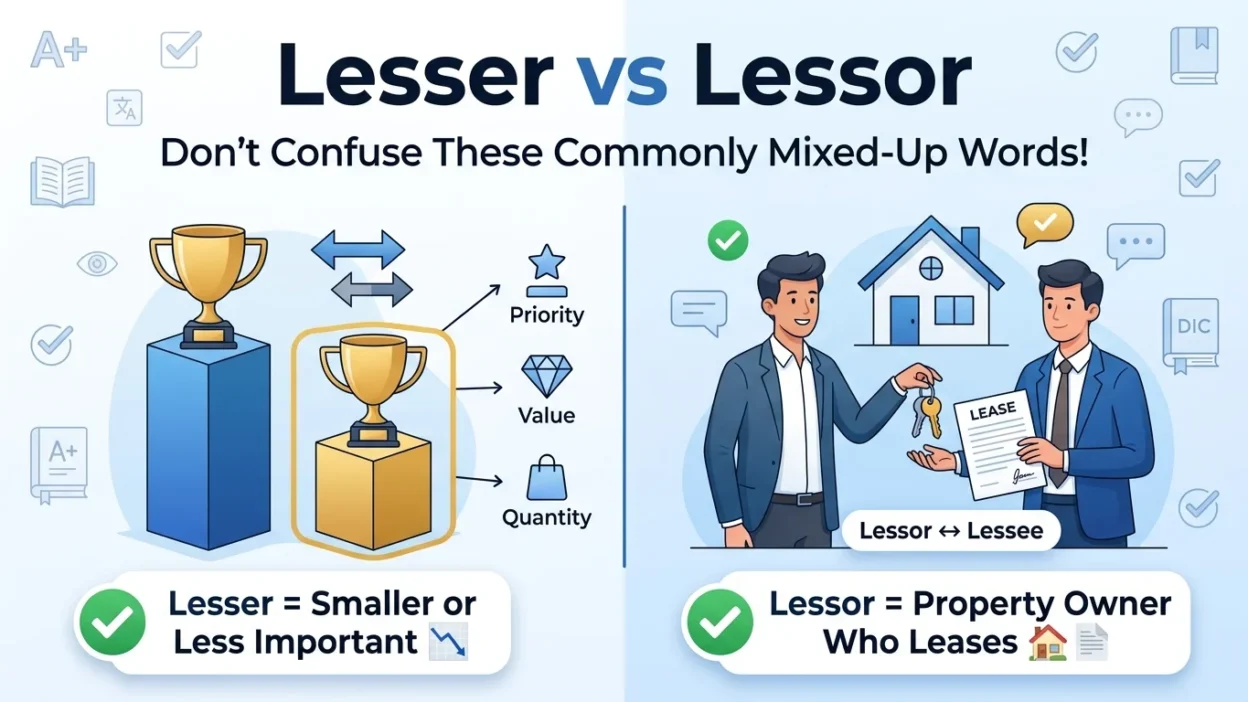
- Lesser is an adjective that means smaller, lower in importance, or not as great.
- Lessor is a noun used in legal and property contexts. It refers to the person or company that leases property to someone else.
Examples:
- She accepted the lesser of the two offers. ✅
- The lessor signed the lease agreement. ✅
Think of it this way:
- Lesser = smaller or less important.
- Lessor = the owner renting out property.
What Does “Lesser” Mean?
Lesser is the comparative form of less and functions as an adjective.
It describes something that is smaller in amount, lower in rank, less significant, or of lower importance.
Examples
- He chose the lesser option.
- The committee focused on the lesser issues first.
- This is the lesser of two problems.
- She accepted a lesser role in the project.
- The country experienced a lesser economic impact.
In each example, lesser compares one thing to another and indicates a lower degree or importance.
What Does “Lessor” Mean?
Lessor is a noun used mainly in legal, business, and real estate documents.
It refers to the person, company, or organization that grants a lease and allows another person to use property in exchange for payment.
The person renting the property is called the lessee.
Examples
- The lessor owns the apartment.
- The lessor signed the rental agreement.
- The contract protects both the lessor and the lessee.
- The lessor agreed to repair the property.
- The tenant contacted the lessor regarding maintenance.
This word is almost always associated with leases and rental agreements.
Lesser vs Lessor: Comparison Table
| Feature | Lesser | Lessor |
|---|---|---|
| Part of Speech | Adjective | Noun |
| Meaning | Smaller or less important | Person who leases property |
| Common Context | Comparisons, descriptions | Real estate, legal contracts |
| Opposite | Greater | Lessee (related role) |
| Example | The lesser problem. | The lessor signed the lease. |
When Should You Use “Lesser”?
Use lesser whenever you’re comparing two things and describing one as smaller, weaker, less important, or lower in value.
Examples
- Choose the lesser expense.
- The company ignored the lesser complaints.
- It was considered the lesser risk.
- We focused on the lesser priority.
- He accepted a lesser salary.
The emphasis is always on comparison.
When Should You Use “Lessor”?
Use lessor only when referring to the owner or provider of leased property.
Examples
- The lessor prepared the lease.
- The lessor collected the monthly rent.
- The agreement requires approval from the lessor.
- Every lessor must follow local property laws.
- The lessor inspected the building before renewal.
Outside legal or rental situations, this word is rarely used.
Common Mistakes People Make
These words are frequently confused because they sound alike.
Mistake 1: Using “Lessor” Instead of “Lesser”
❌ This is the lessor problem.
✅ This is the lesser problem.
Mistake 2: Using “Lesser” in a Lease Agreement
❌ The lesser signed the rental contract.
✅ The lessor signed the rental contract.
Mistake 3: Assuming They Are Different Spellings of the Same Word
Although they sound similar, they have different meanings, grammatical roles, and uses.
Always consider the context before choosing one.
Easy Trick to Remember the Difference
Here’s a simple memory trick.
Lessor contains the letters “or.”
Think of:
Owner = Lessor
Both words end with a similar sound and relate to property ownership.
Now think about lesser.
It comes from less, meaning smaller or lower.
Whenever you’re making a comparison, choose lesser.
Everyday Examples
Using “Lesser”
- We selected the lesser cost.
- He accepted the lesser punishment.
- The judge considered the lesser offense.
- This road has lesser traffic.
- The museum displays works by lesser-known artists.
Using “Lessor”
- The lessor renewed the lease.
- The lessor increased the rent.
- The lessor approved the renovation.
- Contact the lessor before making repairs.
- The lessor provided the property inspection report.
Common Expressions
You’ll often encounter these phrases.
With “Lesser”
- Lesser evil
- Lesser amount
- Lesser-known
- Lesser priority
- Lesser value
- Lesser responsibility
With “Lessor”
- Property lessor
- Equipment lessor
- Vehicle lessor
- Commercial lessor
- Residential lessor
- Lessor agreement
Recognizing these common combinations makes choosing the correct word easier.
American vs British English
There is no meaningful difference between American and British English regarding lesser and lessor.
Both varieties use:
- Lesser as the adjective meaning smaller or less significant.
- Lessor as the legal term for the owner who leases property.
The spellings and meanings are identical in both forms of English.
Practice Sentences
Choose the correct word.
- The ______ signed the lease agreement.
Answer: lessor
- She chose the ______ of two options.
Answer: lesser
- The tenant contacted the ______.
Answer: lessor
- We decided to focus on the ______ issue first.
Answer: lesser
- The ______ owns the commercial building.
Answer: lessor
Frequently Asked Questions (FAQs)
What is the difference between lesser and lessor?
Lesser is an adjective meaning smaller or less important, while lessor is a noun referring to someone who leases property.
Is lesser the same as lessor?
No. They have different meanings and are used in different contexts.
Who is the lessor in a lease?
The lessor is the property owner or organization that rents property to another person.
What is the opposite of lessor?
The related term is lessee, which refers to the person renting or leasing the property.
Can lesser refer to a person?
Yes. It can describe someone as being lower in rank, status, or importance in comparison with another person.
Is lessor only used in legal documents?
It is most common in legal, business, and real estate contexts, but it may also appear in financial and commercial writing.
Is there any difference between American and British English?
No. Both American and British English use lesser and lessor with the same meanings and spellings.
Summary
Understanding lesser vs lessor becomes simple once you recognize their different purposes. Lesser is an adjective used for comparisons, describing something as smaller, lower, or less important. Lessor, on the other hand, is a legal noun that refers to the person or organization leasing property to someone else. Although the words sound almost identical, they are not interchangeable.
Using the correct word helps make your writing more accurate and professional. Whether you’re comparing two choices or discussing a lease agreement, remembering that lesser relates to comparison and lessor relates to property ownership will help you avoid a common English vocabulary mistake.

Dani Morrison is a dedicated language writer and spelling expert at Spelword.com, where she focuses on helping readers understand common English spelling mistakes and confusing word pairs. With a passion for clear communication, Dani creates easy-to-follow guides that simplify complex grammar and spelling rules for everyday use.