Have you ever come across the words humour and humor and wondered if one is incorrect? You’re not alone. These two spellings often confuse English learners, writers, bloggers, and professionals because both appear in books, articles, and dictionaries. The truth is that both spellings are correct, but the one you should use depends on whether you’re writing in American or British English.
Understanding the difference between humour vs humor will help you write with confidence and avoid inconsistent spelling. In this guide, you’ll learn what each word means, when to use it, how it differs between American and British English, common mistakes to avoid, and plenty of examples to make the distinction clear.
Quick Answer
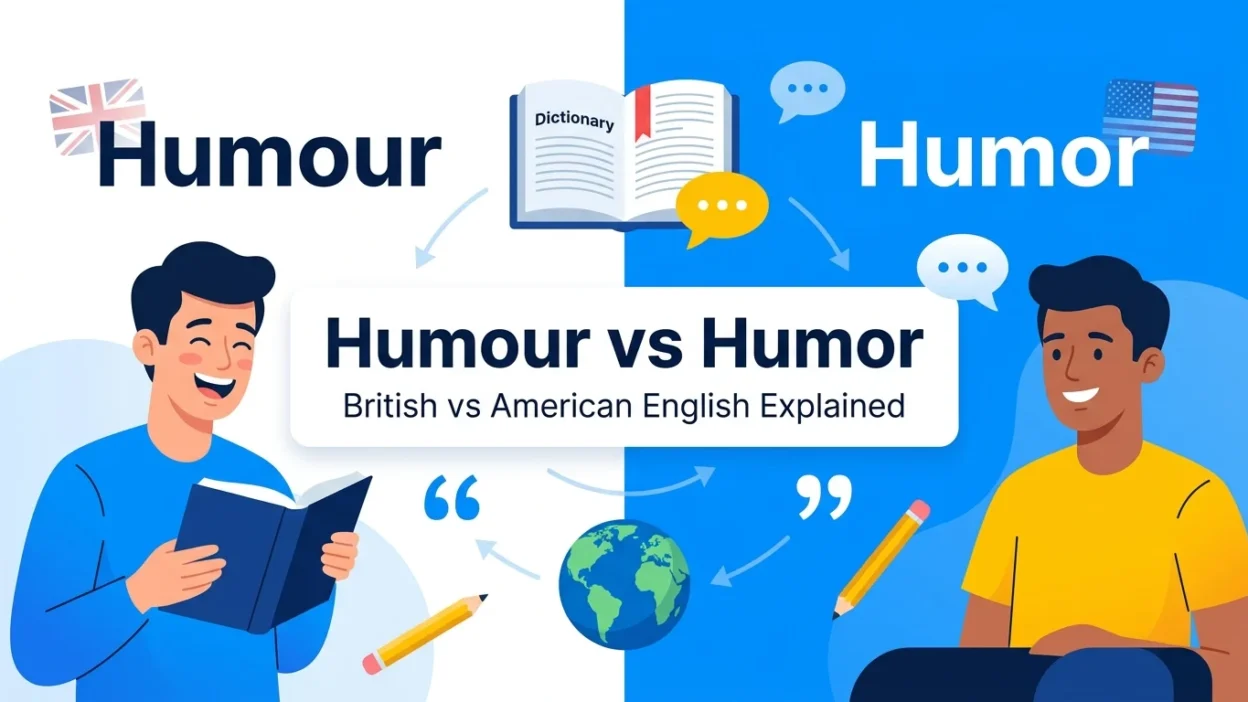
The difference between humour and humor is purely a matter of regional spelling.
- Humor is the standard spelling in American English.
- Humour is the preferred spelling in British English and many Commonwealth countries, including Canada, Australia, and New Zealand.
Both words have the same meaning. They refer to something funny, amusing, or the ability to appreciate and express comedy.
What Do “Humour” and “Humor” Mean?
Both humour and humor describe the quality of being funny or entertaining. They can also refer to a person’s ability to make others laugh or appreciate amusing situations.
The word may be used in everyday conversation, literature, entertainment, psychology, and education.
For example:
- She has a wonderful sense of humor. (American English)
- She has a wonderful sense of humour. (British English)
The meaning remains exactly the same regardless of the spelling.
Humour vs Humor: Comparison Table
| Feature | Humour | Humor |
|---|---|---|
| Meaning | Funniness or the ability to be amusing | Funniness or the ability to be amusing |
| Correct? | Yes | Yes |
| Preferred in | British English | American English |
| Used in the UK | Yes | Rarely |
| Used in the USA | Rarely | Yes |
| Meaning Changes? | No | No |
Why Are There Two Spellings?
The difference exists because American and British English developed different spelling conventions over time.
British English often keeps the traditional -our ending in words such as:
- Colour
- Favourite
- Honour
- Humour
American English simplified many of these spellings by dropping the “u.”
Examples include:
- Color
- Favorite
- Honor
- Humor
Neither spelling is more correct than the other. Your choice should simply match your audience.
American vs British English
The spelling changes depending on the variety of English you are using.
American English
Use humor.
Examples:
- His humor always makes the meeting enjoyable.
- The comedian is famous for his clever humor.
- Good humor helps reduce stress.
British English
Use humour.
Examples:
- Her humour brightened everyone’s day.
- British humour is often dry and witty.
- A good sense of humour is appreciated everywhere.
If you’re writing for an international audience, choose one spelling and use it consistently.
Examples of Humor in Sentences
These examples follow American English spelling.
- The movie is full of clever humor.
- His sense of humor helped everyone relax.
- Teachers often use humor to engage students.
- The author’s humor makes the novel enjoyable.
- A little humor can improve difficult conversations.
Examples of Humour in Sentences
These examples follow British English spelling.
- The book is known for its gentle humour.
- She enjoys British humour because it is subtle.
- His humour helped lift the team’s spirits.
- The speech included plenty of light-hearted humour.
- Children respond well to positive humour.
Common Phrases Using Humor and Humour
American English:
- Sense of humor
- Good humor
- Dry humor
- Dark humor
- Humor writer
- Humor magazine
British English:
- Sense of humour
- Good humour
- Dry humour
- Dark humour
- Humour writer
- Humour magazine
The phrases have identical meanings. Only the spelling changes.
Common Mistakes to Avoid
Many learners make small spelling errors when using these words.
Mixing Both Spellings
Incorrect:
- His humor and British humour make the article inconsistent.
Correct:
- Use humor throughout an American English document.
- Use humour throughout a British English document.
Consistency is important for professional writing.
Thinking One Spelling Is Wrong
Some people believe only one version is correct.
Actually:
- Humour is correct.
- Humor is also correct.
Both are accepted by dictionaries and language experts.
Using the Wrong Version for Your Audience
If you’re writing for American readers, use humor.
If you’re writing for British readers or countries that follow British English, use humour.
Matching your audience improves readability and professionalism.
Easy Ways to Remember the Difference
Here are a few simple memory tips:
- Humor = American English
- Humour = British English
- The meaning never changes.
- Follow the spelling style of your audience.
- Stay consistent throughout your writing.
When Should You Use Humor?
Choose humor if you are writing:
- American blogs
- US businesses
- American universities
- US news websites
- Content aimed at American readers
Example:
“Her sense of humor made the presentation more engaging.”
When Should You Use Humour?
Choose humour if your audience includes readers in:
- The United Kingdom
- Australia
- New Zealand
- Many Canadian publications
- Other countries following British English
Example:
“His cheerful humour helped everyone stay positive.”
Is One More Formal Than the Other?
No.
Both spellings are equally formal and accepted in academic writing, journalism, business communication, and publishing.
The only difference is the regional spelling convention.
Professional writers simply choose the spelling that matches the language style required by their publisher, employer, or audience.
Other Similar British and American Spellings
The difference between humour and humor follows the same pattern as many other words.
Examples include:
- Colour vs Color
- Favourite vs Favorite
- Honour vs Honor
- Labour vs Labor
- Behaviour vs Behavior
- Neighbour vs Neighbor
Learning these spelling patterns makes it easier to switch between American and British English.
FAQs
Is humour or humor correct?
Both are correct. Humor is used in American English, while humour is preferred in British English.
What is the difference between humour and humor?
There is no difference in meaning. The only difference is the regional spelling.
Why does British English use humour?
British English keeps the traditional -our spelling that has been used for centuries.
Why does American English use humor?
American English simplified many spellings by removing the silent “u” from words ending in -our.
Can I use both spellings in the same article?
No. Choose one spelling style and use it consistently throughout your writing.
Is sense of humour different from sense of humor?
No. Both phrases have exactly the same meaning. The spelling simply depends on the variety of English being used.
Which spelling should I use in academic writing?
Follow the style guide or language preference of your institution or publisher. American publications generally use humor, while British publications use humour.
Summary
The difference between humour vs humor is entirely based on regional spelling conventions. Humor is the standard spelling in American English, while humour is preferred in British English and many Commonwealth countries. Both words have the same meaning and describe the quality of being funny, amusing, or able to make people laugh.
Choosing the correct spelling depends on your audience rather than grammar or meaning. If you’re writing for readers in the United States, use humor. If your audience is in the United Kingdom or follows British English conventions, use humour. Staying consistent with one spelling throughout your document will make your writing more polished, professional, and easier to read.

William Harved is a passionate language enthusiast and digital writer specializing in English spelling, grammar clarity, and common writing mistakes. As the primary author of Spelword.com, he focuses on helping readers understand confusing word pairs, correct spelling errors, and improve everyday communication.