English can be tricky, especially when two words sound similar but have completely different meanings. One common pair that confuses many writers and speakers is accept vs except. Although these words differ by only one letter, using the wrong one can change the meaning of your sentence entirely.
If you’ve ever paused while writing and wondered whether to use accept or except, you’re not alone. Understanding the difference is simple once you learn what each word means and how it functions in a sentence. This guide will help you use both words correctly with easy explanations, examples, and practical tips.
Quick Answer
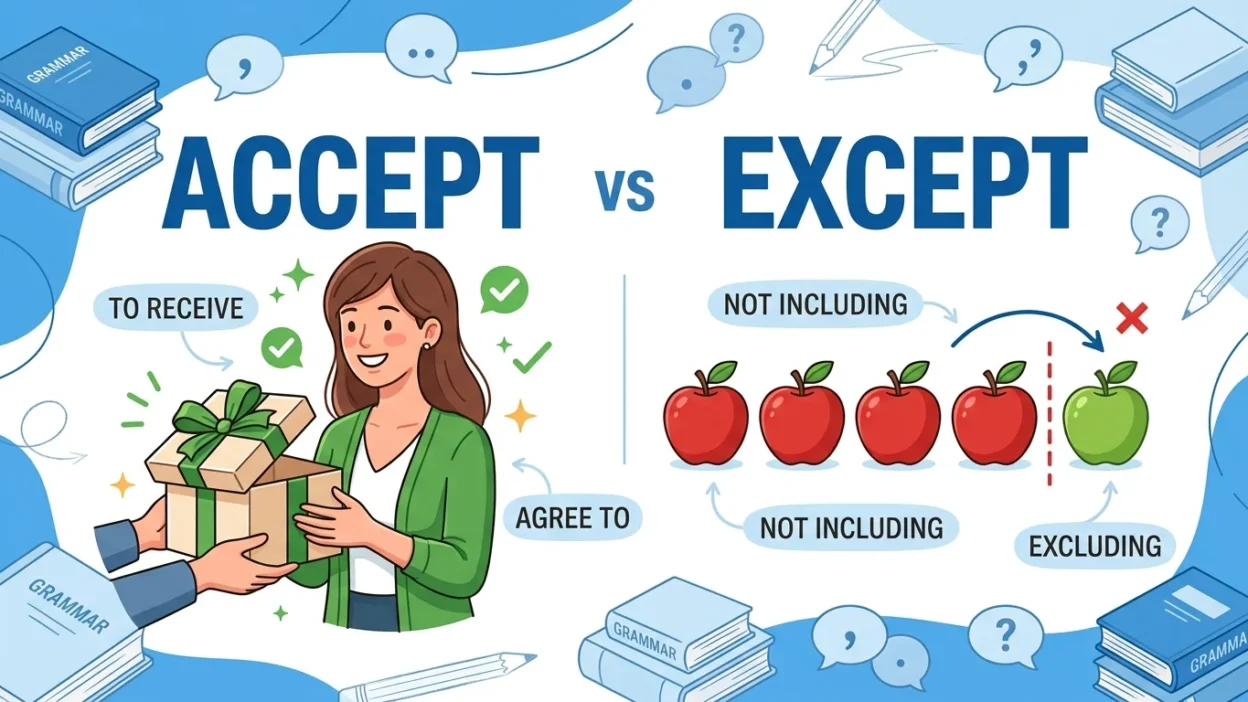
Accept means to receive, agree to, or take something willingly.
Except means excluding, leaving out, or not including something.
Examples:
- I gladly accept your invitation.
- Everyone came to the party except John.
A simple memory trick:
- Accept = Receive
- Except = Exclude
What Does Accept Mean?
The word accept is a verb. It refers to receiving, agreeing to, approving, or taking something that is offered.
When you accept something, you are saying “yes” to it.
Examples of Accept
- She decided to accept the job offer.
- I accept your apology.
- The school will accept applications until Friday.
- He was happy to accept the award.
- We accept credit cards and cash.
In all these examples, someone receives, agrees to, or approves something.
Common Uses of Accept
You may use accept when talking about:
- Invitations
- Gifts
- Offers
- Responsibilities
- Apologies
- Payments
- Decisions
For example:
- They accepted the invitation.
- The company accepts online payments.
What Does Except Mean?
The word except is usually a preposition, although it can sometimes function as a conjunction or verb. It means excluding someone or something from a group.
Think of except as meaning “not including.”
Examples of Except
- Everyone passed the test except Tom.
- The store is open every day except Sunday.
- I like all vegetables except spinach.
- All flights arrived on time except one.
- She invited everyone except her neighbor.
In these examples, something or someone is excluded.
Common Uses of Except
You often use except when:
- Excluding a person
- Excluding an item
- Mentioning an exception
- Describing something left out
For example:
- Everyone attended except Sarah.
- The museum opens daily except Mondays.
Accept vs Except: Key Differences
The easiest way to understand the difference is to remember their roles.
| Feature | Accept | Except |
|---|---|---|
| Meaning | Receive, agree to, take | Exclude, leave out |
| Part of Speech | Verb | Usually preposition |
| Action | Saying yes | Leaving something out |
| Example | I accept your offer. | Everyone came except Alex. |
| Memory Tip | Accept = Receive | Except = Exclude |
Accept vs Except in Sentences
Looking at both words side by side makes the distinction clearer.
Accept
- Please accept this gift.
- She did not accept the invitation.
- We accept applications online.
Except
- Everyone attended except Mike.
- I eat all fruits except bananas.
- The office is open every day except Sunday.
Notice how accept involves receiving something, while except identifies what is excluded.
How to Remember the Difference
A quick memory trick can help you avoid mistakes.
Accept Contains “Ac”
Think of accept as acquiring or accepting something.
- Accept = Take in
- Accept = Receive
Example:
- I accept the scholarship.
Except Contains “Ex”
Think of except as excluding something.
- Except = Exclude
- Except = Leave out
Example:
- Everyone came except Emma.
The shared “Ex” sound can remind you of exclusion.
Common Mistakes People Make
Because these words sound similar, many writers accidentally use the wrong one.
Incorrect
- I except your apology.
Correct
- I accept your apology.
Why?
An apology is something you receive, so accept is correct.
Incorrect
- Everyone accept Jake arrived on time.
Correct
- Everyone except Jake arrived on time.
Why?
Jake is being excluded from the group, so except is correct.
Incorrect
- The company excepts all major credit cards.
Correct
- The company accepts all major credit cards.
Why?
The company receives payments, so accepts is the right choice.
Real-Life Examples
Here are some practical situations where these words commonly appear.
At Work
- The manager accepted the proposal.
- Everyone attended the meeting except the director.
At School
- The university accepts international students.
- All students passed except one.
In Everyday Conversations
- I happily accept your invitation.
- Everyone is ready except my brother.
In Business
- The store accepts debit cards.
- All items are refundable except clearance products.
Accept and Except in Formal Writing
In professional and academic writing, confusing these words can affect clarity.
Correct Business Example
- We accept returns within thirty days.
Correct Policy Example
- Returns are allowed on all products except customized items.
Using the proper word ensures your message remains clear and professional.
American vs British English
There is no significant difference between American and British English when it comes to accept and except.
Both forms use:
- Accept to mean receive or agree.
- Except to mean exclude or leave out.
The spelling, pronunciation, and meanings remain the same in both varieties of English.
Tips to Avoid Confusing Accept and Except
Here are some practical tips:
- Ask yourself whether something is being received or excluded.
- Use accept when someone says “yes” to something.
- Use except when something is left out.
- Remember: Accept = Receive.
- Remember: Except = Exclude.
- Proofread carefully when writing formal documents.
These simple habits can eliminate most mistakes.
Why the Difference Matters
Using the wrong word can completely change the meaning of a sentence.
Compare:
- I accept your invitation.
- I except your invitation.
The first sentence is correct and clear.
The second sentence is incorrect because except does not mean receive or agree.
Even small word mistakes can create confusion for readers, making it important to understand the distinction.
Frequently Asked Questions
What is the difference between accept and except?
Accept means to receive or agree to something. Except means to exclude or leave something out.
Is accept a verb?
Yes. Accept is a verb because it describes an action such as receiving, agreeing, or approving.
Is except a preposition?
Usually, yes. Except commonly functions as a preposition meaning “excluding.”
How can I remember accept vs except?
Remember that accept means receive, while except means exclude. Think of “Ex” in except as standing for exclusion.
Can accept and except be used interchangeably?
No. They have different meanings and cannot normally replace each other.
Which word means to leave something out?
Except means to leave something out or exclude it from a group.
Which word means to agree to an offer?
Accept means to agree to an offer, invitation, proposal, or request.
Are accept and except pronounced the same?
They are pronounced similarly but not exactly the same. Their meanings are completely different despite their similar sounds.
Summary
Understanding accept vs except is easier once you focus on their core meanings. Accept means to receive, approve, agree to, or take something willingly. It is always used as a verb and involves saying “yes” to something offered. Except, on the other hand, means excluding or leaving something out. It is commonly used to identify an exception within a group.
Although the words look and sound similar, their meanings are opposite in many situations. By remembering that accept receive and except =exclude, you can confidently choose the correct word in conversations, emails, school assignments, and professional writing.

William Harved is a passionate language enthusiast and digital writer specializing in English spelling, grammar clarity, and common writing mistakes. As the primary author of Spelword.com, he focuses on helping readers understand confusing word pairs, correct spelling errors, and improve everyday communication.