It’s easy to get tripped up by words that sound similar but aren’t spelled the same. One common confusion is skiddish vs skittish. If you’ve ever typed one and wondered if it looks right, you’re definitely not alone.
This small spelling mistake can quietly affect how your writing is perceived. Whether you’re writing casually or professionally, using the correct form helps your message feel polished and clear. Let’s break it down in a simple, friendly way so you can use the right word with confidence.
Quick Answer: Skiddish vs Skittish
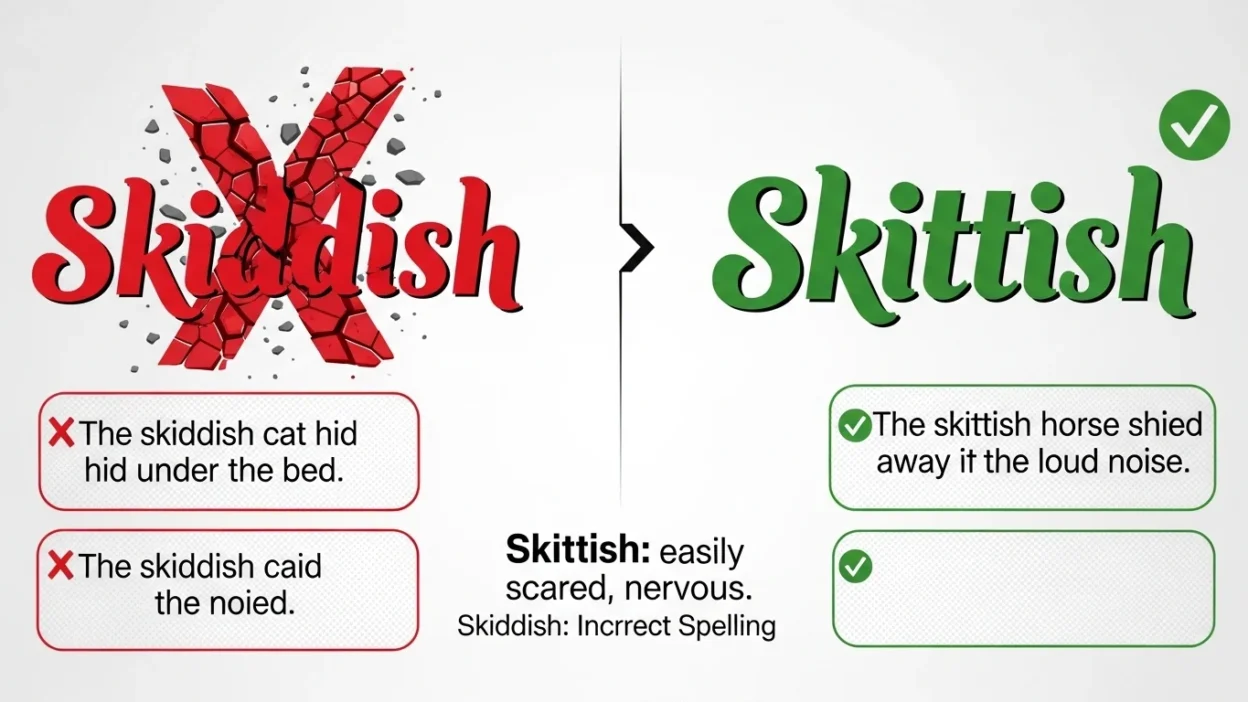
- ✅ Correct spelling: Skittish
- ❌ Incorrect spelling: Skiddish
The word skittish is the correct form and means easily frightened or nervous. Skiddish is a misspelling and should not be used.
What Does “Skittish” Mean?
The word skittish is an adjective used to describe someone or something that is easily startled, nervous, or unpredictable.
Simple Definitions:
- Easily frightened or alarmed
- Nervous or jumpy
- Unpredictable in behavior
Examples in Sentences:
- The horse became skittish at the loud noise.
- She felt skittish before the big presentation.
- Investors are often skittish during uncertain markets.
Why Do People Write “Skiddish”?
The incorrect spelling skiddish usually comes from how the word sounds when spoken.
Common Reasons:
- Phonetic spelling (writing what you hear)
- Confusion with words ending in “-ish”
- Lack of familiarity with the correct spelling
Because “skittish” has a double “t,” it can be easy to mishear and simplify it incorrectly.
Understanding the Correct Spelling Pattern
The word skittish comes from older English forms related to lively or unpredictable behavior.
Key Insight:
👉 The correct spelling includes a double “t”: skittish, not skiddish.
Similar Words with Double Letters:
- Little
- Better
- Written
Recognizing this pattern helps reinforce the correct form.
Skiddish vs Skittish: Comparison Table
| Feature | Skittish ✅ | Skiddish ❌ |
|---|---|---|
| Correct spelling | Yes | No |
| Meaning | Easily frightened or nervous | No meaning |
| Dictionary status | Recognized | Not recognized |
| Usage | Formal & informal | Incorrect |
| Spelling pattern | Double “t” | Missing letter |
Common Mistakes to Avoid
Even simple spelling differences can lead to confusion. Here are the most common mistakes:
1. Dropping One “T”
❌ The horse was skiddish.
✅ The horse was skittish.
2. Relying Only on Sound
The pronunciation may sound like “skiddish,” but the correct spelling is different.
3. Typing Quickly Without Checking
Fast typing can lead to missing letters. Always proofread your writing.
4. Confusing with Other “-ish” Words
Words like “childish” or “reddish” may influence incorrect spelling patterns.
More Examples of “Skittish” in Context
In Everyday Life:
- He became skittish in crowded places.
- The dog grew skittish during the storm.
In Professional Context:
- Markets can become skittish during economic uncertainty.
- New employees may feel skittish on their first day.
In Emotional Context:
- She felt skittish about making a big decision.
American vs British English Differences
There is no difference between American and British English for this word.
- 🇺🇸 American English: skittish
- 🇬🇧 British English: skittish
The spelling remains the same in both forms of English.
Why Correct Spelling Matters
Using the correct spelling of skittish improves both clarity and credibility in your writing.
Key Benefits:
- Enhances readability
- Builds trust with readers
- Improves professionalism
- Avoids confusion
Even small mistakes like skiddish can make your writing appear less polished.
Synonyms and Related Words
Using different words can make your writing more expressive and engaging.
Synonyms of “Skittish”:
- Nervous
- Jumpy
- Anxious
- Uneasy
- Restless
Easy Memory Trick
Here’s a simple way to remember:
👉 “Skittish has two T’s—like a quick, jumpy reaction happening twice.”
This helps you recall the correct spelling easily.
FAQs About Skiddish vs Skittish
Is “skiddish” ever correct?
No, skiddish is always incorrect and should not be used.
What does “skittish” mean?
It means easily frightened, nervous, or jumpy.
Why do people spell it as “skiddish”?
Because of pronunciation confusion and unfamiliar spelling.
Is “skittish” used in formal writing?
Yes, it is used in both formal and informal contexts.
Is there a difference in British English?
No, both American and British English use skittish.
Can “skittish” describe emotions?
Yes, it can describe nervous or uneasy feelings.
How can I remember the correct spelling?
Remember the double “t” in skittish.
Can spell-check tools catch this mistake?
Yes, most tools will flag skiddish as incorrect.
Summary: Skiddish vs Skittish
The difference between skiddish vs skittish is simple but important. Skittish is the correct spelling and describes someone or something that is easily startled or nervous, while skiddish is a common misspelling that should always be avoided.
Understanding the correct spelling and practicing it in context can help you avoid this mistake. Small details like this make your writing clearer, more professional, and more effective.