English is full of phrases that sound similar but have very different meanings. One of the most commonly confused expressions is make do vs make due. Because both phrases sound almost identical when spoken, many people accidentally write the wrong version without realizing it.
If you’ve ever wondered whether the correct phrase is make do or make due, you’re not alone. The confusion is understandable, but only one of these expressions is correct in most situations. Understanding the difference can help you avoid common grammar mistakes and make your writing more polished and professional.
Quick Answer
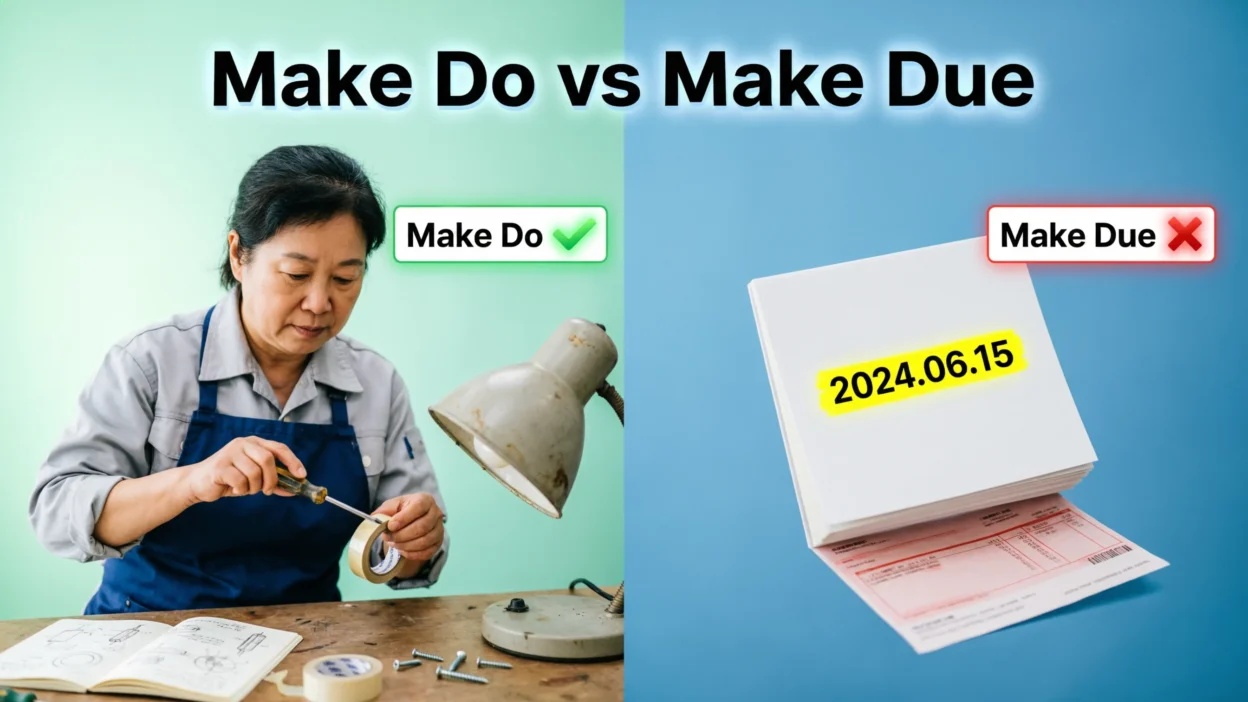
- Make do ✅ = to manage with what you have, even if it is not ideal
- Make due ❌ = usually incorrect in standard English
Simple examples:
- We didn’t have enough chairs, so we had to make do.
- She learned to make do with limited resources.
In almost every case, make do is the correct phrase.
What Does “Make Do” Mean?
The phrase make do means:
To cope, manage, or get by with whatever is available.
People use this expression when they do not have everything they need but find a way to continue anyway.
Examples:
- We forgot our camping stove, so we had to make do with a small grill.
- They couldn’t afford a new car and decided to make do with the old one.
- During the storm, residents had to make do without electricity.
The phrase often suggests creativity, adaptability, and resilience.
What Does “Make Due” Mean?
In standard English, make due is generally considered incorrect when people mean make do.
The confusion happens because the word due is common in phrases such as:
- Due date
- Due payment
- Due process
- Due respect
However, these meanings have nothing to do with managing with limited resources.
Incorrect Example:
- ❌ We had to make due with what we had.
Correct Version:
- ✔️ We had to make do with what we had.
Make Do vs Make Due: Key Differences
| Phrase | Meaning | Correct Usage |
|---|---|---|
| Make do ✅ | Manage with available resources | Standard English |
| Make due ❌ | Usually a mistaken spelling | Generally incorrect |
Why People Confuse Make Do and Make Due
Several factors contribute to the confusion:
- Both phrases sound similar when spoken.
- The word due is more familiar to some writers.
- Autocorrect may not flag the mistake.
- English contains many similar-sounding expressions.
Because of these factors, make due often appears online, even though it is not the accepted expression.
The Origin of “Make Do”
The phrase make do has existed in English for centuries.
Originally, it referred to:
Making something sufficient for a particular purpose.
Over time, the phrase evolved into a common expression meaning to get by with what is available.
Examples:
- Families learned to make do during difficult economic periods.
- Travelers often make do with limited supplies.
The phrase became especially popular during times of hardship when people had to be resourceful.
Common Situations Where “Make Do” Is Used
Financial Challenges
People often use the phrase when discussing limited budgets.
Examples:
- We had to make do until payday.
- The family made do with secondhand furniture.
Household Situations
The expression is common when replacements are unavailable.
Examples:
- The lamp broke, so we had to make do with candles.
- We made do without air conditioning during the heatwave.
Work and School
People frequently use the phrase when resources are limited.
Examples:
- The team had to make do with outdated equipment.
- Students sometimes make do with borrowed textbooks.
Common Mistakes to Avoid
1. Writing “Make Due” Instead of “Make Do”
Incorrect:
- ❌ We’ll make due until next month.
Correct:
- ✔️ We’ll make do until next month.
2. Assuming “Due” Means “Enough”
The word due relates to:
- Owed obligations
- Expected events
- Scheduled dates
It does not mean coping with limited resources.
3. Overthinking the Phrase
Remember:
- If you mean “manage somehow,” use make do.
Easy Trick to Remember the Difference
A simple memory trick is:
👉 Make do = do your best.
The word do reminds you of taking action with what you have.
Example:
- We didn’t have the perfect tools, but we made do.
Another reminder:
👉 Due is about deadlines and obligations.
Examples:
- The payment is due tomorrow.
- The report is due next week.
American vs British English
There is no significant difference between American and British English regarding this phrase.
American English:
- Make do ✅
British English:
- Make do ✅
Both varieties use the same expression and meaning.
Examples of “Make Do” in Sentences
Everyday Examples
- We ran out of milk, so we had to make do without it.
- They made do with a smaller apartment.
Professional Examples
- The company made do with a limited budget.
- Our department had to make do until new equipment arrived.
Personal Examples
- She learned to make do after moving to a new city.
- We can make do for a few more days.
Similar Commonly Confused Phrases
English contains many expressions that are frequently mixed up.
| Correct Phrase | Incorrect Version |
|---|---|
| Make do | Make due |
| By accident | On accident |
| Could have | Could of |
| For all intents and purposes | For all intensive purposes |
Understanding these distinctions helps improve grammar and writing accuracy.
Synonyms for “Make Do”
Depending on context, alternatives include:
- Manage
- Cope
- Get by
- Adapt
- Survive
- Improvise
- Work with what is available
Example:
- We had to make do.
- We had to get by.
Why Correct Usage Matters
Using the correct phrase improves:
- Grammar accuracy
- Professional writing
- Reader confidence
- Communication clarity
- SEO quality
Since make due appears frequently online, some readers may assume it is correct. However, using make do demonstrates a stronger understanding of standard English.
Make Do vs Make Due in Professional Writing
In professional communication, the correct phrase is especially important.
Business Example:
- ✔️ We will make do with existing resources until the new shipment arrives.
Academic Example:
- ✔️ Researchers had to make do with limited funding.
Using the correct expression helps maintain credibility and professionalism.
FAQs
What is the difference between make do and make due?
“Make do” means to manage with available resources, while “make due” is generally considered incorrect in standard English.
Is make due ever correct?
In most situations, no. People usually mean “make do” when they write “make due.”
What does make do mean?
It means to cope, manage, or get by with what you currently have.
Why do people say make due?
The mistake occurs because “do” and “due” sound similar when spoken.
Is make do an idiom?
Yes. It is an established English idiom meaning to manage despite limitations.
Do Americans and British people both use make do?
Yes. The phrase is common in both American and British English.
Can I use make do in formal writing?
Yes. It is accepted in professional, academic, and everyday writing.
How can I remember the correct phrase?
Think of “do” as taking action. If you are managing with what you have, use “make do.”
Summary
Understanding make do vs make due is simpler than it may seem. Make do is the correct and widely accepted expression that means managing with available resources, even when conditions are not ideal. It is commonly used in everyday conversation, professional writing, and literature.
By contrast, make due is generally a spelling mistake that results from the similar pronunciation of the two words. Remembering that do relates to taking action and making the best of a situation can help you choose the correct phrase every time.

Dani Morrison is a dedicated language writer and spelling expert at Spelword.com, where she focuses on helping readers understand common English spelling mistakes and confusing word pairs. With a passion for clear communication, Dani creates easy-to-follow guides that simplify complex grammar and spelling rules for everyday use.