Have you ever typed “absense” and wondered if something looked off? You’re not alone. This is a very common spelling confusion, especially because the word sounds exactly how many people mistakenly write it.
Understanding absence vs absense is essential for clear, professional communication. One spelling is correct and widely accepted, while the other is simply an error that can weaken your writing. Let’s break it down in a simple, friendly way so you can use the correct form with confidence.
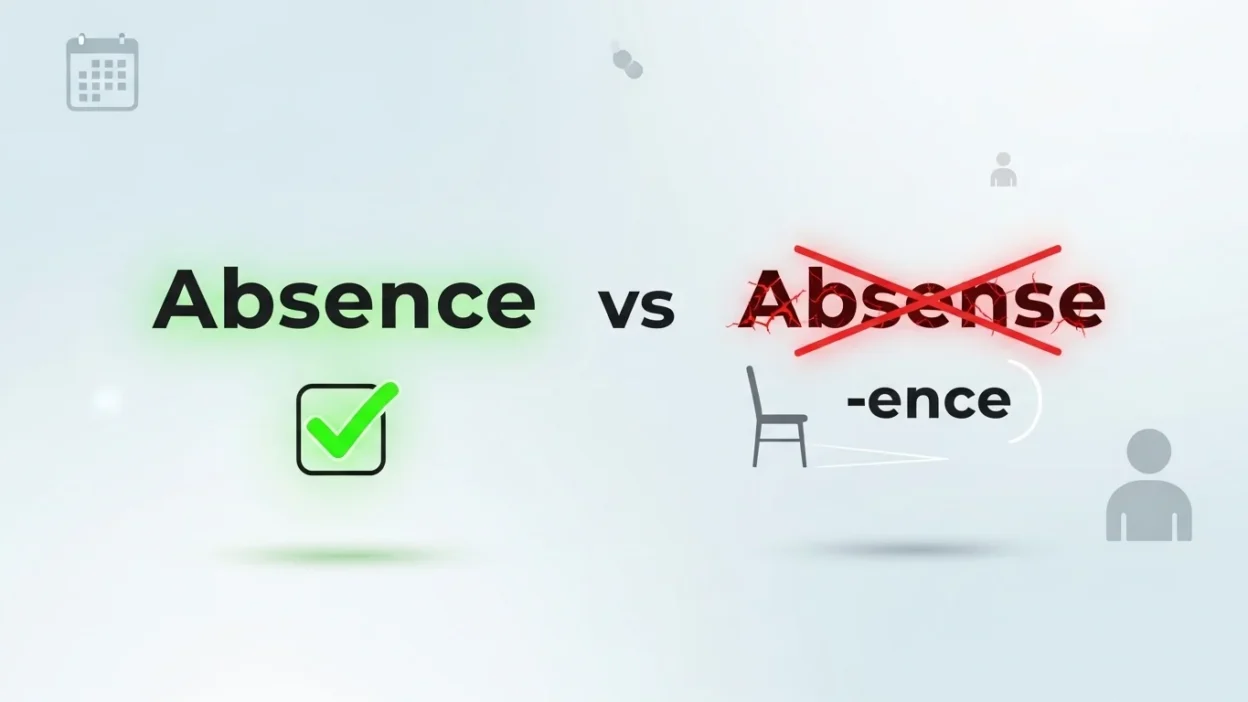
Quick Answer: Absence vs Absense
- ✅ Absence = Correct spelling
- ❌ Absense = Incorrect spelling
👉 Always use “absence” when referring to being away or not present.
What Does “Absence” Mean?
Absence is a noun that refers to the state of being away, missing, or not present.
Core Meanings of Absence
- The state of not being present
- A lack or missing condition
- A period of time when someone is away
Examples of “Absence” in Sentences
- His absence from the meeting was noticed.
- She explained her absence from school.
- The absence of evidence made the case difficult.
- We felt the absence of his support.
This word is commonly used in education, workplace communication, and everyday conversation.
What Is “Absense”?
“Absense” is not a correct English word. It is a misspelling of “absence” and should not be used in proper writing.
Why Do People Write “Absense”?
This mistake usually happens because:
- The pronunciation sounds like “ab-sense”
- Confusion between “-ence” and “-ense” endings
- Spelling habits based on phonetics rather than rules
However, the correct spelling always ends with “-ence”: absence.
Absence vs Absense: Key Differences
| Feature | Absence | Absense |
|---|---|---|
| Correct spelling | ✅ Yes | ❌ No |
| Meaning | State of being absent | None (incorrect form) |
| Usage | Formal & informal writing | Should be avoided |
| Grammar | Noun | Invalid word |
| Dictionary status | Recognized word | Not recognized |
Why “Absence” Uses “-ence”
English spelling patterns can help you remember the correct form.
Common Pattern
Many nouns ending in “-ence” come from Latin roots:
- Absence
- Presence
- Dependence
👉 This pattern supports why “absence” is correct—not “absense.”
Common Mistakes to Avoid
When dealing with absence vs absense, here are the most frequent errors:
1. Using “-ense” Instead of “-ence”
- ❌ Absense
- ✅ Absence
2. Relying on Sound Instead of Spelling
English pronunciation doesn’t always match spelling.
3. Mixing Similar Words
Words like “sense” may influence incorrect spelling.
Easy Memory Trick
👉 “Absence ends with ‘ence’—like presence.”
Linking it with similar words makes it easier to remember.
Real-Life Usage of “Absence”
Using “absence” correctly improves clarity in both writing and speech.
- “Students must explain their absence.”
- “Frequent absence affects performance.”
In Workplace Communication
- “Please notify HR of your absence.”
- “Her absence was due to illness.”
- “We noticed his absence at the event.”
- “The absence of noise was calming.”
Synonyms and Related Words
To add variety to your writing, consider these alternatives:
- Lack
- Nonattendance
- Unavailability
- Missing
- Void
Example:
- “There was a lack of communication.”
- “His nonattendance was unexpected.”
American vs British English
There is no difference between American and British English for this word.
- 🇺🇸 American English: Absence
- 🇬🇧 British English: Absence
Both use the same spelling and meaning.
Why Correct Spelling Matters
Using the correct spelling—absence—is important because:
- Improves clarity and readability
- Builds credibility and professionalism
- Prevents confusion
- Strengthens communication
Misspelling it as “absense” can:
- Make writing appear careless
- Distract readers
- Reduce trust in your content
FAQs About Absence vs Absense
What is the correct spelling: absence or absense?
“Absence” is the correct spelling in standard English.
Is “absense” ever correct?
No, it is always incorrect and should not be used.
What does “absence” mean?
It refers to the state of being away or not present.
Why do people misspell “absence”?
Because of pronunciation and confusion with “-ense” endings.
Can “absence” be used in formal writing?
Yes, it is widely used in both formal and informal contexts.
Is there a British vs American difference?
No, both use the same spelling: “absence.”
What are synonyms for “absence”?
Words like lack, nonattendance, and unavailability can be used.
How can I remember the correct spelling?
Remember that “absence” ends with “-ence,” like “presence.”
Summary: Absence vs Absense
The difference between absence vs absense is simple but important. “Absence” is the correct spelling used to describe the state of being away or not present. It is widely accepted in everyday, academic, and professional writing.
“Absense,” on the other hand, is a common spelling mistake caused by pronunciation confusion and incorrect assumptions about word endings. It has no meaning in standard English and should always be avoided.
By focusing on correct spelling and understanding common patterns, you can improve your writing clarity and professionalism. Small details like this make a big difference in how your message is received.