If you’ve ever traveled internationally, you’ve probably heard the terms passport control and customs. Many travelers assume they mean the same thing because both are part of the airport arrival process. However, they serve completely different purposes, and knowing the difference can make your journey smoother and less stressful.
Understanding passport control vs customs is especially helpful if you’re traveling abroad for the first time. In this guide, you’ll learn what each process involves, when you’ll encounter it, what documents you need, common mistakes travelers make, and how passport control and customs work together when entering a country.
Quick Answer
The difference between passport control vs customs is simple:
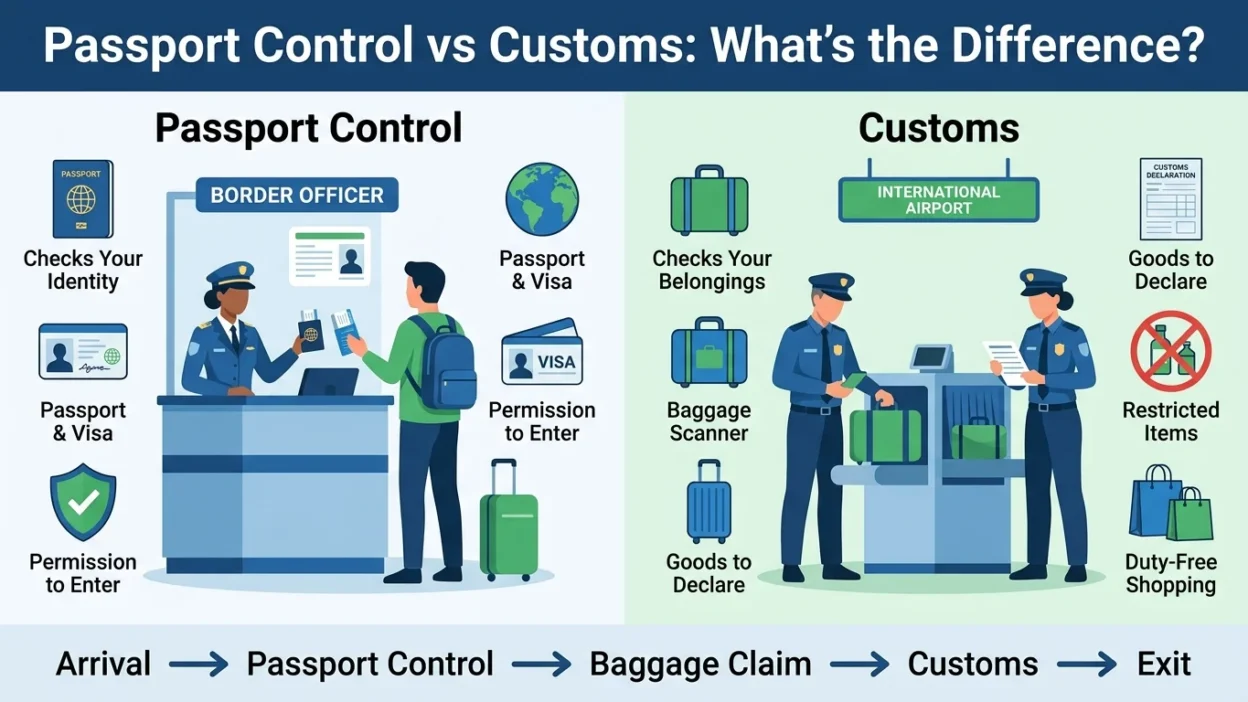
- Passport control checks who you are and whether you have permission to enter the country.
- Customs checks what you are bringing into the country, including luggage, goods, food, cash, and restricted items.
In most international airports, you’ll usually go through passport control first, collect your baggage, and then pass through customs before exiting the airport.
What Is Passport Control?
Passport control is the immigration checkpoint where border officers verify your identity and determine whether you are allowed to enter or leave a country.
During passport control, officials review your travel documents and may ask questions about your trip.
What Officers Usually Check
- Your passport
- Visa (if required)
- Travel authorization
- Arrival card (where applicable)
- Purpose of your visit
- Length of your stay
- Return or onward travel details
Passport control is focused on the traveler, not their belongings.
Example
Suppose you’re flying from Canada to France.
When you land, you’ll first present your passport to an immigration officer.
The officer may ask:
- Why are you visiting?
- How long will you stay?
- Where will you be staying?
If everything is in order, you’ll receive permission to enter the country.
What Is Customs?
Customs is the inspection process that focuses on the items you’re bringing into a country.
Customs officers help protect public health, national security, agriculture, and the economy by regulating imported goods.
Customs May Check
- Suitcases
- Gifts
- Food
- Alcohol
- Tobacco
- Electronics
- Currency
- Medicines
- Plants
- Animal products
Some countries require travelers to declare certain items before entering.
Example
After collecting your luggage, you proceed to customs.
If you’re carrying expensive electronics, large amounts of cash, or restricted food products, you may need to declare them.
The customs officer may inspect your bags before allowing you to leave.
Passport Control vs Customs: Comparison Table
| Feature | Passport Control | Customs |
|---|---|---|
| Main Purpose | Verify your identity and entry permission | Inspect goods entering the country |
| Focus | The traveler | Luggage and belongings |
| Officers | Immigration or border officers | Customs officers |
| Documents Checked | Passport, visa, travel documents | Customs declaration form (if required) |
| Questions Asked | Purpose of travel, duration of stay | Items carried, goods to declare |
| Happens When | Usually before baggage claim | Usually after baggage claim |
When Do You Go Through Passport Control?
In most countries, passport control is one of the first steps after your international flight arrives.
The general process is:
- Leave the aircraft.
- Follow signs for immigration or passport control.
- Present your passport and travel documents.
- Receive permission to enter.
- Proceed to baggage claim.
Only after completing passport control can you continue through the airport.
When Do You Go Through Customs?
Customs usually comes after you’ve collected your checked luggage.
The process often looks like this:
- Pick up your baggage.
- Proceed to the customs area.
- Declare items if necessary.
- Walk through the appropriate customs lane.
- Leave the airport.
Some airports use:
- Green lane (Nothing to Declare)
- Red lane (Goods to Declare)
Choosing the correct lane helps avoid delays or penalties.
Why Passport Control and Customs Are Different
Although both are border procedures, they answer different questions.
Passport control asks:
“Who are you?”
Customs asks:
“What are you bringing?”
For example:
A traveler may have a perfectly valid passport but still violate customs rules by carrying prohibited food or undeclared goods.
Likewise, someone may have nothing to declare at customs but still be denied entry during passport control if their travel documents are not valid.
Real-Life Example
Imagine you’re traveling from Australia to Japan.
Step 1
You arrive at the airport and head to passport control.
The immigration officer checks your passport, visa status, and travel purpose.
Step 2
You collect your luggage from baggage claim.
Step 3
You enter customs.
Because you’re carrying packaged snacks and expensive camera equipment, you declare them.
The customs officer checks your declaration and allows you to leave.
Both checkpoints are necessary but perform different roles.
Common Mistakes Travelers Make
Many first-time travelers confuse passport control with customs.
Here are some common mistakes.
Thinking They Are the Same
They are separate procedures with different responsibilities.
Forgetting Required Documents
Always keep your passport, visa, and travel documents easily accessible.
Bringing Restricted Items
Many travelers unknowingly pack prohibited food, plants, or agricultural products.
Always check the destination country’s rules before traveling.
Failing to Declare Goods
If required, declare valuable items, large amounts of cash, or restricted goods honestly.
Failing to do so can result in fines or confiscation.
Rushing Through the Process
Listen carefully to airport signs and instructions from officials.
Each country may have slightly different procedures.
Tips for Passing Through Passport Control and Customs Smoothly
A little preparation can save time.
- Keep your passport ready.
- Complete arrival forms accurately.
- Know your hotel address.
- Be honest when answering questions.
- Pack according to customs regulations.
- Declare restricted items if required.
- Follow airport signs carefully.
- Stay calm and polite during inspections.
These simple habits help ensure a smooth arrival experience.
American vs British English Differences
The terms passport control and customs are widely understood in both American and British English.
However, you may notice slight differences in terminology.
In British English, travelers commonly say passport control when referring to immigration checks.
In American English, people may also use terms such as immigration, border control, or passport control, depending on the airport and context.
The word customs has the same meaning in both American and British English and refers to the inspection of goods entering or leaving a country.
Regardless of the variety of English, the travel process remains essentially the same.
Easy Way to Remember the Difference
Here’s a simple memory trick.
Think of passport control as checking people.
Think of customs as checking possessions.
Another easy reminder is:
- Passport control = Who you are
- Customs = What you carry
This quick distinction makes it much easier to remember which checkpoint does what.
FAQs
What is the difference between passport control and customs?
Passport control verifies your identity and travel documents, while customs inspects the goods and belongings you bring into a country.
Which comes first, passport control or customs?
In most international airports, you pass through passport control first, collect your luggage, and then go through customs.
Do all international travelers go through passport control?
Yes. Anyone entering or leaving a country internationally usually passes through passport control or immigration checks.
What does customs check?
Customs officers inspect luggage, declared goods, food, alcohol, cash, medicines, and other items entering the country.
Can customs inspect my luggage?
Yes. Customs officers have the authority to inspect baggage if necessary under the country’s regulations.
What happens if I bring prohibited items?
The items may be confiscated, and depending on the country’s laws, you could face fines or other penalties.
Do domestic flights have passport control?
No. Passport control generally applies only to international travel.
Is customs the same in every country?
The basic purpose is the same, but each country has its own customs regulations, declaration requirements, and prohibited items.
Summary
Understanding passport control vs customs helps make international travel easier and more predictable. Passport control focuses on verifying your identity, travel documents, and permission to enter a country, while customs is responsible for checking the items you bring with you. Although both are essential border procedures, they serve different purposes and occur at different stages of your arrival.
Knowing what to expect at each checkpoint can reduce stress, save time, and help you avoid common travel mistakes. By keeping your documents ready, following customs regulations, and answering officials honestly, you’ll be better prepared for a smooth and successful journey wherever you travel.

Dani Morrison is a dedicated language writer and spelling expert at Spelword.com, where she focuses on helping readers understand common English spelling mistakes and confusing word pairs. With a passion for clear communication, Dani creates easy-to-follow guides that simplify complex grammar and spelling rules for everyday use.