English can be tricky, especially when two words seem interchangeable but follow different rules. One common grammar question is the difference between hung vs hanged. Since both words are past tense forms of the verb hang, many people assume they can be used in the same way. However, that’s not always true.
Understanding when to use hung and when to use hanged can make your writing more accurate and professional. Whether you’re writing an essay, a blog post, or simply improving your grammar skills, knowing the distinction will help you avoid one of the most frequently misunderstood verb forms in English.
Quick Answer
The difference between hung and hanged depends on the context:
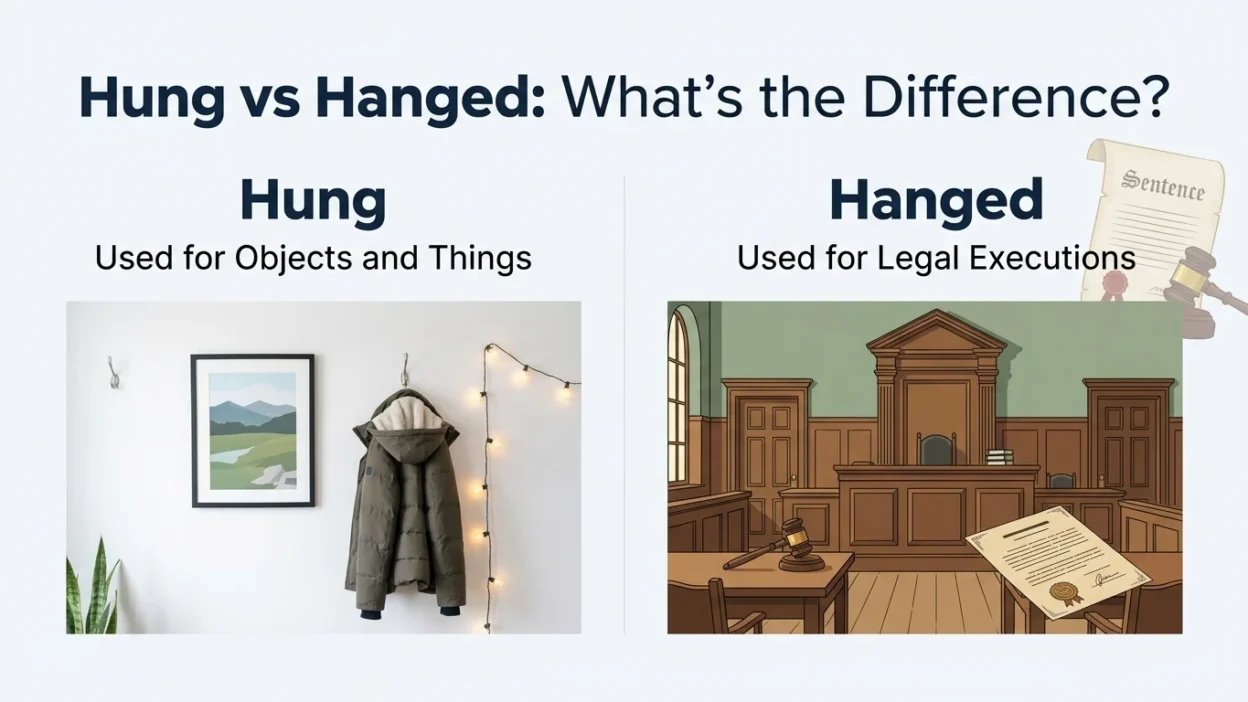
- Hung is used for objects that are suspended or attached above the ground.
- Hanged is traditionally used when referring to a person being executed by hanging.
Examples
- She hung a painting on the wall.
- The criminal was hanged for his crimes.
In modern English, hung is used in almost every situation except legal or historical references to execution.
Understanding the Verb “Hang”
The verb hang means to suspend something from above so that it dangles freely.
However, unlike many English verbs, hang has two accepted past tense forms:
- Hung
- Hanged
The correct choice depends entirely on what is being described.
What Does Hung Mean?
Hung is the standard past tense and past participle of hang for nearly all everyday situations.
Use hung when talking about objects, decorations, clothing, artwork, signs, or anything suspended from a support.
Examples of Hung
- She hung the picture above the fireplace.
- We hung lights around the garden.
- The coat was hung neatly in the closet.
- He hung the banner before the event.
- Christmas decorations were hung throughout the house.
In modern English, this is the form you’ll use most often.
Common Uses of Hung
- Hung a painting
- Hung a coat
- Hung decorations
- Hung curtains
- Hung a sign
Whenever an object is being suspended, hung is usually correct.
What Does Hanged Mean?
Hanged has a very specific meaning in English.
It is traditionally used when referring to execution by hanging.
Examples of Hanged
- The prisoner was hanged after the trial.
- Several pirates were hanged during that period.
- Historical records show that the criminal was hanged in the town square.
- He was sentenced to be hanged.
- The convicted murderer was hanged according to the law of that time.
Because this meaning is so specific, hanged appears far less frequently in everyday writing.
Common Uses of Hanged
- Hanged for a crime
- Hanged by order of the court
- Hanged in historical accounts
- Hanged after conviction
Outside this legal or historical context, hanged is rarely appropriate.
Hung vs Hanged: Comparison Table
| Feature | Hung | Hanged |
|---|---|---|
| Meaning | Suspended or attached from above | Executed by hanging |
| Common Usage | Everyday English | Legal and historical contexts |
| Frequency | Very common | Rare |
| Example | Hung a picture on the wall | Hanged for a crime |
| Modern Usage | Preferred in most situations | Reserved for executions |
This simple comparison highlights the key distinction.
Why Do Hung and Hanged Both Exist?
Historically, English verbs often had multiple past tense forms.
Over time, hung became the standard past tense for nearly all meanings of hang. However, hanged remained in use for judicial executions because it provided a clear distinction between ordinary hanging and capital punishment.
This special usage has survived into modern English.
As a result:
- Objects are hung.
- People executed by hanging are hanged.
Examples in Everyday Sentences
Here are examples showing how hung is used correctly.
Using Hung
- She hung her jacket by the door.
- The artist hung his work in the gallery.
- They hung lanterns across the patio.
- The mirror was hung perfectly straight.
- We hung family photos in the hallway.
These examples all involve objects being suspended.
Using Hanged
- The outlaw was hanged in the nineteenth century.
- Historical documents reveal that several prisoners were hanged.
- The court ordered that he be hanged.
- The convicted criminal was hanged according to the law.
- Many old stories describe people who were hanged for theft.
These examples involve execution rather than simple suspension.
Common Mistakes With Hung and Hanged
Many writers accidentally use the wrong form because they assume the two words are interchangeable.
Mistake 1: Using Hanged for Objects
Incorrect:
- She hanged a picture on the wall.
Correct:
- She hung a picture on the wall.
Objects should be hung, not hanged.
Mistake 2: Using Hung for Judicial Execution
Less Precise:
- The prisoner was hung after conviction.
Preferred:
- The prisoner was hanged after conviction.
In legal and historical contexts, hanged is the traditional form.
Mistake 3: Assuming Hanged Is More Formal
Some writers think hanged sounds more sophisticated and use it everywhere.
This is incorrect. In modern English, hung is the standard choice for most situations.
Easy Memory Trick
A simple trick can help you remember the difference.
Hung = Things
If you’re talking about an object, decoration, picture, sign, or clothing item, use hung.
Examples:
- Hung curtains
- Hung artwork
- Hung lights
Hanged = Humans in Executions
If you’re discussing a legal or historical execution by hanging, use hanged.
Examples:
- Hanged criminal
- Hanged prisoner
- Hanged outlaw
Thinking of hanged as a special legal term makes the distinction easier to remember.
Hung vs Hanged in Literature and History
Older books and historical documents often contain references to people being hanged.
Examples include:
- Historical accounts of executions
- Court records
- Legal documents
- Historical biographies
In contrast, literature describing ordinary actions almost always uses hung.
For example:
- The sword hung from his belt.
- Portraits hung on the walls.
- Lanterns hung from the ceiling.
Context determines which form is appropriate.
American vs British English
The distinction between hung and hanged is recognized in both American and British English.
American English
- Hung is used for objects.
- Hanged is used for executions.
British English
British English follows the same rule.
As a result, there is very little difference between the two varieties regarding these words.
Whether you’re writing for an American or British audience, the guidelines remain the same.
When in Doubt, Use Hung
For most writers, the safest rule is simple:
If you’re not discussing a legal execution, use hung.
Since the vast majority of situations involve objects rather than judicial punishment, hung will be correct almost every time.
This straightforward approach eliminates most confusion.
FAQs
What is the difference between hung and hanged?
Hung refers to objects suspended from above, while hanged refers specifically to execution by hanging.
Is it hung a picture or hanged a picture?
The correct phrase is hung a picture because pictures are objects, not people being executed.
Why is hanged used for executions?
English retained the form hanged as a special term to distinguish judicial executions from ordinary hanging.
Is hanged still used today?
Yes. It remains the standard term in legal, historical, and formal discussions about execution by hanging.
Can I say someone was hung?
In casual conversation, some people do. However, formal grammar traditionally prefers hanged when referring to execution.
Is hung the past tense of hang?
Yes. Hung is the standard past tense and past participle of hang in nearly all everyday situations.
Do British and American English use different rules?
No. Both varieties generally follow the same distinction between hung and hanged.
Which word is more common?
Hung is much more common because it applies to everyday actions involving objects and decorations.
Summary
The difference between hung vs hanged is surprisingly simple once you know the rule. Hung is the standard past tense of hang and is used when discussing objects that are suspended, such as pictures, signs, decorations, clothing, or lights. It is the form you’ll encounter most often in everyday writing and conversation.
Hanged, on the other hand, has a specialized meaning. It is traditionally reserved for legal or historical references to execution by hanging. Because this context is relatively uncommon, the word appears far less frequently. Remembering that objects are hung and people executed by hanging are hanged will help you use both words correctly and confidently.