It’s one of the most common greetings in English, yet many people still pause before typing it: goodmorning or good morning? The difference may seem small, but using the correct form matters especially in emails, messages, and professional communication.
If you’ve ever wondered which version is right, you’re not alone. In this guide, we’ll break down goodmorning vs good morning in a simple, friendly way so you can use the correct form with confidence every time.
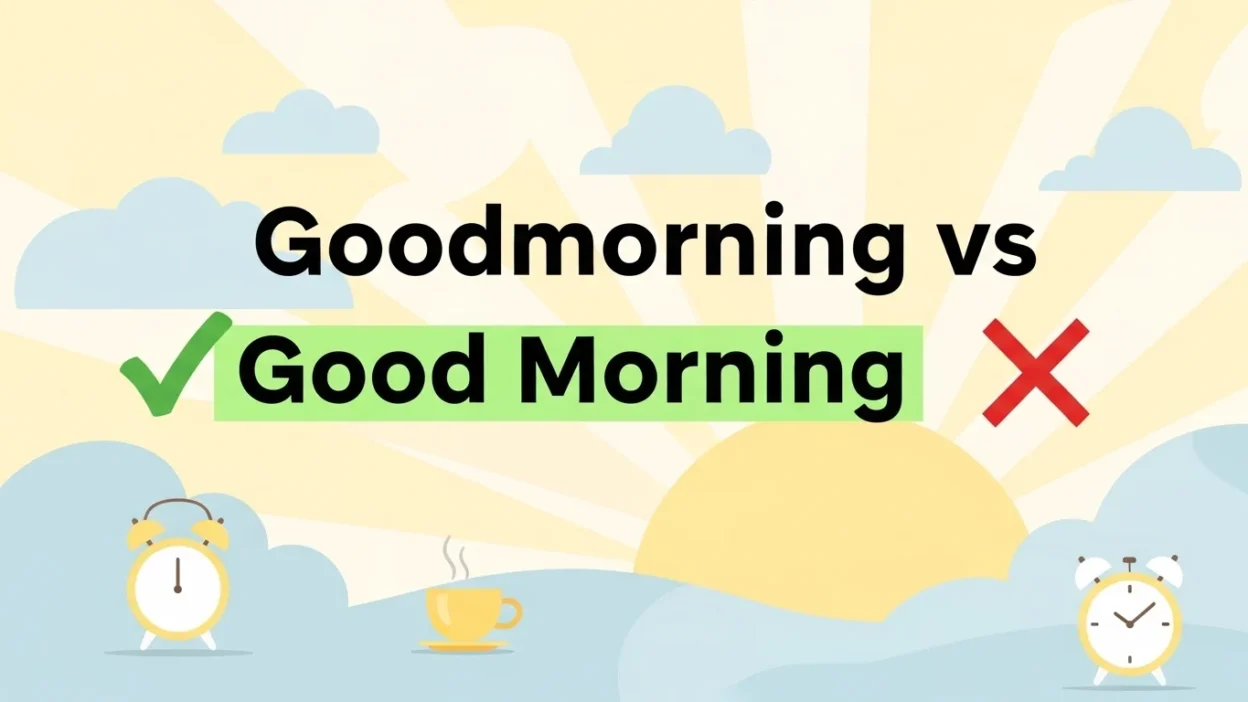
Quick Answer: Goodmorning vs Good Morning
- Good morning (two words) is the correct and standard form.
- Goodmorning (one word) is incorrect and should not be used in formal or standard writing.
What Does “Good Morning” Mean?
Good morning is a polite greeting used when meeting someone or starting communication during the early part of the day.
Definition:
A courteous expression used to greet someone in the morning.
Examples:
- Good morning, how are you today?
- She greeted everyone with a cheerful good morning.
- Good morning, team—let’s get started.
It’s widely used in both spoken and written English, from casual conversations to professional emails.
Is “Goodmorning” a Real Word?
No, goodmorning is not considered correct in standard English. It is a common spacing mistake where two words are incorrectly combined.
Why does this happen?
- Fast typing or texting habits
- Influence of compound words like goodnight
- Lack of awareness of correct spacing
Even though you might see goodmorning in informal chats or social media, it’s best to avoid it in proper writing.
Goodmorning vs Good Morning: Key Differences
| Feature | Good Morning | Goodmorning |
|---|---|---|
| Correct usage | ✅ Yes | ❌ No |
| Word form | Two separate words | Incorrect compound form |
| Meaning | Morning greeting | Same intended meaning |
| Usage | Formal and informal | Informal/incorrect |
Why “Good Morning” Is Two Words
English greetings like good morning, good afternoon, and good evening follow a consistent pattern:
- They remain two separate words
- Each word carries its own meaning
- Together, they form a polite expression
Unlike goodbye or goodnight, which have evolved into compound words, “good morning” has remained separate in standard usage.
Examples of Correct Usage
- Good morning, I hope you’re doing well.
- He said, “Good morning,” with a smile.
- Good morning, everyone.
In casual chats:
- Good morning! Ready for the day?
Using the correct form ensures your message sounds natural and polished.
Common Mistakes to Avoid
Even simple phrases can lead to errors. Here are some common ones:
1. Writing “goodmorning” as one word
Incorrect: Goodmorning everyone!
Correct: Good morning everyone!
2. Inconsistent capitalization
Incorrect: good Morning
Correct: Good morning (capitalize only when starting a sentence or greeting)
3. Overusing informal shortcuts
Texting habits can carry into formal writing—be mindful of context.
4. Assuming all greetings are one word
Not all greetings follow the same pattern (goodnight vs good morning).
Easy Ways to Remember the Correct Form
If you often forget, try these simple tips:
- Think of it as two ideas: “good” + “morning”
- Compare with similar phrases:
- good afternoon
- good evening
- If you wouldn’t combine those, don’t combine good morning either
These small reminders can help you avoid mistakes.
American vs British English Differences
There is no difference between American and British English in this case:
- Both use good morning as the correct form
- Goodmorning is incorrect in both versions
This makes it easy to apply the rule universally.
Why Correct Usage Matters
You might wonder if spacing really matters—but it does.
- Professionalism: Correct formatting improves your writing quality
- Clarity: Proper spacing makes text easier to read
- First impressions: Greetings often set the tone for communication
- Credibility: Small details reflect attention to detail
Using good morning correctly helps your message feel polished and respectful.
Frequently Asked Questions (FAQs)
Is goodmorning ever correct?
No, goodmorning is not correct in standard English. The correct form is good morning.
Why is good morning written as two words?
Because it follows the structure of English greetings, where each word remains separate.
Can I use goodmorning in casual texting?
While it may appear in casual chats, it’s still considered incorrect and best avoided.
Is good morning formal or informal?
Good morning can be used in both formal and informal situations.
Do I always capitalize good morning?
Capitalize it at the beginning of a sentence or when used as a greeting.
Is there a difference between good morning and goodmorning in meaning?
No difference in intended meaning, but only good morning is correct.
Are other greetings written the same way?
Yes, good afternoon and good evening are also written as two words.
Summary
The difference between goodmorning vs good morning is simple but important. Good morning is the correct and standard form used in both spoken and written English, while goodmorning is an incorrect combination that should be avoided in all proper contexts.
By understanding this distinction and paying attention to spacing, you can improve your writing clarity and professionalism. Small details like this make a big difference in how your message is received and understood.