Have you ever paused while writing and wondered whether title or tittle is the correct word? You’re not alone. These two words look almost identical, but they have very different meanings. Because of their similar spelling, many writers accidentally use tittle when they actually mean title.
In this guide, you’ll learn the difference between title and tittle, when to use each one, common mistakes to avoid, practical examples, and simple tips to remember the correct spelling. By the end, you’ll feel confident choosing the right word every time.
Quick Answer
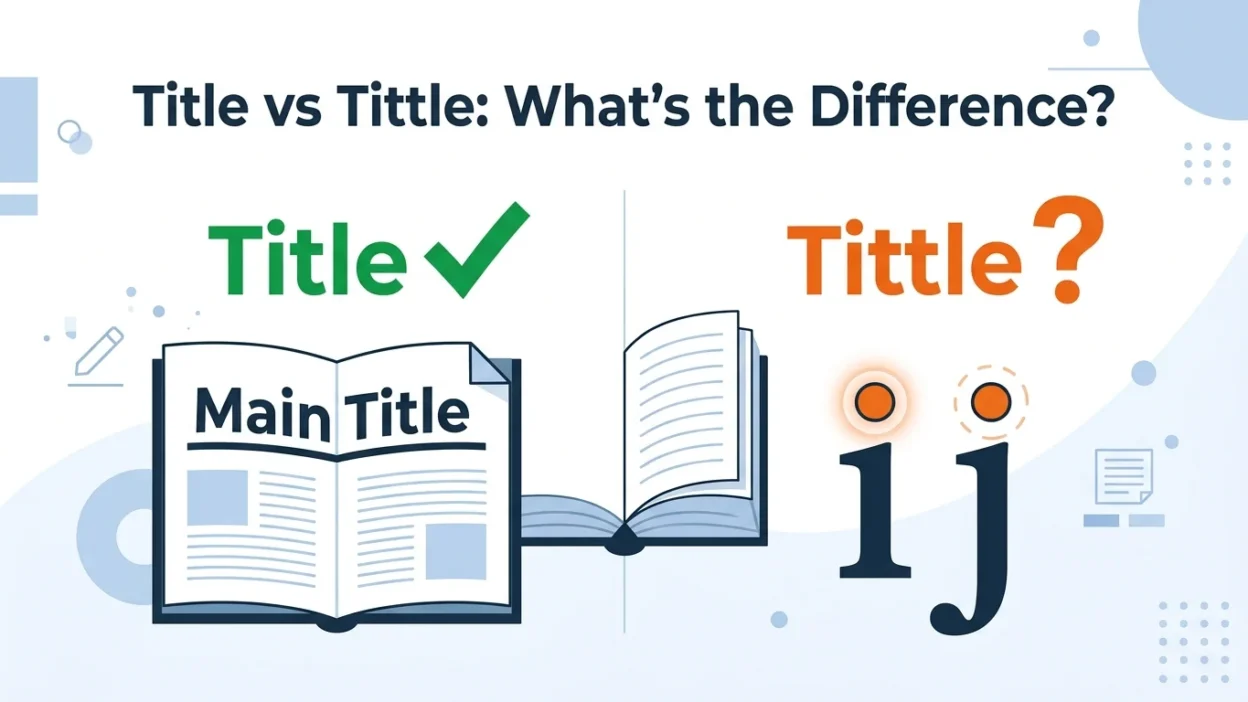
Title is the correct word when referring to the name of a book, movie, article, job position, or honor.
Tittle is a real English word, but it has a completely different meaning. It refers to the small dot above the letters i and j, or a very tiny mark or detail. It is rarely used in everyday writing.
Example:
- ✅ The title of the book is fascinating.
- ✅ The dot above the letter i is called a tittle.
- ❌ The tittle of the movie was unforgettable.
Is It Title or Tittle?
The confusion happens because only one letter separates these words. However, they are not interchangeable.
- Title is a common word used every day.
- Tittle is a specialized word used mainly in typography, linguistics, and historical or religious contexts.
If you’re naming a book, article, essay, or job role, you almost certainly need title.
What Does “Title” Mean?
A title is the name given to something or a designation held by someone.
It can refer to:
- The name of a book
- The heading of an article
- The name of a movie
- A person’s professional or noble rank
- Legal ownership of property
Examples of “Title”
- She chose an interesting title for her novel.
- What is the title of your presentation?
- His official title is Marketing Director.
- The company transferred the property title to the new owner.
- That movie has one of the best titles I’ve ever seen.
What Does “Tittle” Mean?
A tittle is the tiny dot placed above the lowercase letters i and j.
The word can also refer to a very small amount or insignificant detail. Although it is a legitimate English word, most people rarely use it in everyday conversation.
Examples of “Tittle”
- The tittle above the letter i was missing.
- Every tittle of the manuscript was carefully examined.
- The teacher reminded students not to forget the tittle when writing lowercase letters.
Title vs Tittle Comparison
| Feature | Title | Tittle |
|---|---|---|
| Meaning | Name, heading, rank, ownership | Dot above “i” or “j”; tiny detail |
| Everyday Use | Very common | Very rare |
| Part of Speech | Noun | Noun |
| Used for Books and Articles | Yes | No |
| Used in Typography | No | Yes |
| Correct in “Book Title” | ✅ Yes | ❌ No |
Why Do People Confuse Title and Tittle?
Several factors contribute to this common mistake.
- The words differ by only one letter.
- Both are legitimate English words.
- Spellcheck may not always catch the error because tittle is correctly spelled.
- Fast typing often leads to accidental substitution.
Because tittle exists in the dictionary, proofreading is especially important.
Examples in Everyday Sentences
Using “Title”
- The article’s title immediately grabbed my attention.
- Please include a descriptive title for your report.
- She earned the title of Employee of the Year.
- His new song has a memorable title.
- I forgot the title of that documentary.
Using “Tittle”
- The designer adjusted the tittle on the lowercase “i.”
- Every tittle in the handwritten document was carefully preserved.
- The font makes the tittle appear square instead of round.
Common Mistakes to Avoid
Many learners accidentally replace title with tittle simply because the words look alike.
Here are common errors.
Incorrect
- The tittle of the essay is too long.
- I love the tittle of your book.
- What’s the tittle of this movie?
Correct
- The title of the essay is too long.
- I love the title of your book.
- What’s the title of this movie?
Remember, whenever you’re referring to the name of something, the correct word is always title.
Easy Trick to Remember the Difference
Here’s a simple memory tip.
Think of title as the name at the top of a page.
Think of tittle as the tiny dot on top of the letters i and j.
If you’re talking about a heading, book name, article name, movie name, or job position, choose title.
If you’re talking about typography or handwriting details, choose tittle.
American vs British English
There is no spelling difference between American and British English for these words.
Both varieties use:
- Title for names, headings, positions, and ownership.
- Tittle for the dot above the letters i and j.
The meanings remain identical in both forms of English.
When Should You Use “Title”?
Use title whenever you are referring to:
- Books
- Articles
- Essays
- Movies
- Songs
- Presentations
- Academic papers
- Job positions
- Honorary designations
- Property ownership
Examples:
- Write an engaging title for your blog post.
- Her professional title changed after the promotion.
- The title page appears before the introduction.
When Should You Use “Tittle”?
Use tittle only in specialized situations involving:
- Typography
- Handwriting
- Letter design
- Linguistics
- Historical texts
- Discussions about tiny marks or details
Outside these contexts, you’ll rarely need this word.
Frequently Confused Words Related to Title
Writers sometimes confuse title with other similar-looking words.
- Title vs Tittle
- Title vs Heading
- Title vs Caption
- Heading vs Subtitle
- Name vs Title
Understanding the context usually makes the correct choice obvious.
FAQs
Is title or tittle correct?
Title is correct when referring to the name of a book, article, movie, essay, or someone’s position. Tittle has a different meaning related to typography.
Is tittle a real English word?
Yes. Tittle is a genuine English word that refers to the small dot above the letters i and j or a tiny mark.
Why do people write tittle instead of title?
The words look very similar, and typing quickly can easily cause the extra “t” to be added. Since tittle is a real word, spellcheck may not flag it.
What is the tittle above the letter i?
The small dot above the lowercase i is called a tittle.
Can I use tittle for the name of a book?
No. The correct word is title.
Are title and tittle interchangeable?
No. They have completely different meanings and should never be used interchangeably.
Is there any difference between American and British English?
No. Both American and British English use title and tittle with the same spelling and meanings.
Summary
The difference between title and tittle is straightforward once you understand their meanings. Title refers to the name of a book, article, movie, presentation, job position, or legal ownership. It is one of the most commonly used words in English and appears in everyday writing across academic, professional, and creative contexts.
Tittle, on the other hand, is a specialized term referring to the small dot above the letters i and j or a tiny detail. Unless you’re discussing typography, handwriting, or linguistics, you probably won’t need this word. When in doubt, if you’re naming something, title is almost always the correct choice.

Dani Morrison is a dedicated language writer and spelling expert at Spelword.com, where she focuses on helping readers understand common English spelling mistakes and confusing word pairs. With a passion for clear communication, Dani creates easy-to-follow guides that simplify complex grammar and spelling rules for everyday use.