Have you ever typed “rehireable” or “rehirable” and wondered which one is actually right? You’re not alone. This is a common spelling confusion, especially in professional and HR-related writing where clarity really matters.
Understanding rehireable vs rehirable is important because both forms appear online but only one follows standard spelling rules more accurately. Choosing the right version helps your writing look polished, credible, and easy to understand. Let’s break it down clearly so you can use the correct form with confidence.
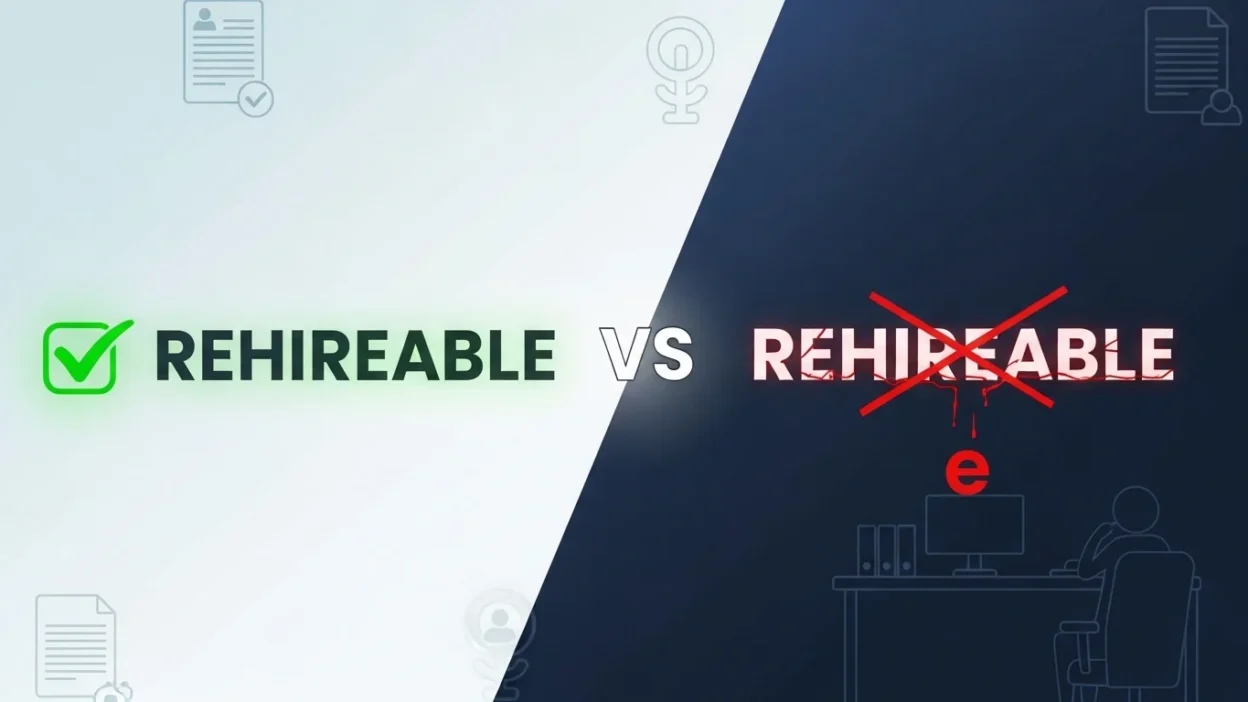
Quick Answer: Rehireable vs Rehirable
- ❌ Rehireable = Incorrect or nonstandard spelling
- ✅ Rehirable = Correct and preferred spelling
👉 Always use “rehirable” in professional and formal writing.
What Does “Rehirable” Mean?
Rehirable is an adjective used to describe someone who is eligible or suitable to be hired again by a company or organization.
Core Meaning of Rehirable
- Eligible to be hired again
- Suitable for reemployment
- Approved for future hiring
This term is commonly used in human resources, employee records, and job references.
Examples of “Rehirable” in Sentences
- The employee left on good terms and is marked as rehirable.
- HR confirmed that she is rehirable for future roles.
- Candidates who perform well are often considered rehirable.
- The company maintains a list of rehirable former staff.
What Is “Rehireable”?
“Rehireable” is considered a nonstandard or incorrect spelling. While you may see it used informally, it does not follow standard English word formation rules.
Why Do People Write “Rehireable”?
This mistake usually happens because:
- Writers try to combine “rehire” + “able” directly
- Confusion about whether to keep the “e” before adding “-able”
- Lack of familiarity with spelling conventions
However, standard grammar rules drop the extra “e,” making rehirable the correct form.
Rehireable vs Rehirable: Key Differences
| Feature | Rehirable | Rehireable |
|---|---|---|
| Correct spelling | ✅ Yes | ❌ No / Nonstandard |
| Meaning | Eligible for rehire | Same intended meaning |
| Usage | Professional & formal writing | Informal / discouraged |
| Grammar | Proper adjective form | Incorrect formation |
| Dictionary status | Accepted usage | Not widely recognized |
Why “Rehirable” Is Correct
English spelling rules often drop the silent “e” before adding suffixes like “-able.”
Example Pattern
- Hire → Rehirable (drop the “e”)
- Move → Movable
- Use → Usable
👉 This pattern explains why rehirable is correct, not “rehireable.”
Common Mistakes to Avoid
When dealing with rehireable vs rehirable, here are the most frequent errors:
1. Keeping the Extra “E”
- ❌ Rehireable
- ✅ Rehirable
Drop the “e” before adding “-able.”
2. Assuming Both Are Acceptable
While “rehireable” may appear online, it is not recommended in professional writing.
3. Inconsistent Usage
Switching between spellings in the same document can confuse readers.
Easy Memory Trick
👉 “Rehirable drops the ‘e’ to stay simple and correct.”
Think of it like other words ending in “-able” that follow the same rule.
Real-Life Usage of “Rehirable”
Using “rehirable” correctly is especially important in workplace and HR contexts.
In Human Resources
- “The employee is listed as rehirable in company records.”
- “Managers should indicate whether staff are rehirable.”
In Job References
- “She is highly recommended and fully rehirable.”
In Workplace Policies
- “Only rehirable employees may apply for internal roles.”
This term helps organizations manage hiring decisions effectively.
Synonyms and Related Words
To improve clarity and variety, you can use similar expressions:
- Eligible for rehire
- Suitable for reemployment
- Reemployable
- Recommended for rehiring
Example:
- “He is eligible for rehire in the future.”
- “She is considered reemployable by the organization.”
American vs British English
There is no major difference between American and British English for this word.
- 🇺🇸 American English: Rehirable
- 🇬🇧 British English: Rehirable
Both forms follow the same spelling rule.
Why Correct Spelling Matters
Using the correct form—rehirable—is especially important in professional communication:
- Builds credibility and trust
- Ensures clarity in HR documentation
- Maintains consistent language standards
- Reflects attention to detail
Using “rehireable” can:
- Make writing appear unprofessional
- Cause confusion in formal documents
- Reduce confidence in your communication
FAQs About Rehireable vs Rehirable
What is the correct spelling: rehireable or rehirable?
“Rehirable” is the correct and preferred spelling.
Is “rehireable” ever correct?
It is considered nonstandard and should be avoided in formal writing.
What does “rehirable” mean?
It means eligible or suitable to be hired again.
Why is the “e” removed in “rehirable”?
Because English spelling rules drop the silent “e” before adding “-able.”
Can I use “rehirable” in professional documents?
Yes, it is widely accepted in HR and business contexts.
Is there a difference in British English?
No, both American and British English use “rehirable.”
What are alternatives to “rehirable”?
You can say eligible for rehire or reemployable.
How can I remember the correct spelling?
Remember to drop the “e” before adding “-able.”
Summary: Rehireable vs Rehirable
The difference between rehireable vs rehirable comes down to proper spelling rules. “Rehirable” is the correct and preferred form, used to describe someone who is eligible to be hired again. It follows standard English patterns for adding the “-able” suffix.
“Rehireable,” on the other hand, is a nonstandard variation that may appear in informal writing but is not recommended for professional use. It results from incorrectly keeping the extra “e” in the base word.
By using “rehirable” consistently, you can ensure your writing is clear, accurate, and professional. Small spelling choices like this make a big difference, especially in workplace communication and formal documents.