If you’ve ever typed “vender” when you meant “vendor,” you’re not alone. These two words look almost identical, which often leads to confusion especially for writers, students, and business professionals.
The truth is that “vendor” is the correct and widely accepted spelling, while “vender” is usually a misspelling. However, the story doesn’t completely end there. In some rare cases, vender appears in historical or legal contexts. In this guide, we’ll break down the meaning, differences, examples, and common mistakes so you can confidently use the right word every time.
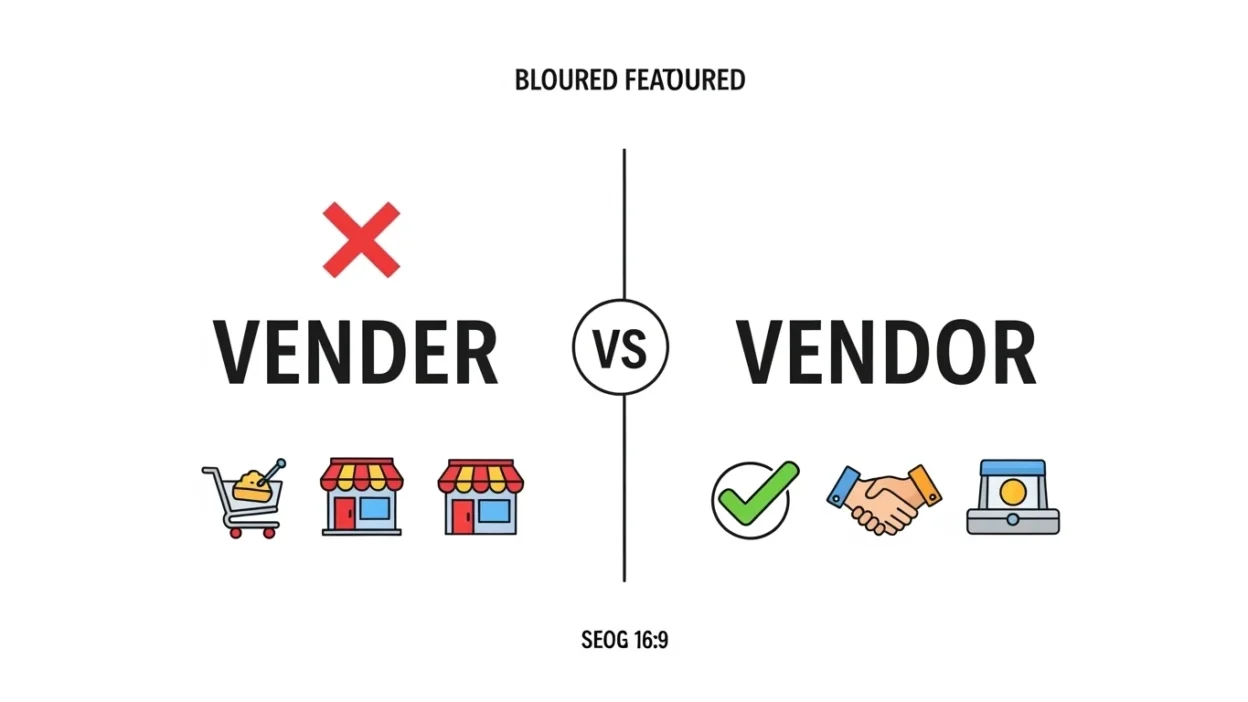
Quick Answer: Vender vs Vendor
- Vendor: The correct and standard spelling meaning a person or business that sells goods or services.
- Vender: Usually a misspelling of vendor, though rarely used in legal contexts referring to a seller.
In modern English, you should almost always use “vendor.”
What Does “Vendor” Mean?
A vendor is a person, company, or business that sells products or services. The word is commonly used in business, retail, events, and technology.
In simple terms:
Vendor = someone who sells something.
Examples of Vendor in Sentences
- The festival had over 50 food vendors selling local dishes.
- Our company hired a software vendor to develop the new system.
- Street vendors sell snacks and drinks near the stadium.
- The store contacted its suppliers and vendors for new inventory.
Common Situations Where “Vendor” Is Used
You’ll frequently see the word in contexts like:
- Business and procurement
- E-commerce and retail
- Technology vendors
- Street vendors or market sellers
- Event vendors (food, decoration, photography)
Related terms and LSI keywords include:
- supplier
- seller
- service provider
- contractor
- merchant
- distributor
These related words often appear in business discussions about vendors and supply chains.
What Does “Vender” Mean?
The word vender technically comes from the same root as vendor, meaning a seller. However, in modern English it is rarely used.
Today, vender usually appears as a spelling mistake when someone intends to write vendor.
Rare Legal Usage
In some older legal documents, vender may appear when referring to someone transferring property or rights. However, even in legal writing, vendor is now the standard spelling.
Because of this, most dictionaries and style guides recommend avoiding “vender.”
Vender vs Vendor: Key Differences
| Feature | Vendor | Vender |
|---|---|---|
| Meaning | A person or business selling goods or services | Rarely used spelling of vendor |
| Modern Usage | Very common | Mostly considered a mistake |
| Business Context | Widely used in procurement, retail, and technology | Rarely used |
| Dictionaries | Standard spelling | Often listed as variant or obsolete |
| Recommended Use | ✔ Yes | ✖ Avoid |
Bottom line: Use vendor in almost all cases.
Why People Confuse Vender and Vendor
There are several reasons why these two spellings get mixed up.
1. Similar Pronunciation
Both words sound almost identical, which leads to spelling confusion.
2. Typing Errors
When typing quickly, it’s easy to replace “o” with “e.”
3. Influence of Other Words
Words like:
- lender
- sender
- tender
can make people think vender follows the same pattern.
4. Autocorrect Issues
Sometimes writing tools fail to catch the mistake, allowing vender to slip into text.
Common Mistakes with Vendor
Understanding typical errors can help you avoid them.
Mistake 1: Using “Vender” in Business Writing
❌ The company hired a new vender for software development.
✔ The company hired a new vendor for software development.
Mistake 2: Using Vender in Academic Papers
Formal writing should always use vendor, since it is the accepted spelling.
Mistake 3: Mixing Vendor with Supplier
While related, they aren’t exactly the same.
- Vendor: sells goods or services
- Supplier: provides materials or products, often to vendors or businesses
Vendor in Business and Technology
The word vendor is extremely common in professional environments.
Examples
- IT Vendor – A company providing software or hardware solutions.
- Third-Party Vendor – An external company hired to provide services.
- Vendor Management – The process of managing relationships with suppliers and service providers.
Many industries rely heavily on vendors, including:
- retail
- technology
- construction
- hospitality
- event planning
For example, a wedding may involve multiple vendors such as photographers, caterers, and decorators.
Vendor in Everyday Life
You probably encounter vendors regularly without thinking about it.
Everyday Examples
- Street vendors selling food
- Market vendors selling fruits and vegetables
- Online vendors selling products on e-commerce platforms
- Event vendors at fairs or festivals
In all these cases, the correct term is vendor, not vender.
American vs British English: Is There a Difference?
Interestingly, both American and British English prefer the spelling “vendor.”
There is no major regional spelling difference between the two varieties of English in this case.
However, pronunciation may vary slightly depending on accent.
So whether you’re writing in:
- American English
- British English
- Canadian English
- Australian English
Vendor remains the correct spelling.
Tips to Remember the Correct Spelling
Here are a few simple tricks to remember the right word.
Memory Trick
Think of vendor like “vend” + “or.”
The verb vend means to sell.
So:
vend → vendor = someone who sells.
Quick Reminder
- Vendor = correct spelling
- Vender = usually incorrect
Keeping this simple rule in mind can help you avoid mistakes.
FAQs About Vender vs Vendor
1. Is “vender” a real word?
Yes, but it is extremely rare in modern English. Most of the time it is considered a misspelling of vendor.
2. Which spelling is correct: vender or vendor?
Vendor is the correct and standard spelling used in business, writing, and everyday language.
3. Why do people write “vender” instead of “vendor”?
It often happens due to typing errors, pronunciation confusion, or misunderstanding of spelling patterns.
4. Is vendor used in business terminology?
Yes. The word vendor is widely used in business, procurement, technology, and retail industries.
5. What is an example of a vendor?
A street food seller, online store owner, or software provider can all be considered vendors.
6. Is vendor the same as supplier?
Not exactly. A vendor sells goods or services, while a supplier provides materials or products, often to vendors or manufacturers.
7. Is vender used in legal writing?
It occasionally appears in older legal documents, but modern legal writing generally uses vendor.
8. Should I ever use the spelling vender?
In most cases, no. Using vendor is safer and more widely accepted.
Summary
The confusion between vender vs vendor mostly comes down to spelling. While both words share the same historical roots, vendor is the correct and modern spelling used in everyday English, business communication, and professional writing.
On the other hand, vender is rarely used today and usually appears as a spelling mistake. Although it occasionally appears in historical or legal contexts, most writers should avoid it to maintain clarity and credibility.
Actionable Takeaway
Whenever you’re writing about someone selling goods or services, always choose “vendor.” This spelling is recognized across industries, dictionaries, and English variations worldwide.
If you remember one simple rule, let it be this:
Vendor is correct. Vender is almost always wrong.
Using the correct spelling improves your writing, strengthens professionalism, and helps avoid confusion for readers.