If you’ve ever paused while writing superseded and wondered, “Wait is it superceded instead?”, you’re not alone. This is one of those tricky spelling pairs that even experienced writers get wrong. Both versions look believable, but only one is actually correct in standard English.
In this guide, you’ll get a clear and simple explanation of superseded vs superceded, including meanings, examples, and practical tips. By the end, you’ll know exactly which spelling to use and why.
Quick Answer: Superseded vs Superceded
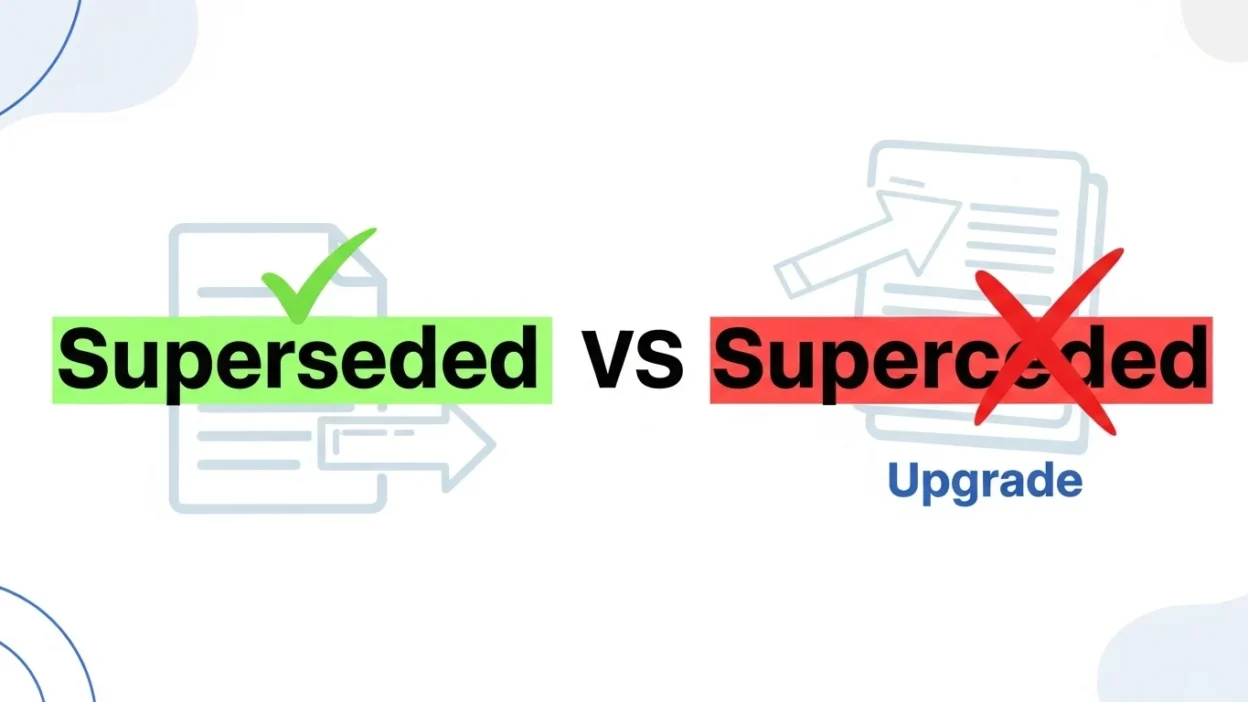
- Superseded is the correct spelling.
- Superceded is a common misspelling and should not be used.
What Does “Superseded” Mean?
The word superseded is the past tense of supersede. It means to replace something older with something newer, better, or more effective.
Definition:
To take the place of something previously used, often because it is outdated or no longer needed.
Examples:
- The new policy has superseded the old one.
- Digital cameras have largely superseded film cameras.
- This version of the software superseded the earlier release.
It’s commonly used in professional, academic, and technical contexts.
Is “Superceded” a Real Word?
No, superceded is not a correct spelling. It is a frequent mistake caused by confusion with similar words that use “-cede.”
Why does this happen?
- Words like proceed, succeed, and recede follow a “-ceed” or “-cede” pattern.
- People assume supersede should follow the same rule.
- However, supersede is an exception and uses “sede” instead of “cede.”
So even though superceded looks logical, it’s incorrect.
Superseded vs Superceded: Key Differences
| Feature | Superseded | Superceded |
|---|---|---|
| Correct spelling | ✅ Yes | ❌ No |
| Meaning | Replaced or taken over | No meaning in English |
| Usage | Formal and informal writing | Should not be used |
| Dictionary status | Recognized word | Not recognized |
Why “Superseded” Is Spelled This Way
English can be unpredictable, and supersede is a classic example.
- It comes from Latin roots meaning “to sit above” or “take the place of.”
- Unlike similar words, it retained the “sede” spelling.
- Over time, this spelling became standardized—even if it doesn’t follow common patterns.
This is why memorization is key for this particular word.
Examples of “Superseded” in Different Contexts
- The updated contract has superseded the previous agreement.
- New devices have superseded older models.
- The regulation was superseded by new legislation.
In everyday language:
- My old phone has been superseded by a newer one.
The word is especially useful when describing change, upgrades, or replacements.
Common Mistakes to Avoid
Even experienced writers sometimes get this wrong. Here are key mistakes to watch for:
1. Writing “superceded” instead of “superseded”
Incorrect: The rule was superceded.
Correct: The rule was superseded.
2. Assuming all similar words follow the same pattern
Not all English words follow consistent spelling rules.
3. Ignoring spellcheck suggestions
Most tools will flag superceded—don’t overlook it.
4. Confusing it with “preceded” or “succeeded”
These words look similar but have different meanings and spellings.
Easy Ways to Remember the Correct Spelling
Here are a few simple tricks to help:
- Focus on the middle: super + sede + d
- Think: “supersede” is special, so it breaks the rule
- Practice writing it a few times to build memory
Once you’ve seen it often, the correct spelling becomes natural.
American vs British English Differences
There is no difference between American and British English here:
- Both use superseded as the correct spelling.
- Superceded is incorrect in all regions.
This consistency makes it easier to learn and apply globally.
Why Correct Spelling Matters
You might think a small spelling mistake isn’t a big deal—but it can be.
- Clarity: Ensures your message is clear and accurate.
- Credibility: Correct spelling reflects attention to detail.
- Professionalism: Important in formal writing and communication.
- Trust: Readers are more likely to trust polished content.
Errors like superceded can distract readers and reduce confidence in your writing.
Frequently Asked Questions (FAQs)
Is superceded ever correct?
No, superceded is always incorrect. The correct spelling is superseded.
What does superseded mean?
Superseded means something has been replaced or taken over by something newer or better.
Why is superseded spelled with “sede”?
It comes from Latin roots and is an exception to common English spelling patterns.
Can I use superseded in formal writing?
Yes, superseded is commonly used in formal, academic, and professional contexts.
Is there a difference between supersede and succeed?
Yes, supersede means to replace, while succeed means to achieve success or come after something.
How can I remember the correct spelling?
Remember that supersede is an exception and uses “sede” instead of “cede.”
Does British English use a different spelling?
No, both British and American English use superseded.
Summary
The difference between superseded vs superceded is simple once you know the rule. Superseded is the correct spelling used to describe something that has been replaced or made outdated. On the other hand, superceded is a common mistake that should be avoided in all types of writing.
Although English spelling can sometimes feel inconsistent, learning exceptions like this can greatly improve your accuracy. By remembering the unique spelling of superseded and practicing its use, you can write more clearly, confidently, and professionally.