If you’ve ever written “alterior motive” and wondered whether it looked right, you’re not alone. The words alterior and ulterior sound very similar, which makes them easy to confuse in writing. Many people accidentally use “alterior” when they actually mean “ulterior.”
In this guide, we’ll clearly explain the difference between alterior vs ulterior, show which spelling is correct, and help you avoid this common English mistake with simple examples and easy to remember tips.
Quick Answer
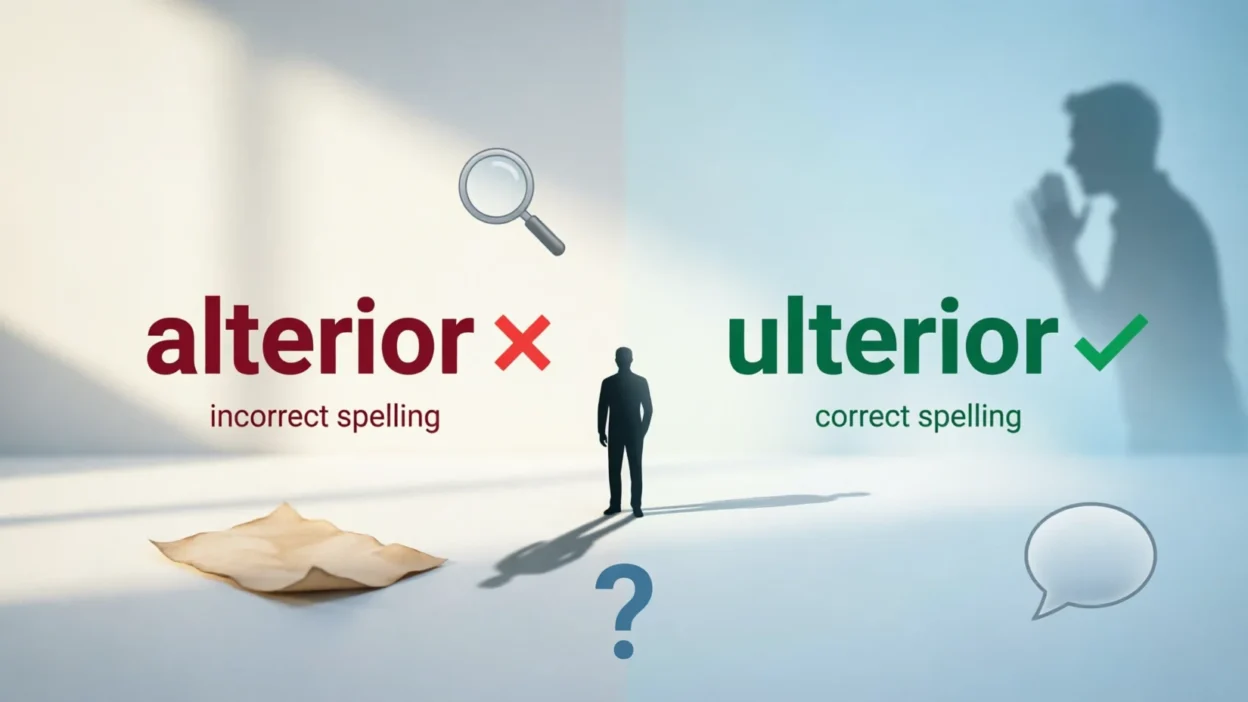
“Ulterior” is correct.
“Alterior” is considered a misspelling and is not a standard English word.
The correct phrase is:
- ✅ Ulterior motive
- ❌ Alterior motive
What Does “Ulterior” Mean?
The word ulterior refers to something hidden, secret, or intentionally concealed. It’s often used when someone appears to have one reason for doing something but actually has another purpose behind it.
Common Meaning:
- Hidden intention
- Secret motive
- Underlying agenda
Examples:
- She suspected he had an ulterior motive for helping.
- His kindness seemed genuine, but others believed there was an ulterior purpose.
- The company was accused of having ulterior intentions.
Is “Alterior” a Real Word?
No, “alterior” is not recognized as a correct English word in standard dictionaries.
It’s usually just a spelling mistake caused by:
- Mishearing the pronunciation of “ulterior”
- Typing too quickly
- Confusing it with words that begin with “al-”
Even though many people accidentally write “alterior,” the accepted and proper form is always ulterior.
Why Do People Confuse Alterior vs Ulterior?
The confusion between alterior vs ulterior is extremely common because the words sound similar when spoken aloud.
Here are the main reasons:
- The pronunciation is close in casual speech
- “Ulterior” is not a word people use every day
- English spelling patterns can feel inconsistent
- The phrase “ulterior motive” is often heard more than read
As a result, people may guess the spelling incorrectly and write “alterior” without realizing it’s wrong.
Comparison Table: Alterior vs Ulterior
| Word | Correct? | Meaning | Example Sentence |
|---|---|---|---|
| Ulterior | ✅ Yes | Hidden or secret intention | She had an ulterior motive. |
| Alterior | ❌ No | Incorrect spelling | ❌ He had an alterior purpose. |
The Most Common Phrase: “Ulterior Motive”
The phrase “ulterior motive” is one of the most frequently used expressions with this word.
It means someone has a hidden reason behind their actions.
Examples:
- I wondered if he had an ulterior motive for being so generous.
- Her offer sounded helpful, but there seemed to be an ulterior motive.
This phrase is widely used in:
- Everyday conversations
- News articles
- Movies and TV shows
- Professional writing
How to Remember the Correct Spelling
A simple trick can help you remember:
- Ulterior begins with “U”
- Think of “underlying” or “unknown” intentions—both also start with “U”
Another easy memory tip:
- “Ulterior” is the only standard dictionary word
- If spell-check flags “alterior,” it’s because it’s incorrect
Common Mistakes to Avoid
Here are some frequent errors people make:
❌ Incorrect:
- He had an alterior motive.
- They suspected an alterior agenda.
✅ Correct:
- He had an ulterior motive.
- They suspected an ulterior agenda.
Avoid assuming that because a word sounds right, it must be spelled correctly.
Formal and Informal Usage
“Ulterior” is appropriate in both formal and informal English.
Formal Examples:
- The investigation uncovered ulterior financial motives.
- Critics argued the policy served an ulterior purpose.
Informal Examples:
- I think she’s being nice for some ulterior reason.
- That sounded suspiciously like an ulterior motive to me.
American vs British English Differences
There is no spelling difference between American and British English for this word.
- Americans use ulterior
- British speakers also use ulterior
- “Alterior” is incorrect in both forms of English
So regardless of where you write or speak English, the correct spelling remains the same.
Words Often Associated With “Ulterior”
Understanding related words can make the meaning clearer.
Similar Expressions:
- Hidden agenda
- Secret intention
- Concealed purpose
- Personal gain
- Underlying motive
These phrases often appear in similar situations where trust or honesty is questioned.
Why Correct Spelling Matters
Using the correct spelling helps your writing appear:
- More professional
- More trustworthy
- Easier to understand
Mistakes like “alterior” may confuse readers or weaken credibility, especially in academic, business, or professional communication.
FAQs
What is correct: alterior or ulterior?
“Ulterior” is correct. “Alterior” is a misspelling and should be avoided.
Is “alterior motive” wrong?
Yes, the correct phrase is “ulterior motive.”
What does “ulterior” mean?
It means hidden, secret, or intentionally concealed, usually describing motives or intentions.
Why do people spell “ulterior” as “alterior”?
Because the pronunciation sounds similar, many people mistakenly guess the spelling.
Is “ulterior” used in formal writing?
Yes, it is commonly used in academic, legal, journalistic, and professional contexts.
Are there American and British spelling differences?
No, both American and British English use the spelling “ulterior.”
Can “ulterior” have a positive meaning?
Usually, it carries a suspicious or negative tone because it refers to hidden intentions.
Summary
The difference between alterior vs ulterior is simple once you know the rule: “ulterior” is the correct spelling, while “alterior” is a common mistake. Because the words sound similar, many writers accidentally use the wrong version, especially in phrases like “ulterior motive.”
Remember that “ulterior” refers to hidden intentions or secret purposes. Whether you’re writing casually, academically, or professionally, using the correct spelling helps your communication appear clearer, stronger, and more polished.

William Harved is a passionate language enthusiast and digital writer specializing in English spelling, grammar clarity, and common writing mistakes. As the primary author of Spelword.com, he focuses on helping readers understand confusing word pairs, correct spelling errors, and improve everyday communication.