Many English learners and even native speakers struggle with whos vs whose. These two words look very similar and sound almost identical when spoken, which makes them easy to confuse. However, they serve completely different purposes in grammar, and using the wrong one can make a sentence incorrect or unclear.
If you’ve ever paused while writing and wondered whether to use whos or whose, you’re not alone. Understanding the difference is simpler than it seems once you learn the grammar rule behind these words. In this guide, you’ll discover the meaning of each word, practical examples, common mistakes to avoid, and easy tips to remember the correct usage every time.
Quick Answer: Whos vs Whose
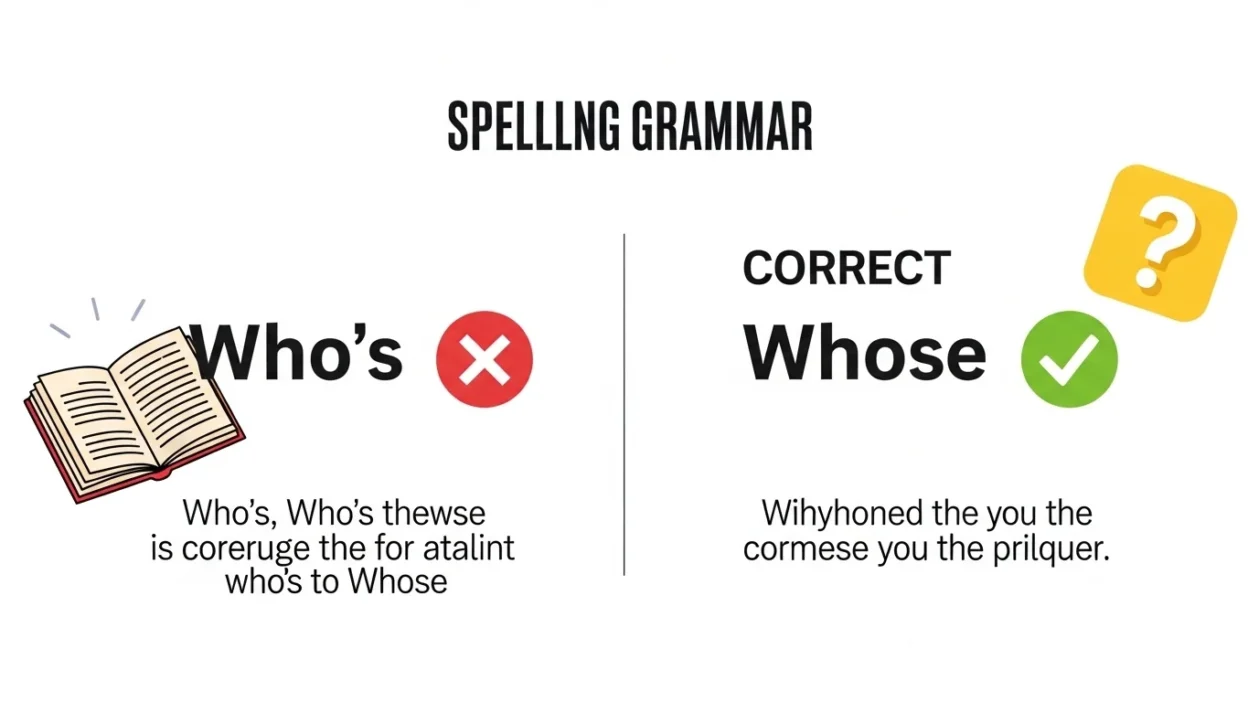
The correct comparison is actually who’s vs whose.
- Who’s – Contraction of who is or who has.
- Whose – Possessive form of who, meaning belonging to whom.
- Whos – Incorrect spelling in standard English.
In short:
- Use who’s when you mean who is or who has.
- Use whose to show possession.
Understanding the Word “Who’s”
Who’s is a contraction, meaning it combines two words into one.
Who’s = who is or who has
Contractions are common in everyday English and often include an apostrophe.
Examples of contractions:
- it’s = it is
- she’s = she is
- he’s = he is
- who’s = who is
Examples of Who’s in Sentences
- Who’s coming to the meeting today?
- Who’s responsible for organizing the event?
- Do you know who’s calling?
- Who’s been using my laptop?
If you can replace who’s with who is or who has, then the usage is correct.
Example:
Who’s at the door?
→ Who is at the door? ✔
Understanding the Word “Whose”
The word whose is a possessive pronoun. It shows that something belongs to someone.
Whose = belonging to whom
It is similar to possessive words like:
- his
- her
- their
- its
Examples of Whose in Sentences
- Whose phone is ringing?
- Do you know whose book this is?
- She is the student whose project won the prize.
- Whose car is parked outside?
In each sentence, whose shows ownership or possession.
Whos vs Whose: Comparison Table
| Word | Grammar Role | Meaning | Example |
|---|---|---|---|
| Who’s | Contraction | Who is / who has | Who’s ready for dinner? |
| Whose | Possessive pronoun | Belonging to whom | Whose jacket is this? |
| Whos | Incorrect | Not standard English | Avoid using this spelling |
This table makes it clear that whos is not a correct word in formal English.
How to Remember the Difference
One simple trick can help you avoid confusion between who’s and whose.
Replace Who’s with “Who Is”
If the sentence still makes sense, use who’s.
Example:
Who’s cooking dinner?
→ Who is cooking dinner?
Think of Possession for Whose
If the sentence refers to ownership, use whose.
Example:
Whose bag is this?
Here the sentence asks who owns the bag.
Real-Life Examples of Who’s and Whose
Let’s look at more examples in everyday contexts.
Using Who’s
- Who’s leading the project this month?
- Who’s going to pick up the kids?
- Do you know who’s speaking at the conference?
Using Whose
- Whose laptop is on the desk?
- She’s the artist whose paintings sold out.
- Whose idea was this brilliant plan?
Common Mistakes People Make
Even experienced writers sometimes mix up whos vs whose. Here are the most common mistakes.
1. Forgetting the Apostrophe in Who’s
Incorrect:
Whos coming to the party?
Correct:
Who’s coming to the party?
2. Using Who’s Instead of Whose
Incorrect:
Who’s bag is this?
Correct:
Whose bag is this?
3. Assuming Whose Is Only for People
Some people think whose must refer only to people, but it can also refer to things or animals.
Example:
The company whose products are popular expanded globally.
American vs British English
Interestingly, the usage of who’s and whose is exactly the same in both major forms of English.
- American English: who’s / whose
- British English: who’s / whose
There are no spelling differences or grammatical variations between these two varieties.
So regardless of where you’re writing—whether in the US, UK, Canada, or Australia—the same rules apply.
Why This Grammar Rule Matters
Using the correct form of who’s or whose improves writing clarity and professionalism.
These words appear frequently in:
- emails
- academic writing
- blog posts
- social media
- business communication
Small grammar mistakes can sometimes distract readers or make writing seem less polished. Learning the difference ensures your message remains clear and confident.
Synonyms and Related Words
While who’s and whose are specific grammar forms, related pronouns and question words include:
- who
- whom
- which
- that
- whoever
Example sentence:
She is the writer whose novel became a bestseller.
These pronouns help form relative clauses and make sentences more descriptive.
Frequently Asked Questions (FAQs)
1. Is “whos” a real word?
No. Whos is not considered correct in standard English. You should use who’s or whose instead.
2. What does who’s mean?
Who’s is a contraction of who is or who has.
Example:
Who’s coming to dinner?
3. What does whose mean?
Whose is a possessive word that shows ownership.
Example:
Whose keys are on the table?
4. How can I remember the difference quickly?
Try replacing who’s with who is.
If the sentence still makes sense, then who’s is correct.
5. Is whose only used for people?
No. Whose can refer to people, animals, or things.
Example:
The company whose profits increased expanded internationally.
6. Are who’s and whose used differently in British English?
No. The rules are exactly the same in both American and British English.
7. Why do people confuse who’s and whose?
They sound identical when spoken, which makes them easy to mix up when writing.
8. Is whose formal or informal?
Whose is used in both formal and informal English, including academic writing.
Summary: Whos vs Whose
The difference between whos vs whose becomes clear once you understand the grammar rule. Who’s is a contraction meaning who is or who has, while whose is a possessive pronoun used to show ownership. The spelling whos without an apostrophe is incorrect in standard English writing.
Because these words sound the same, they are often confused in everyday communication. However, remembering the simple rule—who’s equals who is, and whose shows possession—can help you choose the correct word every time.