
English spelling can be tricky, especially when words sound the same but have completely different meanings. One common confusion many writers face is thier vs their vs there. These words often appear in everyday writing, emails, essays, and social media posts, yet they are frequently misused.
If you’ve ever paused while typing and wondered which version is correct, you’re not alone. Understanding the difference between thier, their, and there helps you write more clearly and avoid common grammar mistakes. Once you learn their meanings and usage patterns, choosing the right word becomes much easier.
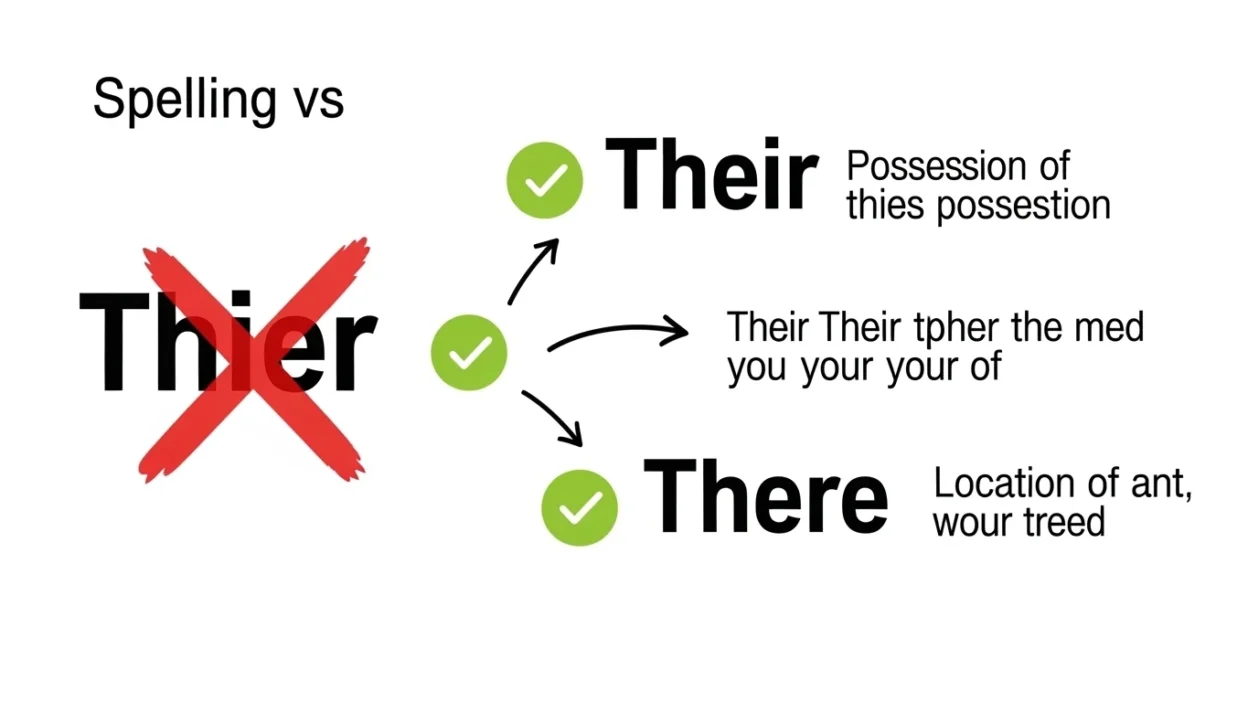
Quick Answer: Thier vs Their vs There
- Their – A possessive pronoun that shows ownership.
Example: Their house is beautiful. - There – Refers to a place, location, or existence.
Example: The keys are over there. - Thier – Incorrect spelling of “their.” It is a common typo and should not be used in proper English writing.
In short, “their” shows possession, “there” refers to place or existence, and “thier” is simply a spelling mistake.
Understanding the Meaning of Their
The word their is a possessive determiner used to show that something belongs to people or things previously mentioned.
It answers the question: Whose?
Examples:
- Their car is parked outside.
- The students finished their homework early.
- The company announced their new product.
In these sentences, their indicates ownership or association with a group.
When to Use “Their”
Use their when talking about something owned or connected to a group of people, animals, or organizations.
Examples:
- The players celebrated their victory.
- The children forgot their bags.
- The team shared their strategy.
Singular “Their”
Modern English often uses singular they/their to refer to a person whose gender is unknown or unspecified.
Example:
- If someone calls, tell them I received their message.
This usage is widely accepted in both formal and informal writing.
Understanding the Meaning of There
The word there usually refers to a place, location, or existence. It is one of the most common words in English grammar.
There as a Location
In many sentences, there simply means in that place.
Examples:
- The restaurant is over there.
- We stayed there for two hours.
- Put the books there on the table.
There as an Introductory Word
Sometimes there introduces a sentence to indicate existence.
Examples:
- There is a problem with the system.
- There are many reasons to learn English.
- There was a loud noise outside.
In these examples, there does not indicate a location but introduces the sentence structure.
Why “Thier” Is Incorrect
The word thier is a misspelling of their. It often occurs because people accidentally switch the letters “i” and “e.”
English spelling rules can be confusing, especially the famous guideline:
“I before E except after C.”
However, their does not follow this rule, which is why many people mistakenly type thier.
Example of incorrect usage:
- ❌ Thier house is beautiful.
Correct version:
- ✅ Their house is beautiful.
Spell-check tools usually highlight this mistake, but it still appears frequently in online writing.
Thier vs Their vs There: Key Differences
Understanding the differences becomes easier when you compare them side by side.
| Word | Meaning | Part of Speech | Example |
|---|---|---|---|
| Thier | Incorrect spelling | — | Thier car is new (incorrect) |
| Their | Shows possession | Possessive determiner | Their dog is friendly |
| There | Refers to place or existence | Adverb / pronoun | The store is over there |
Quick Memory Tip
- Their → contains “heir” (someone who owns something)
- There → contains “here” (a place)
This small trick helps many learners remember the difference.
Examples in Everyday Sentences
Here are practical examples showing the correct usage.
Sentences with “Their”
- Their teacher explained the lesson clearly.
- The neighbors painted their house.
- The employees shared their ideas.
Sentences with “There”
- There is a new café in town.
- I left my phone there yesterday.
- There were many people at the event.
Incorrect Example with “Thier”
- ❌ Thier team won the match.
Correct version:
- ✅ Their team won the match.
Common Mistakes People Make
Even experienced writers sometimes confuse their and there. Here are the most frequent mistakes.
1. Using “There” Instead of “Their”
Incorrect:
- There car is parked outside.
Correct:
- Their car is parked outside.
2. Spelling “Their” as “Thier”
Incorrect:
- Thier ideas were helpful.
Correct:
- Their ideas were helpful.
3. Confusing “There” with “They’re”
Another similar word is they’re, which means they are.
Example:
- They’re going to the park.
Although it sounds similar to their and there, its meaning is completely different.
American vs British English Differences
Interestingly, their and there are spelled and used the same way in both American and British English. There are no spelling differences between these varieties.
However, some stylistic differences may appear in sentence structure or punctuation, but the usage of these words remains consistent across English-speaking regions.
For example:
- American English: Their team won the championship.
- British English: Their team won the championship.
Both versions are identical.
Helpful Tips to Remember the Difference
Simple tricks can make these words easier to remember.
1. Think about ownership
- If the sentence talks about possession, use their.
Example:
- Their books are on the desk.
2. Think about location
- If the sentence refers to a place, use there.
Example:
- The park is over there.
3. Watch for spelling
- Thier is always wrong, so replace it with their.
4. Use context clues
- Read the entire sentence to determine meaning.
Example:
- There are many cars in their parking lot.
FAQs About Thier vs Their vs There
1. Is “thier” ever correct?
No. Thier is always incorrect and is considered a spelling mistake.
2. What is the difference between their and there?
Their shows possession, while there refers to location or introduces a sentence about existence.
3. Why do people confuse their and there?
They sound identical in pronunciation, which makes them homophones, leading to frequent confusion.
4. Can “their” refer to a single person?
Yes. Modern English allows singular “their” when referring to a person whose gender is unknown or unspecified.
Example:
- Someone forgot their umbrella.
5. Is there a difference between American and British spelling?
No. Both American and British English use their and there with the same spelling and meaning.
6. What part of speech is “there”?
“There” can function as an adverb, pronoun, or introductory word, depending on the sentence structure.
7. How can I easily remember the difference?
A simple trick is:
- Their → ownership
- There → place
- Thier → always incorrect
Summary: Thier vs Their vs There
Understanding the difference between thier vs their vs there is essential for clear and professional writing. Although they sound the same, their meanings are completely different.
Their is a possessive word used to show ownership. There refers to location or introduces a statement about existence. Meanwhile, thier is simply a misspelling that should always be corrected to their.
Improving your grammar awareness helps you avoid these common mistakes and strengthens your overall writing skills. Whether you’re writing emails, academic papers, or blog posts, using the correct word builds credibility and clarity.