If you’ve ever paused while writing and wondered whether to use “proceed” or “procede,” you’re not alone. This is a common spelling confusion that can easily slip into emails, essays, and professional writing.
Understanding the difference between proceed vs procede is essential for clear and polished communication. The good news? The answer is simple once you break it down and mastering it will instantly improve your writing accuracy.
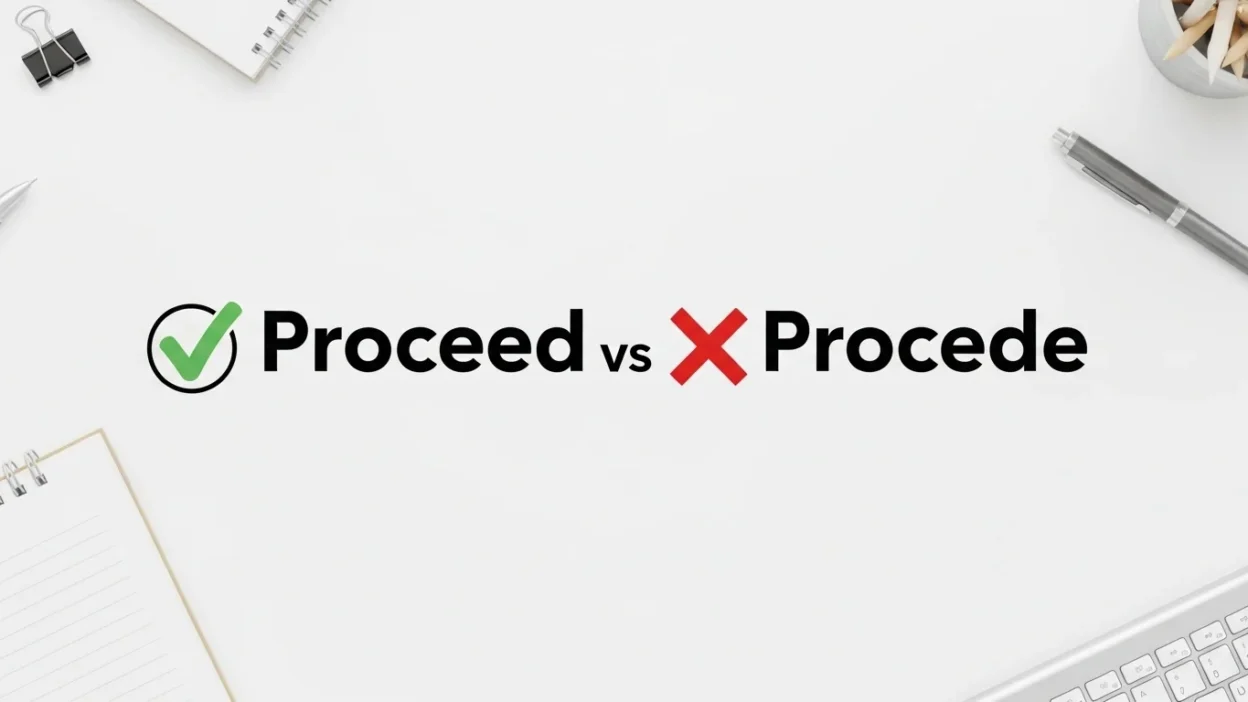
Quick Answer: Proceed vs Procede
- ✅ Proceed = Correct spelling
- ❌ Procede = Incorrect spelling (a common typo)
Use “proceed” whenever you want to express moving forward, continuing, or taking action.
What Does “Proceed” Mean?
The word “proceed” is a verb that means:
- To move forward or continue
- To begin or carry out an action
- To advance in a process
Examples of “Proceed” in Sentences
- Please proceed to the next step in the application.
- After the meeting, we will proceed with the project.
- The teacher asked the students to proceed quietly.
This word is widely used in both formal and informal contexts, making it an essential part of everyday English vocabulary.
What Is “Procede”?
“Procede” is simply a misspelling of “proceed.” It has no meaning in standard English and should always be avoided.
Why Do People Write “Procede”?
This mistake usually happens because:
- English spelling rules can be tricky
- The pronunciation sounds like “pro-seed,” leading to confusion
- People assume a simpler spelling pattern
However, the correct form always includes double “e”: proceed.
Proceed vs Procede: Key Differences
| Feature | Proceed | Procede |
|---|---|---|
| Correct spelling | ✅ Yes | ❌ No |
| Meaning | Continue or move forward | None |
| Usage | Formal & informal writing | Incorrect usage |
| Dictionary status | Recognized word | Not recognized |
Common Mistakes to Avoid
Even experienced writers sometimes slip up. Here are the most common mistakes related to proceed vs procede:
1. Dropping One “E”
- ❌ Proced
- ❌ Procede
- ✅ Proceed
2. Confusing with Similar Words
Words like precede and procedure can cause confusion:
- Precede = To come before
- Proceed = To move forward
3. Relying on Pronunciation
The word sounds like “pro-seed,” which can mislead spelling. Always remember the double “e.”
Easy Memory Trick
A simple way to remember the correct spelling:
👉 “Proceed” has double ‘E’ because you ‘Enter’ and ‘Execute’ actions.
This mental shortcut helps reinforce the correct structure.
Real-Life Usage Scenarios
Understanding how “proceed” fits into everyday situations can boost your confidence.
In Professional Writing
- “We will proceed with the contract after approval.”
- “Kindly proceed with the payment.”
In Academic Writing
- “The experiment will proceed in three stages.”
In Daily Conversations
- “You can proceed when you’re ready.”
American vs British English
Good news—there’s no difference between American and British English when it comes to this word.
- 🇺🇸 American English: Proceed
- 🇬🇧 British English: Proceed
Both use the same spelling and meaning, making it straightforward for global communication.
Synonyms of “Proceed”
Using synonyms can improve your writing variety and SEO strength. Here are some alternatives:
- Continue
- Advance
- Move forward
- Carry on
- Progress
- Go ahead
Example:
- Instead of: “Let’s proceed with the plan.”
- Try: “Let’s move forward with the plan.”
Why Correct Spelling Matters
Using the correct spelling—especially in professional or academic writing—builds:
- Credibility
- Trustworthiness
- Clarity
Misspellings like “procede” can:
- Distract readers
- Reduce professionalism
- Affect SEO rankings in digital content
FAQs About Proceed vs Procede
1. Is “procede” ever correct?
No, “procede” is always incorrect. The correct spelling is “proceed.”
2. Why does “proceed” have double “e”?
It follows historical English spelling patterns and maintains consistency with similar word forms.
3. Is “proceed” a formal word?
It can be both formal and informal, depending on context.
4. What is the difference between “proceed” and “precede”?
- Proceed = Move forward
- Precede = Come before
5. Can I use “proceed” in emails?
Yes, it’s commonly used in professional emails and instructions.
6. How can I remember the correct spelling?
Think of “proceed” as having double “e” for “enter” and “execute.”
7. Is “procede” used in any dialect?
No, it’s not recognized in any standard English dialect.
Summary: Proceed vs Procede
Understanding proceed vs procede comes down to recognizing that only one form is correct. “Proceed” is the proper spelling used to indicate moving forward, continuing, or taking action. “Procede,” on the other hand, is simply a common spelling error with no place in standard English.
By remembering the double “e” in “proceed” and practicing its usage in real life sentences, you can avoid this mistake confidently. Clear, correct spelling not only improves your writing but also strengthens your credibility in professional and academic settings.