
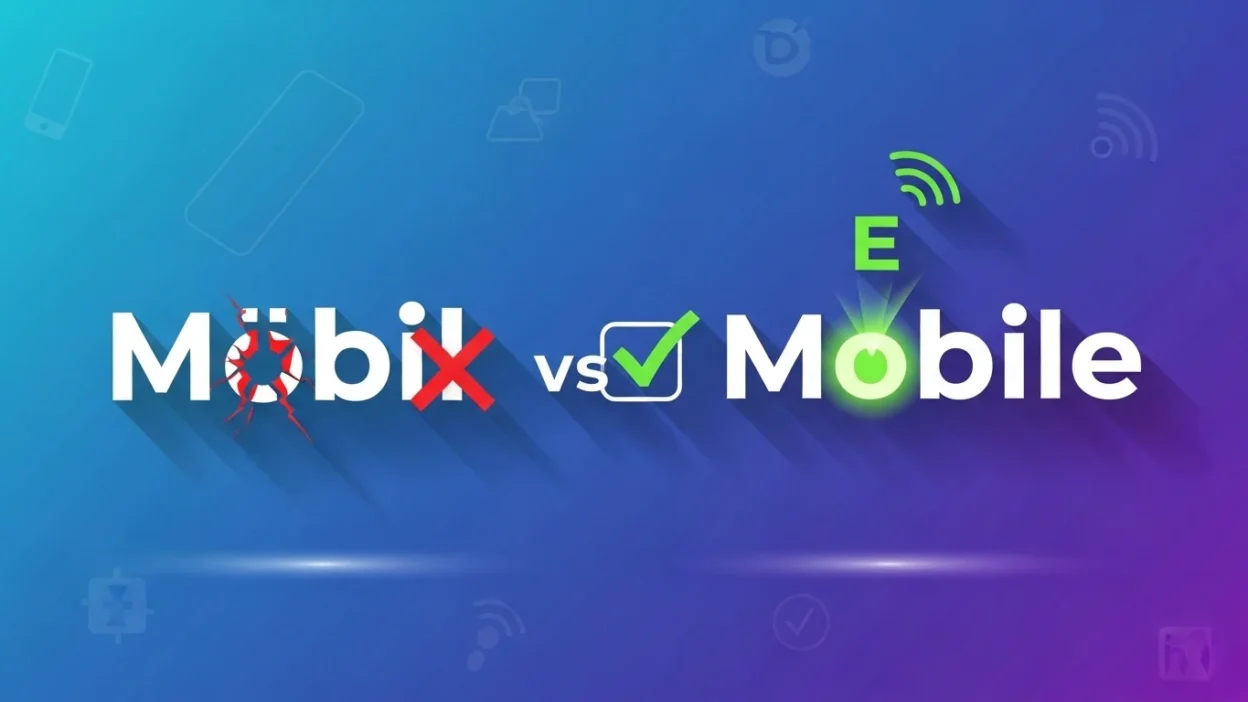
It’s a small difference just one missing letter but “mobil” vs “mobile” can create real confusion in writing. Whether you’re typing a message, writing a blog post, or describing a phone, choosing the correct spelling matters more than you might think.
Understanding mobil vs mobile helps you avoid common spelling errors and communicate clearly in both personal and professional contexts. While one form is widely accepted in English, the other is usually incorrect except in very specific cases. Let’s explore the difference in a simple, clear way.
Quick Answer: Mobil vs Mobile
- ✅ Mobile = Correct spelling in standard English
- ❌ Mobil = Incorrect spelling (except as a proper noun or brand name)
👉 In almost all situations, you should use “mobile.”
What Does “Mobile” Mean?
The word “mobile” is widely used in English and has several related meanings depending on context.
Common Meanings of Mobile
- Able to move easily or freely
- A portable device, especially a phone
- Something that is flexible or adaptable
Examples of “Mobile” in Sentences
- I forgot my mobile at home.
- The company launched a new mobile app.
- She is highly mobile despite her age.
- The website is optimized for mobile users.
Where “Mobile” Is Commonly Used
- Technology (mobile phones, mobile apps)
- Healthcare (mobile patients, mobility)
- Business (mobile workforce)
- Everyday communication
Because of its versatility, “mobile” is one of the most commonly used words in modern English.
What Does “Mobil” Mean?
In standard English, “mobil” is not a correct spelling of “mobile.” However, it does appear in specific contexts.
When “Mobil” Is Used
- As part of a brand name (e.g., Mobil oil company)
- In proper nouns or trademarks
- In some non-English languages
Examples of “Mobil” in Context
- The car uses Mobil engine oil.
- Mobil is a well-known global brand.
Outside of these specific uses, “mobil” should be avoided in regular writing.
Mobil vs Mobile: Key Differences
| Feature | Mobile | Mobil |
|---|---|---|
| Correct spelling | ✅ Yes | ❌ No (general use) |
| Meaning | Portable or able to move | Brand name or proper noun |
| Usage | Everyday English | Specific contexts only |
| Context | Tech, communication, general | Business names, trademarks |
| Dictionary status | Recognized word | Not standard (general English) |
Common Mistakes to Avoid
Confusion between mobil vs mobile often leads to simple but noticeable errors. Here are the most common ones:
1. Dropping the “E”
- ❌ Mobil phone
- ✅ Mobile phone
This is the most frequent mistake, especially in fast typing.
2. Assuming Shorter Is Correct
Some writers assume “mobil” is a simplified spelling, but English requires the full form: “mobile.”
3. Ignoring Context
“Mobil” is only correct when referring to a brand or proper noun. Using it in general writing is incorrect.
4. Mixing with Related Words
Words like mobility and mobilize can create confusion, but they follow their own spelling patterns.
Easy Memory Trick
👉 “Mobile moves with an ‘E’ at the end.”
Think of the “E” as representing energy or ease of movement—both connected to the meaning of “mobile.”
Real-Life Usage Scenarios
Understanding how “mobile” is used in real life helps reinforce correct usage.
In Technology
- “This is a mobile-friendly website.”
- “Download the app on your mobile device.”
In Business
- “We support a fully mobile workforce.”
- “Our services are optimized for mobile users.”
In Everyday Language
- “Keep your mobile charged.”
- “He prefers using his mobile for browsing.”
In all these cases, “mobile” is the correct and natural choice.
American vs British English
There is a slight difference in usage between American and British English.
British English 🇬🇧
- “Mobile” commonly refers to a phone
- Example: “Call me on my mobile.”
American English 🇺🇸
- “Cell phone” is more common
- “Mobile” is still used but often in technical contexts
- Example: “mobile app,” “mobile device”
Despite this difference in preference, the spelling “mobile” remains the same in both versions of English.
Why Correct Spelling Matters
Using the correct spelling improves your writing in several ways:
- Builds credibility and professionalism
- Enhances clarity and readability
- Prevents confusion in communication
- Supports better SEO performance
Mistakes like “mobil” instead of “mobile” can:
- Make content look unpolished
- Reduce trust with readers
- Impact search engine rankings
Synonyms and Related Words
To improve writing variety and depth, here are some alternatives and related terms:
- Portable
- Movable
- On-the-go
- Wireless
- Flexible
- Handheld
Example:
- “This is a portable device designed for travel.”
- “The system supports wireless access.”
These words can enhance your content while maintaining clarity.
FAQs About Mobil vs Mobile
What is the correct spelling: mobil or mobile?
“Mobile” is the correct spelling in standard English.
Is “mobil” ever correct?
Yes, but only as a brand name or proper noun, not as a general word.
Why do people write “mobil” instead of “mobile”?
It often happens due to typing errors or misunderstanding spelling rules.
Is “mobile” used in both British and American English?
Yes, although Americans more commonly say “cell phone.”
Can I use “mobil” in formal writing?
No, unless you are referring to a specific brand name.
What does “mobile” mean in technology?
It refers to portable devices like smartphones and tablets.
Is “mobile” a noun or adjective?
It can be both, depending on the sentence.
How can I remember the correct spelling?
Remember that “mobile” ends with an “E” for proper English spelling.
Summary: Mobil vs Mobile
The difference between mobil vs mobile is simple but important. “Mobile” is the correct spelling used to describe something that can move easily or a portable device like a phone. It is widely used in everyday language, business, and technology.
“Mobil,” on the other hand, is not a standard English word in general usage. It only appears in specific contexts such as brand names or proper nouns. Using it incorrectly can make your writing look careless or confusing.
Understanding this distinction helps you communicate more clearly and professionally. By consistently using “mobile” in the right contexts, you can avoid common mistakes and improve the overall quality of your writing.