Spelling can be tricky, especially when two words look and sound similar. If you’ve ever paused while writing insue vs ensue, you’re not alone. This is a common confusion that can easily slip into everyday writing.
The good news is that the difference is simple once you understand it. In this guide, you’ll learn the correct spelling, meaning, examples, and how to avoid this mistake so your writing stays clear and professional.
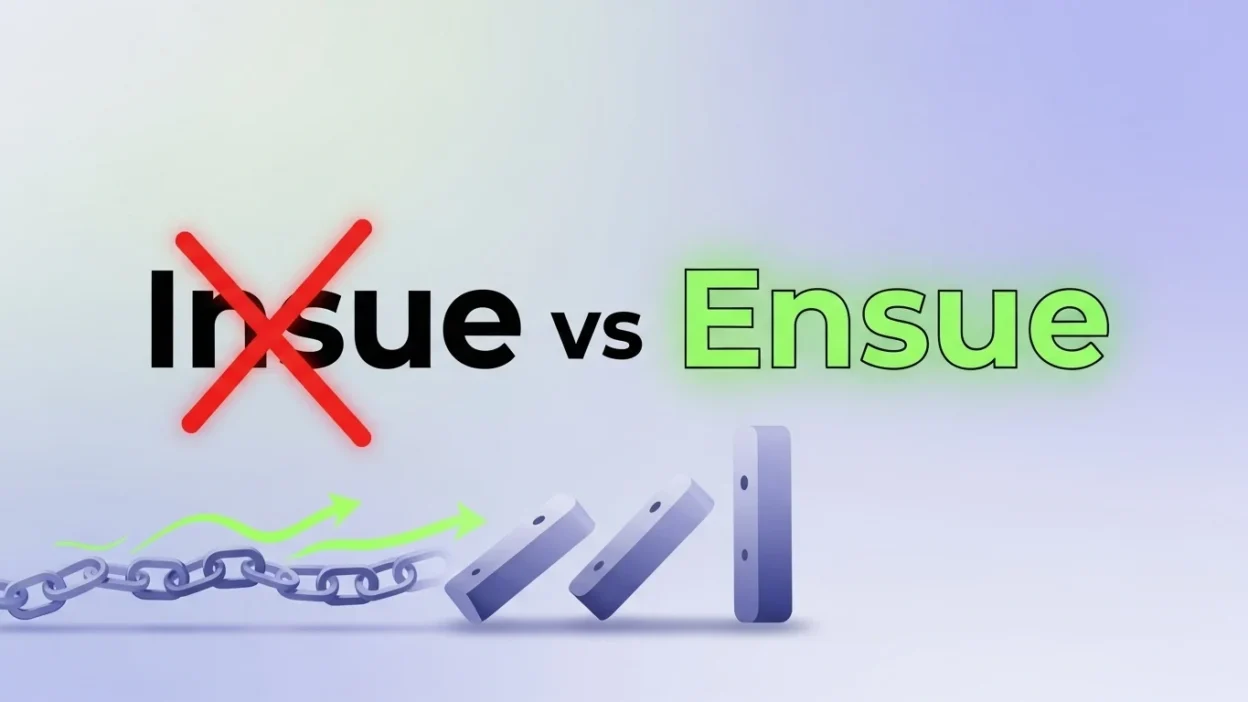
Quick Answer: Insue vs Ensue
- ✅ Correct spelling: Ensue
- ❌ Incorrect spelling: Insue
The word ensue is the correct and standard form in English. Insue is a misspelling and should not be used.
What Does “Ensue” Mean?
The word ensue is a verb that means something happens as a result or follows after something else.
Simple Definitions:
- To happen next or afterward
- To occur as a result of something
- To follow in sequence
Examples in Sentences:
- Chaos will ensue if the rules are ignored.
- A heated argument ensued after the meeting.
- If the system fails, serious problems may ensue.
Why Do People Write “Insue”?
The incorrect spelling insue usually comes from confusion in pronunciation and unfamiliarity with the word.
Common Reasons:
- Writing based on how the word sounds
- Confusing “en-” and “in-” prefixes
- Lack of exposure to the correct spelling
Since “ensue” is not used as frequently as some other verbs, it’s easier to misspell.
Understanding the Word Origin
The word ensue comes from Old French ensuivre, meaning “to follow after.”
Key Insight:
👉 The prefix “en-” in this case relates to “to cause or put into motion,” not “in-.”
This explains why:
- Ensue ✅
- Insue ❌
Understanding the origin helps reinforce the correct spelling.
Insue vs Ensue: Comparison Table
| Feature | Ensue ✅ | Insue ❌ |
|---|---|---|
| Correct spelling | Yes | No |
| Meaning | To happen next or as a result | No meaning |
| Dictionary status | Valid word | Not recognized |
| Usage | Formal & informal | Incorrect |
| Word origin | Old French | Misspelling |
Common Mistakes to Avoid
Even simple spelling differences can lead to confusion. Here are common errors to watch for:
1. Using “Insue” Instead of “Ensue”
❌ Confusion will insue after the announcement.
✅ Confusion will ensue after the announcement.
2. Mixing Up Prefixes
Writers often confuse “en-” and “in-,” but they are not interchangeable.
3. Misusing the Word in Context
❌ He will ensue the plan.
✅ He will follow the plan.
Remember, ensue means something happens as a result—it doesn’t mean “to ensure” or “to do.”
4. Confusing “Ensue” with “Ensure” or “Insure”
- Ensure = to make certain
- Insure = related to insurance
- Ensue = to happen afterward
More Examples of “Ensue” in Context
In Everyday Language:
- Laughter will ensue when the joke is told.
- Delays may ensue due to bad weather.
In Professional Writing:
- Legal action may ensue if the contract is violated.
- A discussion ensued after the presentation.
In News or Formal Context:
- Protests ensued following the announcement.
American vs British English Differences
There is no difference between American and British English for this word.
- 🇺🇸 American English: ensue
- 🇬🇧 British English: ensue
Both forms use the same spelling and meaning.
Why Correct Spelling Matters
Using ensue correctly helps your writing remain clear and professional.
Key Benefits:
- Improves readability
- Builds credibility
- Prevents confusion with similar words
- Enhances writing quality
Mistakes like insue can distract readers and reduce trust in your content.
Synonyms and Related Words
Using related words can make your writing more varied and engaging.
Synonyms of “Ensue”:
- Follow
- Result
- Occur
- Happen
- Develop
Easy Memory Trick
Here’s a simple way to remember:
👉 “Ensue starts with ‘en’ like ‘event’—something that happens next.”
This connection helps reinforce the correct spelling.
FAQs About Insue vs Ensue
Is “insue” ever correct?
No, insue is always incorrect and should not be used.
What does “ensue” mean?
It means to happen as a result or to follow after something.
Is “ensue” commonly used?
Yes, especially in formal, academic, and professional writing.
What is the difference between “ensue” and “ensure”?
Ensue means to happen next, while ensure means to make something certain.
Is there a British vs American difference?
No, both use ensue.
Why do people misspell “ensue”?
Because of pronunciation confusion and unfamiliarity with the word.
Can “ensue” be used in casual writing?
Yes, but it is more common in formal contexts.
How can I remember the correct spelling?
Think of “ensue” as something that follows an event.
Summary: Insue vs Ensue
The difference between insue vs ensue is straightforward. Ensue is the correct spelling and means something happens as a result, while insue is a common misspelling that should always be avoided.
Understanding the meaning, origin, and usage of ensue helps you use it confidently in your writing. Small improvements like this can make your communication clearer and more effective.