Have you ever written “agast” when trying to express shock or surprise and then wondered if it looked right? You’re not alone. This is a common spelling confusion that often slips into writing because the pronunciation can be misleading.
Understanding agast vs aghast is important if you want your writing to feel polished and accurate. While one word is widely accepted and expressive, the other is simply a mistake. Let’s break it down clearly so you can use the correct form with confidence.
Quick Answer: Agast vs Aghast
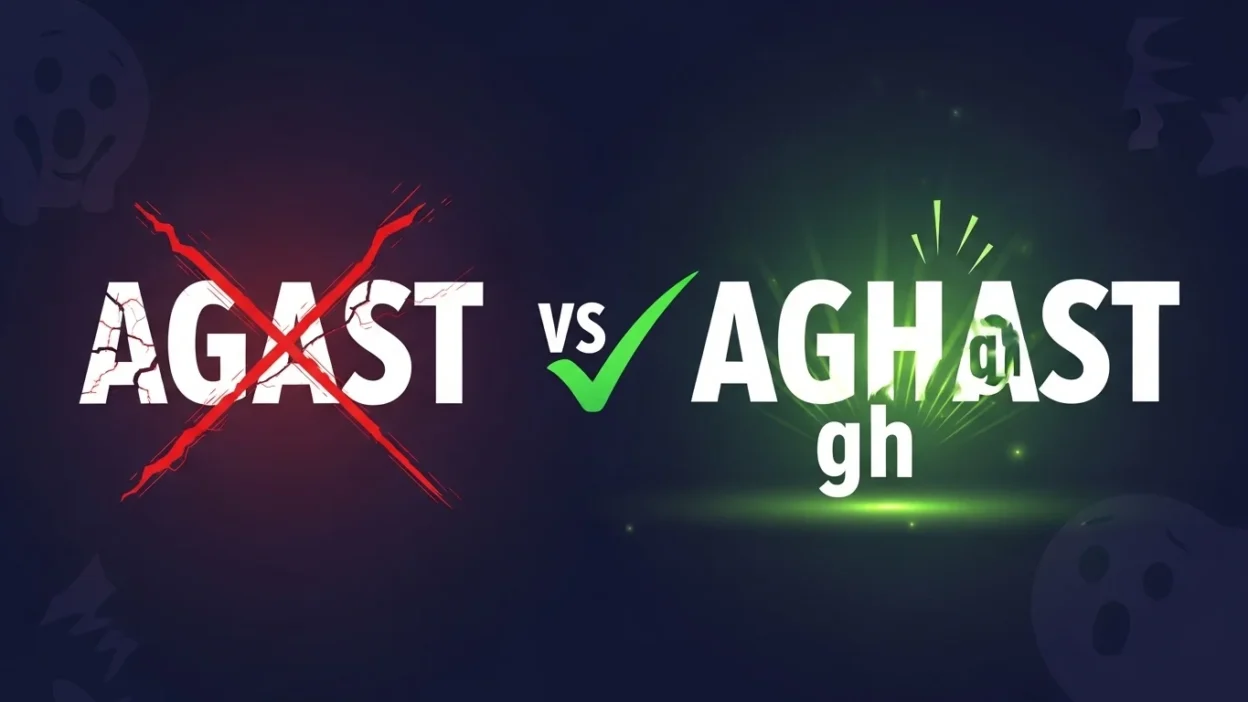
- ❌ Agast = Incorrect spelling
- ✅ Aghast = Correct spelling
👉 Always use “aghast” when describing shock, horror, or amazement.
What Does “Aghast” Mean?
Aghast is an adjective used to describe a strong feeling of shock, horror, or amazement. It often appears in emotional or dramatic contexts.
Core Meanings of Aghast
- Shocked or stunned
- Horrified or deeply surprised
- Overwhelmed by unexpected events
Examples of “Aghast” in Sentences
- She was aghast at the sudden news.
- He looked aghast when he saw the damage.
- The audience sat aghast during the intense scene.
- They were aghast at the unexpected outcome.
This word is commonly used in storytelling, journalism, and expressive writing.
What Is “Agast”?
“Agast” is not a correct English word. It is a misspelling of “aghast” and has no recognized meaning in standard usage.
Why Do People Write “Agast”?
This mistake usually happens because:
- The “gh” in “aghast” is silent, making it easy to forget
- Writers rely on pronunciation instead of spelling
- It looks simpler and feels intuitive
However, the correct spelling always includes “gh”: aghast.
Agast vs Aghast: Key Differences
| Feature | Aghast | Agast |
|---|---|---|
| Correct spelling | ✅ Yes | ❌ No |
| Meaning | Shocked or horrified | None (incorrect form) |
| Usage | Formal & expressive writing | Should be avoided |
| Dictionary status | Recognized word | Not recognized |
| Pronunciation | Silent “gh” | Misleading simplified form |
Common Mistakes to Avoid
When dealing with agast vs aghast, here are the most frequent errors:
1. Dropping the “GH”
- ❌ Agast
- ✅ Aghast
The “gh” is essential, even though it’s silent.
2. Relying on Pronunciation
Since “aghast” sounds like “a-gast,” many people spell it incorrectly.
3. Avoiding the Word Altogether
Some writers skip using “aghast” because they’re unsure of the spelling. Learning it properly helps expand your vocabulary.
Easy Memory Trick
👉 “Aghast has ‘gh’—like a gasp of shock.”
Think of the “gh” as part of a dramatic reaction, helping you remember the correct spelling.
Real-Life Usage of “Aghast”
Using “aghast” correctly adds emotion and depth to your writing.
In Storytelling
- “She stood aghast, unable to believe what she saw.”
- “He was aghast at the twist in the story.”
In News or Reports
- “Residents were aghast at the sudden changes.”
In Everyday Language
- “I was aghast when I heard the news.”
It’s a powerful word that conveys strong emotional reactions.
Synonyms of “Aghast”
To enrich your writing, you can also use similar words:
- Shocked
- Stunned
- Horrified
- Astonished
- Speechless
- Appalled
Example:
- “She was stunned by the announcement.”
- “He felt astonished at the result.”
American vs British English
There is no difference between American and British English for this word.
- 🇺🇸 American English: Aghast
- 🇬🇧 British English: Aghast
The spelling and meaning remain the same in both forms.
Why Correct Spelling Matters
Using the correct word—aghast—helps you:
- Communicate emotions clearly
- Maintain professionalism in writing
- Avoid confusion for readers
- Build credibility and trust
Misspelling it as “agast” can:
- Make writing appear careless
- Reduce clarity
- Distract readers
FAQs About Agast vs Aghast
What is the correct spelling: agast or aghast?
“Aghast” is the correct spelling in standard English.
Is “agast” ever correct?
No, it is always incorrect and should not be used.
What does “aghast” mean?
It means feeling shocked, horrified, or deeply surprised.
Why is there “gh” in “aghast”?
The “gh” is part of the traditional spelling, even though it is silent.
Can I use “aghast” in formal writing?
Yes, it is suitable for both formal and informal contexts.
Are there differences in British English?
No, both American and British English use the same spelling.
What are synonyms for “aghast”?
Words like shocked, stunned, and horrified can be used as alternatives.
How can I remember the correct spelling?
Think of “aghast” as a gasp reaction, which includes “gh.”
Summary: Agast vs Aghast
The difference between agast vs aghast is simple yet important. “Aghast” is the correct spelling used to describe shock, horror, or amazement. It is a powerful and expressive word that adds emotional depth to your writing.
“Agast,” on the other hand, is a common misspelling caused by the silent “gh.” While it may seem logical based on pronunciation, it is not accepted in standard English. Avoiding this mistake helps ensure your writing remains clear and professional.
By remembering the correct spelling and understanding its meaning, you can confidently use “aghast” in both everyday and formal communication. Small details like this make a big difference in how your writing is perceived.