Spelling mistakes can slip into writing without us even noticing especially when words sound the same. One common confusion is adict or addict. At a glance, both might seem acceptable, but only one is correct in standard English.
If you want your writing to be clear, professional, and credible, understanding this difference is essential. This guide explains the correct spelling, meaning, usage, and common mistakes so you can confidently use the right word every time.
Quick Answer: Adict or Addict
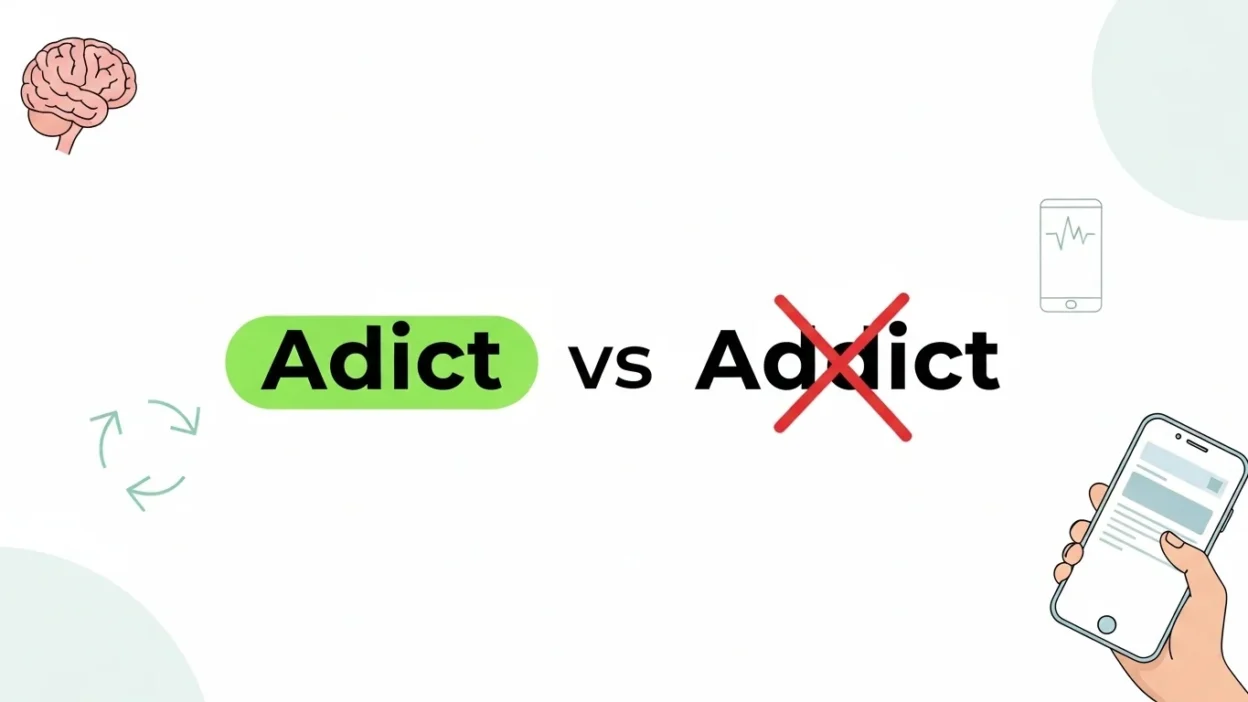
- ✅ Correct spelling: Addict
- ❌ Incorrect spelling: Adict
The word addict is the correct form. Adict is a misspelling and is not recognized in English dictionaries.
What Does “Addict” Mean?
The word addict can be used as both a noun and a verb, though it is most commonly used as a noun.
As a Noun:
An addict is a person who is dependent on something, often a substance or activity.
As a Verb:
To addict means to cause someone to become dependent on something.
Examples in Sentences:
- He is a social media addict.
- The program helps people recover from being an addict.
- Certain habits can addict individuals over time.
Understanding the Meaning in Context
The word addict is often associated with dependency, but it can be used in both serious and casual contexts.
Serious Context:
- A person struggling with substance addiction
- Medical or psychological dependency
Casual Context:
- “I’m a coffee addict”
- “She’s a travel addict”
In casual use, it often means strong enthusiasm rather than actual addiction.
Why Do People Write “Adict”?
The incorrect spelling adict usually happens due to:
Common Reasons:
- Missing one “d” while typing
- Mishearing the pronunciation
- Lack of awareness of double consonant rules
English often uses double consonants, which can be easy to overlook.
The Rule Behind “Addict”
The word addict contains a double “d,” which is part of its correct spelling and pronunciation.
Key Insight:
👉 Many English words double consonants to maintain sound and structure.
Similar Words:
- Address
- Addition
- Admit
These words also use double “d,” helping reinforce the pattern.
Adict vs Addict: Comparison Table
| Feature | Addict ✅ | Adict ❌ |
|---|---|---|
| Correct spelling | Yes | No |
| Meaning | Dependent person or behavior | No meaning |
| Dictionary status | Valid word | Invalid |
| Usage | Formal & informal | Incorrect |
| Spelling structure | Double “d” | Missing letter |
Common Mistakes to Avoid
Even simple spelling errors can affect your writing quality. Here are the most common mistakes:
1. Dropping One “D”
❌ He is an adict of video games.
✅ He is an addict of video games.
2. Confusing Tone and Context
Be mindful when using the word casually—it can be sensitive in serious contexts.
3. Spelling Errors in Fast Writing
Typing quickly often leads to missing letters. Always proofread.
4. Misusing as a Verb
While addict can be a verb, it’s less common:
- More common: “He became addicted.”
- Less common: “It can addict users.”
More Examples of “Addict” in Context
In Everyday Use:
- She’s a chocolate addict.
- He’s a fitness addict.
In Serious Context:
- The center helps every addict recover safely.
- Support is crucial for an addict’s recovery journey.
In Professional Writing:
- The study examined behavior patterns of a digital addict.
American vs British English Differences
There is no difference between American and British English for this word.
- 🇺🇸 American English: addict
- 🇬🇧 British English: addict
Both forms use the same spelling and meaning.
Why Correct Spelling Matters
Using the correct spelling of addict improves both clarity and credibility in your writing.
Key Benefits:
- Builds trust with readers
- Enhances professionalism
- Improves readability
- Supports SEO accuracy
Even small errors like adict can make your writing seem less reliable.
Synonyms and Related Words
Expanding your vocabulary helps improve your writing and communication.
Synonyms of “Addict”:
- Dependent
- Enthusiast (casual context)
- Fan
- Devotee
- Habitual user
Related Keywords (LSI):
- addict meaning
- correct spelling addict
- addiction definition
- addict vs addicted
- common spelling mistakes
Easy Memory Trick
Here’s a simple trick to remember:
👉 “Addict has two D’s—like double desire or dependency.”
This helps you recall the correct spelling instantly.
FAQs About Adict or Addict
1. Is “adict” ever correct?
No, adict is always incorrect in standard English.
2. What does “addict” mean?
It refers to a person who is dependent on something or strongly enthusiastic about it.
3. Why does “addict” have two “d’s”?
Because it follows standard English spelling patterns and comes from Latin roots.
4. Is “addict” always negative?
Not always. It can be used casually to describe strong interest (e.g., “book addict”).
5. What is the difference between “addict” and “addicted”?
- Addict = noun (person)
- Addicted = adjective (state or condition)
6. Is the spelling different in British English?
No, both American and British English use addict.
7. How can I avoid spelling mistakes like this?
Practice common patterns and proofread your writing.
8. Are there tools to check spelling?
Yes, grammar tools and spell-checkers can catch errors like adict.
Summary: Adict or Addict
The difference between adict or addict is simple but important. Addict is the correct spelling and is widely used to describe dependency or strong enthusiasm, while adict is a common typo that should always be avoided.
Understanding the correct spelling helps improve your writing clarity and professionalism. Whether you’re writing casually or formally, using accurate words ensures your message is clear and impactful.