If you’ve ever typed “natzi” and paused to wonder if it’s correct, you’re not alone. This is a common spelling mistake, especially because the word “Nazi” is strongly associated with history, and people want to make sure they use it accurately and respectfully.
Understanding the difference between natzi vs nazi is important not only for correct spelling but also for clarity and credibility in writing. In this guide, you’ll learn the correct form, its meaning, proper usage, examples, common mistakes, and helpful tips to avoid errors.
Quick Answer: Natzi vs Nazi
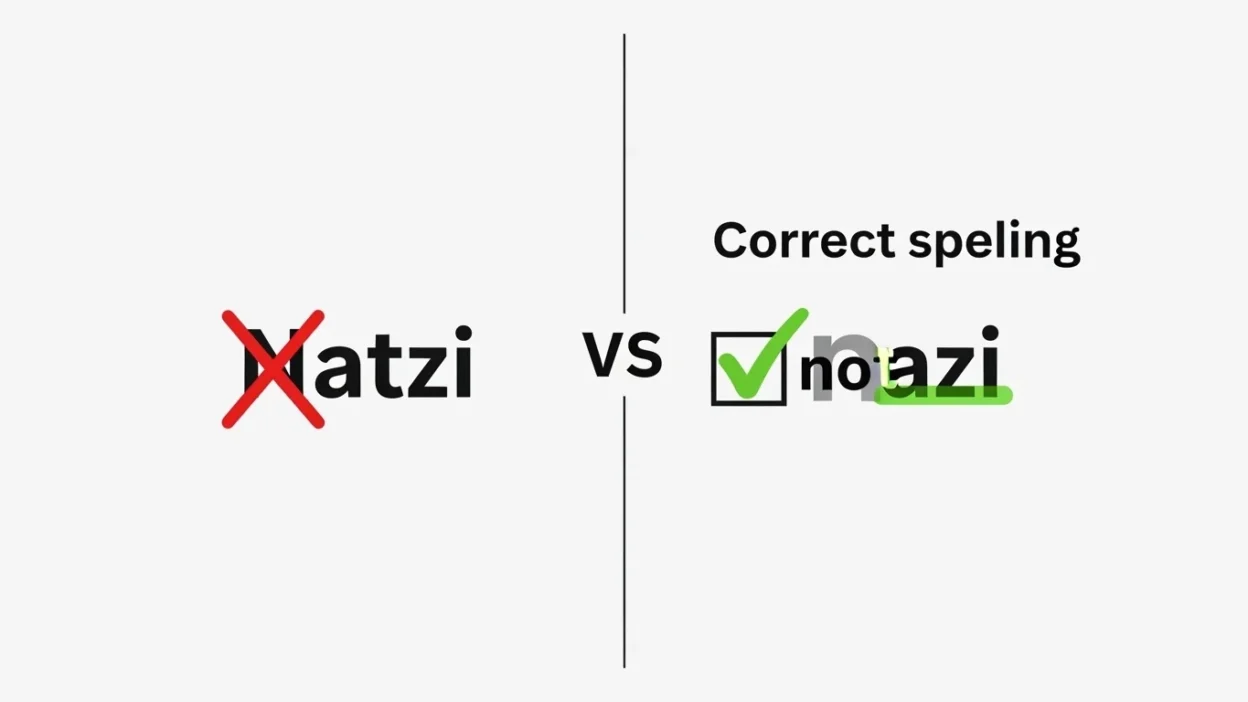
- Nazi – ✅ Correct spelling; refers to a member or ideology of the National Socialist German Workers’ Party
- Natzi – ❌ Incorrect spelling; a common typo or misspelling
✔ Correct: The term Nazi refers to a political movement in Germany.
✖ Incorrect: The term natzi refers to a political movement in Germany.
Always use “Nazi” in correct English writing.
What Does “Nazi” Mean?
The word Nazi is a historical and political term. It refers to a member or supporter of the National Socialist German Workers’ Party, which was led by Adolf Hitler in Germany during the early to mid-20th century.
Historical Context
The term is closely associated with:
- World War II
- Totalitarian rule
- Extremist ideology
- The Holocaust
Because of its historical significance, the word Nazi should be used carefully and accurately.
Basic Meaning
Nazi = a member or supporter of the National Socialist German Workers’ Party or its ideology.
Examples in Sentences
- The Nazi regime ruled Germany during World War II.
- Many books explore the history of the Nazi movement.
- The museum provides information about Nazi propaganda.
Modern Usage
In modern language, the term is sometimes used metaphorically (e.g., “grammar Nazi”), but this usage can be sensitive and controversial.
Example:
- He jokingly called himself a “grammar Nazi,” though such expressions should be used carefully.
Why “Natzi” Is Incorrect
The spelling natzi is incorrect because it does not match the standard English spelling of the word.
Reasons for the Mistake
- Confusion with similar letter combinations
- Phonetic spelling errors
- Typing mistakes
Since Nazi originates from German, its spelling is fixed and does not change.
Incorrect:
- The natzi regime had strict control.
Correct:
- The Nazi regime had strict control.
Natzi vs Nazi: Key Differences
| Feature | Natzi | Nazi |
|---|---|---|
| Spelling | Incorrect | Correct |
| Meaning | None | Historical/political term |
| Usage | Typo or error | Standard English |
| Dictionary Status | Not recognized | Recognized word |
| Recommended Use | ✖ Avoid | ✔ Always use |
In all contexts, Nazi is the correct spelling.
Proper Usage of “Nazi” in Writing
Because of its historical weight, the word Nazi should be used thoughtfully.
In Academic Writing
- The Nazi government implemented strict policies.
- Researchers study the rise of the Nazi party.
In Historical Discussions
- The Nazi regime lasted from 1933 to 1945.
- The documentary explores Nazi leadership.
In Media and Journalism
- Articles often discuss Nazi history and its global impact.
Important Note
Use the word respectfully and avoid casual or insensitive comparisons.
Common Mistakes with Natzi vs Nazi
Mistake 1: Misspelling the Word
❌ natzi
✔ Nazi
Mistake 2: Using It Casually
Using the term lightly or jokingly can be inappropriate.
Mistake 3: Incorrect Capitalization
The word Nazi should always be capitalized because it is a proper noun.
❌ nazi
✔ Nazi
Why People Confuse Natzi and Nazi
1. Typing Errors
The letters t and z may be swapped accidentally.
2. Pronunciation Confusion
Some accents may influence how the word is spelled.
3. Lack of Familiarity
Not everyone is familiar with the correct spelling, especially if English is not their first language.
4. Auto-Correction Issues
Some devices may not immediately correct the typo.
American vs British English
The spelling Nazi is the same in both American and British English. There are no variations.
Examples:
American English:
- The Nazi regime influenced global events.
British English:
- The Nazi regime influenced global events.
The usage and spelling remain consistent worldwide.
Related Terms and Concepts
Understanding related vocabulary can provide more clarity.
Related Words
- fascism
- dictatorship
- propaganda
- totalitarianism
- authoritarian regime
These terms often appear in discussions about history and politics.
Synonyms (Contextual)
While there is no direct synonym for Nazi, related concepts include:
- extremist regime
- authoritarian movement
These should be used carefully and in the correct context.
Tips to Remember the Correct Spelling
1. Keep It Simple
The correct spelling is short and straightforward: N-A-Z-I
2. Avoid Adding Extra Letters
There is no “t” in the word.
3. Always Capitalize It
Since it is a proper noun, always write Nazi, not nazi.
4. Double-Check in Formal Writing
Because of its sensitivity, accuracy is important.
FAQs About Natzi vs Nazi
1. Is “natzi” a real word?
No. Natzi is not a correct word in English.
2. Which spelling is correct: natzi or nazi?
The correct spelling is Nazi, with a capital “N.”
3. Why is “Nazi” capitalized?
Because it is a proper noun referring to a specific political group.
4. Can “Nazi” be used in casual conversation?
It can be used, but it should be handled carefully due to its historical significance.
5. Is there a difference in British and American spelling?
No. Both use Nazi.
6. What does “Nazi” refer to?
It refers to members or ideology of the National Socialist German Workers’ Party.
7. Why is the word sensitive?
Because it is associated with World War II and the Holocaust.
8. How can I avoid spelling mistakes?
Remember the simple form: N-A-Z-I and avoid adding extra letters.
Summary
The difference between natzi vs nazi is straightforward but important. Nazi is the correct spelling, referring to a historical political movement and its members, while natzi is simply a misspelling that should be avoided in all forms of writing.
Because the term carries significant historical and emotional weight, using the correct spelling and context is essential. Whether you’re writing academically, professionally, or casually, accuracy helps maintain clarity and respect.