If you’ve ever paused while writing and wondered whether the correct phrase is “more then” or “more than,” you’re not alone. This confusion is extremely common because the words then and than sound similar when spoken, but they serve completely different purposes in English grammar.
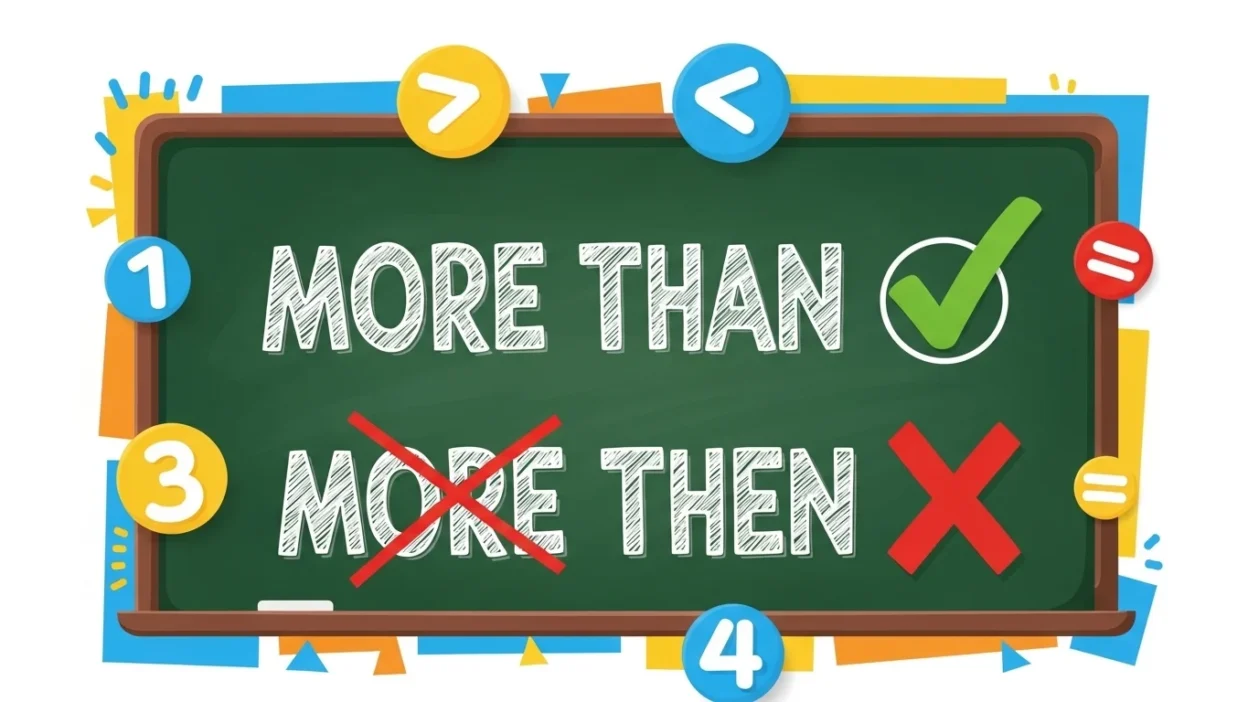
Understanding the difference between more then vs more than is essential for clear and professional writing. In most situations, “more than” is the correct phrase, while “more then” is usually a mistake caused by mixing up “then” and “than.” In this guide, we’ll break down the meanings, examples, grammar rules, and common mistakes so you can confidently choose the right phrase every time.
Quick Answer: More Then vs More Than
- More than – The correct phrase used for comparisons, quantities, or amounts.
- More then – Usually incorrect and occurs when “then” is mistakenly used instead of “than.”
✔ Correct: She has more than ten books.
✖ Incorrect: She has more then ten books.
In almost every situation involving comparison or quantity, “more than” is the correct choice.
What Does “More Than” Mean?
The phrase more than is used to indicate a greater quantity, amount, number, or degree. It commonly appears in comparisons and measurements.
Basic Meaning
More than = greater in number, amount, or degree.
Examples in Sentences
- The company has more than 500 employees.
- I waited more than an hour for the bus.
- She has more than enough experience for the job.
- The project required more than we expected.
Common Situations Where “More Than” Is Used
You’ll frequently see this phrase in contexts like:
- Comparisons
- Statistics and numbers
- Business and reports
- Academic writing
- Everyday conversation
Examples:
- This phone costs more than the previous model.
- The class has more than thirty students.
What Does “More Then” Mean?
The phrase more then is typically incorrect grammar. It happens when someone accidentally uses then instead of than.
To understand why this is wrong, we need to look at the meaning of then.
Meaning of “Then”
The word then refers to time or sequence, meaning something that happens afterward or next.
Examples:
- Finish your homework, then watch TV.
- We ate dinner, and then we went for a walk.
Because then refers to time, it doesn’t work in comparisons.
Why “More Then” Is Wrong
When you want to compare amounts or quantities, you must use than, not then.
Example:
❌ She has more then five years of experience.
✔ She has more than five years of experience.
More Then vs More Than: Key Differences
| Feature | More Then | More Than |
|---|---|---|
| Grammar | Usually incorrect | Correct |
| Meaning | Refers to time if “then” used | Indicates greater amount |
| Usage | Typo or confusion | Standard comparison phrase |
| Context | Rarely correct | Numbers, comparisons, quantities |
| Recommended Use | ✖ Avoid | ✔ Always use |
Whenever you’re comparing numbers, amounts, or levels, more than is the correct phrase.
Examples of “More Than” in Everyday English
The phrase more than appears frequently in both casual conversation and formal writing.
Numbers and Quantities
- The store sold more than 1,000 products last week.
- There are more than twenty parks in the city.
Comparisons
- This car is more than twice as fast as the old one.
- The movie was more than I expected.
Emphasis
Sometimes more than is used for emphasis.
Examples:
- She was more than happy to help.
- The event was more than a success.
These examples show how versatile and important the phrase more than is in English.
Common Mistakes with More Then vs More Than
Even experienced writers occasionally confuse these words. Here are the most frequent mistakes.
Mistake 1: Using “Then” in Comparisons
❌ The project took more then two months.
✔ The project took more than two months.
Mistake 2: Confusing “Then” and “Than”
Remember:
- Then = time or sequence
- Than = comparison
Examples:
✔ We ate lunch, then we went home.
✔ This book is better than the last one.
Mistake 3: Typing Errors
Sometimes writers know the rule but accidentally type then instead of than.
Proofreading helps catch this mistake.
Why People Confuse Then and Than
Several factors contribute to this common grammar error.
1. Similar Pronunciation
In many accents, then and than sound very similar.
2. Spelling Similarity
The two words differ by only one letter.
3. Fast Typing
When writing quickly, people may choose the wrong word automatically.
4. Lack of Grammar Awareness
Some learners aren’t taught the specific difference between then and than.
Simple Trick to Remember the Difference
A helpful memory trick makes the rule easy to remember.
“Than” Is for Comparison
Think of than as the word used when comparing two things.
Example:
- This laptop is faster than the old one.
“Then” Is for Time
Think of then as referring to time or sequence.
Example:
- Finish your work, then relax.
Quick Reminder
Than = comparison
Then = time
American vs British English
The phrase more than is spelled the same in American and British English. There are no regional spelling differences.
Examples:
American English:
- The company earned more than a million dollars.
British English:
- The company earned more than a million pounds.
Although pronunciation may vary slightly, the spelling remains identical.
Related Words and Phrases
Using related expressions can make writing clearer and more varied.
Similar Comparison Phrases
- greater than
- higher than
- larger than
- above
- exceeding
Examples:
- The temperature rose higher than expected.
- The company made profits exceeding expectations.
Related Grammar Concepts
Understanding these related grammar topics can improve writing:
- comparative adjectives
- quantity expressions
- comparison phrases
These concepts appear frequently in academic, professional, and everyday writing.
FAQs About More Then vs More Than
1. Is “more then” ever correct?
In most cases, no. It usually appears when someone mistakenly writes then instead of than.
2. Which phrase is correct: more then or more than?
The correct phrase is more than when referring to numbers, comparisons, or quantities.
3. What does “then” mean?
Then refers to time, sequence, or what happens next.
Example:
- We finished dinner, then we watched a movie.
4. What does “than” mean?
Than is used for comparisons between two things.
Example:
- This car is faster than the previous model.
5. Why do people confuse then and than?
The confusion happens because the words sound similar and look almost identical.
6. Is “more than” used in formal writing?
Yes. More than is widely used in academic, business, and professional writing.
7. Can “more than” be used for emphasis?
Yes. It can emphasize strong feelings or results.
Example:
- She was more than grateful for the help.
8. Are then and than interchangeable?
No. They have completely different meanings and grammar roles.
Summary
The difference between more then vs more than is simple once you understand the roles of then and than. The phrase more than is the correct expression used to describe a greater quantity, amount, or degree, making it essential for comparisons and numerical statements.
On the other hand, more then is typically a mistake caused by confusing then, which refers to time, with than, which is used for comparisons. Because this error appears frequently in everyday writing, remembering the rule can significantly improve your grammar accuracy.