If you’ve ever typed “habbit” and wondered whether it’s correct, you’re not alone. Many English learners and even native speakers occasionally mix up habbit vs habit because the words sound the same in pronunciation. However, only one of them is actually correct in standard English.
Understanding the difference is important for clear writing especially in emails, academic work, blog posts, or professional communication. In this guide, you’ll learn the correct spelling, the meaning of the word, common mistakes people make, and helpful examples so you never confuse habbit vs habit again.
Quick Answer: Habbit vs Habit
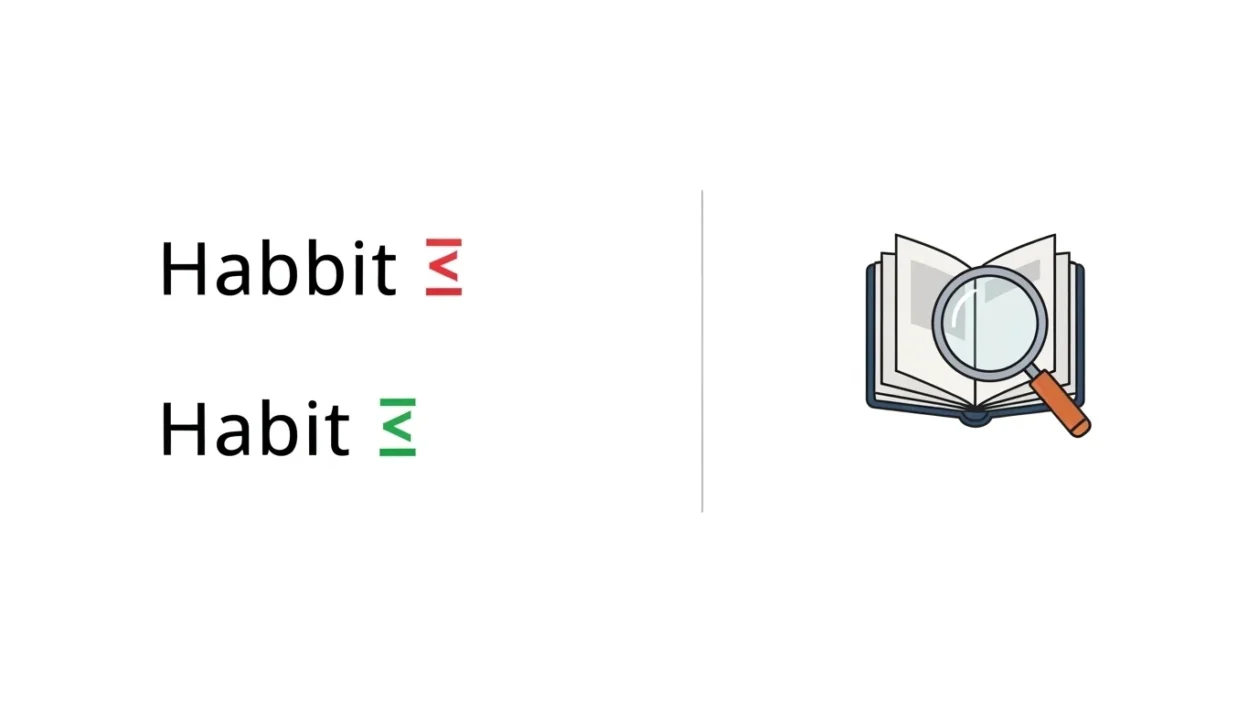
The correct spelling is habit.
- Habit – Correct English word meaning a repeated behavior or routine.
- Habbit – Incorrect spelling and not recognized in standard English dictionaries.
In short: Always use “habit.” Avoid “habbit.”
What Does “Habit” Mean?
A habit is something you do regularly or automatically, often without thinking much about it. Habits are repeated behaviors that become part of your daily routine.
In psychology and everyday language, habits can be good, bad, or neutral depending on their effects.
Simple Definition
A habit is a behavior that becomes automatic because it is repeated frequently.
Examples of Habit in Sentences
Here are some everyday examples:
- Drinking water first thing in the morning is a healthy habit.
- Checking your phone constantly can become a bad habit.
- She developed the habit of reading before bed.
- Exercising daily is a good habit for mental and physical health.
- He has a habit of arriving early to meetings.
Why Do People Write “Habbit”?
The spelling habbit usually appears because of pronunciation confusion. When we say the word aloud, the b sound may seem stronger or doubled, which leads some people to mistakenly add another b.
There are three main reasons people make this mistake:
1. Phonetic Spelling
People sometimes spell words exactly as they hear them. Since habit may sound like “hab-bit,” some assume the spelling must include bb.
2. Influence of Similar Words
English has many words with double consonants such as:
- rabbit
- hobby
- cabbage
Because of this pattern, writers may assume habit also uses double b.
3. Typing Errors
Sometimes habbit appears simply because of fast typing or autocorrect mistakes.
Regardless of the reason, habbit is always incorrect in standard English writing.
Habbit vs Habit: Comparison Table
| Word | Correct Spelling | Meaning | Example Sentence |
|---|---|---|---|
| Habit | ✅ Yes | A repeated behavior or routine | Brushing teeth twice daily is a good habit. |
| Habbit | ❌ No | Incorrect spelling | “Habbit” should always be corrected to “habit.” |
This simple comparison shows that habit is the only acceptable spelling.
Common Phrases with “Habit”
The word habit appears in many everyday expressions and idioms. Learning these phrases helps you understand how the word is naturally used in English.
1. Break a Habit
Meaning: To stop doing something regularly.
Example:
He finally broke the habit of staying up late.
2. Form a Habit
Meaning: To develop a repeated behavior.
Example:
It takes time to form a habit of exercising daily.
3. Bad Habit
Meaning: A negative repeated behavior.
Example:
Biting nails is a bad habit.
4. Good Habit
Meaning: A beneficial repeated action.
Example:
Saving money every month is a good habit.
5. Creature of Habit
Meaning: Someone who prefers routine and consistency.
Example:
My grandfather is a creature of habit and eats breakfast at the same time every day.
Examples Showing the Correct Usage
Let’s look at more real-life examples to reinforce the correct spelling.
Correct sentences:
- Reading every day is a habit that improves vocabulary.
- She made a habit of writing in her journal each night.
- Drinking too much coffee became his daily habit.
- Practicing gratitude is a powerful habit for mental health.
Incorrect sentence:
- I am trying to change my habbit. ❌
Corrected version:
- I am trying to change my habit. ✅
Common Mistakes People Make
Many writers accidentally use habbit because of confusion with spelling rules. Here are the most common mistakes.
Adding an Extra “B”
Incorrect: habbit
Correct: habit
Assuming It Follows Double-Consonant Rules
Some English words double the consonant when adding suffixes, but habit does not start with a double “b.”
Examples:
- habit → habits
- habit → habitual
- habit → habitually
Confusing with Similar-Sounding Words
People sometimes confuse habit with words like:
- rabbit
- hobbit
- hobby
Although they sound similar, their spellings are different.
Tips to Remember the Correct Spelling
Here are a few simple memory tricks to avoid writing habbit again.
1. Think “One B Habit”
The word habit always has one “b.”
2. Link It to “Habitat”
The word habitat shares the same root and also uses one “b.”
Habit → Habitat
3. Use Spellcheck
Most writing tools will automatically flag habbit as incorrect.
American vs British English
When comparing habbit vs habit, there is no difference between American and British English.
Both varieties of English use the same spelling:
- American English: habit
- British English: habit
So regardless of where you live—USA, UK, Canada, Australia, or elsewhere—the correct spelling remains habit.
Related Words and Synonyms
Understanding related terms helps strengthen vocabulary around habit.
Common synonyms include:
- routine
- practice
- custom
- pattern
- behavior
- tendency
Example:
Instead of saying:
He has a habit of waking up early.
You could say:
He has a routine of waking up early.
Habit in Psychology and Self-Improvement
In psychology, a habit forms when a behavior is repeated enough times that it becomes automatic.
Experts often describe habit formation as a loop:
- Cue – a trigger that starts the behavior
- Routine – the action itself
- Reward – the benefit you get
For example:
- Cue: Alarm rings
- Routine: Go for a morning walk
- Reward: Feel energized
Over time, this loop turns into a daily habit.
Frequently Asked Questions (FAQs)
1. Is “habbit” a real word?
No. Habbit is a spelling mistake. The correct word is habit.
2. Why do people spell habit as habbit?
This happens mainly because of pronunciation confusion or influence from words with double consonants.
3. Is habit spelled differently in British English?
No. Both American and British English use the same spelling: habit.
4. What does habit mean in simple words?
A habit is something you do regularly without thinking much about it.
5. Can habit be positive or negative?
Yes. Habits can be:
- Good habits (exercise, reading)
- Bad habits (smoking, procrastination)
6. How long does it take to build a habit?
Research often suggests it takes about 21–66 days for a behavior to become automatic.
7. What is an example of a daily habit?
Examples include:
- brushing teeth
- drinking coffee in the morning
- checking emails regularly
8. Is “habitual” related to habit?
Yes. Habitual describes something done regularly or repeatedly.
Example:
His habitual lateness annoyed his coworkers.
Summary: Habbit vs Habit
The confusion between habbit vs habit is common, but the rule is simple. Habit is the correct spelling and refers to a repeated behavior or routine that becomes automatic over time. The spelling habbit is simply a mistake and should never be used in formal or informal writing.
By remembering that habit contains only one “b,” you can avoid this common spelling error. Whether you’re writing an essay, email, or blog post, using the correct spelling improves clarity and professionalism. With practice and awareness, recognizing the difference between habbit vs habit becomes effortless.
Actionable Takeaway
Whenever you write the word habit, pause and check the spelling. Remember: one “b,” not two. A quick mental rule like “a good habit has one b” can help prevent mistakes.
Building good language habits—such as proofreading your writing and learning common spelling differences—will gradually improve your communication skills and writing confidence.